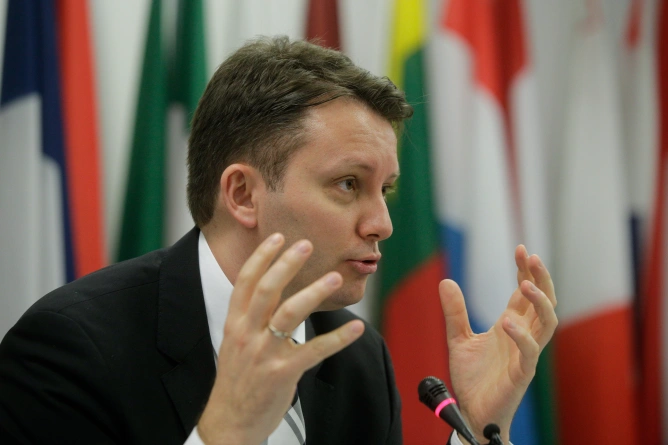
Mureșan, facing a fragmented Parliament. 10 days to request a vote of confidence / How the parties have reacted so far



Always see our news on Google
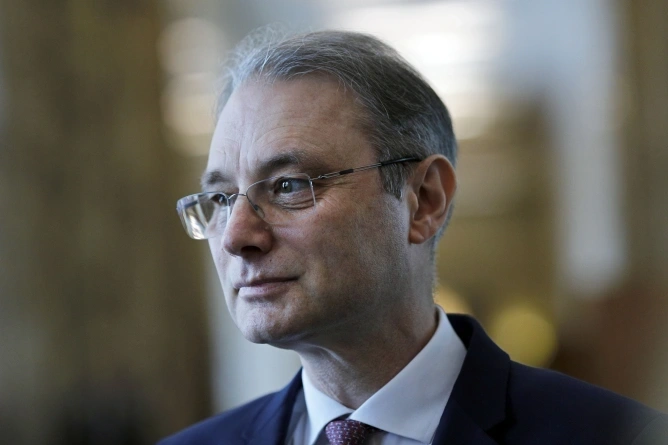
President Nicușor Dan designated MEP PNL’s Siegfried Mureșan as candidate for the position of prime minister, following consultations with the parliamentary parties. The head of state cited the support expressed by PNL, USR, and UDMR, but acknowledged that no majority has yet been formed.
Mureșan thus starts with explicit political support, but insufficient for investiture. The decisive issue is not the designation, but securing the votes needed at the joint session of the Chamber of Deputies and the Senate.
Vote arithmetic
The Constitution requires the vote of a majority of deputies and senators, meaning a majority of the members of Parliament in office, not merely a majority of those present. According to the current structure, there are 465 parliamentarians: 330 deputies and 135 senators. The investiture threshold is therefore 233 votes.
In the Chamber of Deputies, PNL has 54 members, USR 40, and UDMR 21. In the Senate, PNL has 26 members, USR 18, and UDMR 10. The three parties that proposed Mureșan therefore have a total of 169 parliamentarians: 80 from PNL, 58 from USR, and 31 from UDMR.
This bloc remains about 64 votes below the threshold of 233. Even with the 17 deputies representing national minorities, it would reach approximately 186 votes, still well short of the majority required by the Constitution.
PSD remains the key group. It has 91 deputies and 35 senators, for a total of 126 parliamentarians. AUR has 92 parliamentarians: 62 deputies and 30 senators. UPR has 17 parliamentarians in the Chamber of Deputies, PACE – Întâi România has seven senators, SOS România has 13 deputies, while the unaffiliated members number 23: 15 deputies and eight senators.
A PNL–USR–UDMR–minorities plus PSD formula would have, arithmetically, around 312 votes. A formula based on PNL, USR, UDMR, minorities, and AUR would also exceed the threshold, but UDMR has ruled out a majority built with AUR votes.
Political positions
PNL supports the designation. The party’s president, Ilie Bolojan, presented the nomination as a chance for reformist governance, responsible and pro-European. USR also supports Mureșan.
Dominic Fritz stated that USR would participate in the effort to build a majority, although he acknowledged that the negotiations would not be easy.
UDMR says it will be a partner in building a majority, but makes the political formula conditional on excluding AUR. This position limits the designated prime minister’s options.PSD has not announced its support.
Sorin Grindeanu reacted with “surprise and disappointment.” Moreover, the Social Democratic leader said that the Mureșan government “will fall gloriously.”Claudiu Manda argued that the future government must be built around PSD. The message indicates that the party wants to be the central negotiator, not merely a supplier of votes.
PNL is now trying to persuade PSD to grant Mureșan its support by relaunching the proposal for a rotating government.
AUR has also announced that it will not vote for a Mureșan cabinet.
The PACE – Întâi România group, in turn, announced that it refuses to support a government led by him.
The constitutional deadline
Article 103 paragraph 2 of the Constitution stipulates that the designated prime minister has 10 days from the designation to request Parliament’s vote of confidence on the government program and the complete list of ministers. The procedure has several clear stages:The designated prime minister negotiates the majority, drafts the government program, and determines the cabinet’s composition.He submits the program and the list of the Government to Parliament.The proposed ministers are heard by the specialized committees.The Chamber of Deputies and the Senate meet in joint session for debate and a vote.
Investiture requires a minimum of 233 votes in favor, meaning a majority of deputies and senators.
After the vote is granted, the president appoints the Government by decree, and the prime minister and ministers take the oath before the head of state.The 10-day deadline requires the candidate to submit the investiture request within a short interval. However, the Constitution does not turn exceeding the deadline into automatic investiture, nor does it eliminate the need for a parliamentary majority.
When early elections may occur
Early elections do not automatically follow the rejection of the Mureșan cabinet. Article 89 of the Constitution allows Parliament to be dissolved only if two conditions are cumulatively met: Parliament fails to grant confidence for the formation of the Government for 60 days from the first request for investiture, and at least two requests for investiture are rejected.
Even then, dissolution is an option for the president, not an obligation. Before issuing the decree, the head of state must consult the presidents of the two Chambers and the leaders of the parliamentary groups.
The Constitution further provides that Parliament may be dissolved only once in a year. Dissolution is prohibited during the last six months of the presidential term and during a state of mobilization, war, siege, or emergency. Parliamentary elections must be held no later than three months after dissolution.
In conclusion, Mureșan has a nomination supported by three parties, but not a majority. The key to investiture remains the willingness of PSD, the minorities, and/or parliamentarians from the smaller groups to support a government formula that reaches the constitutional threshold.
Summary prepared with the help of Perplexity
Latest News
22:57
22:53
22:42
22:30
22:28
See more news
NEWS ON THE SAME TOPICS