EXCLUSIVE | Why Romania cannot afford the luxury of isolation



Always see our news on Google
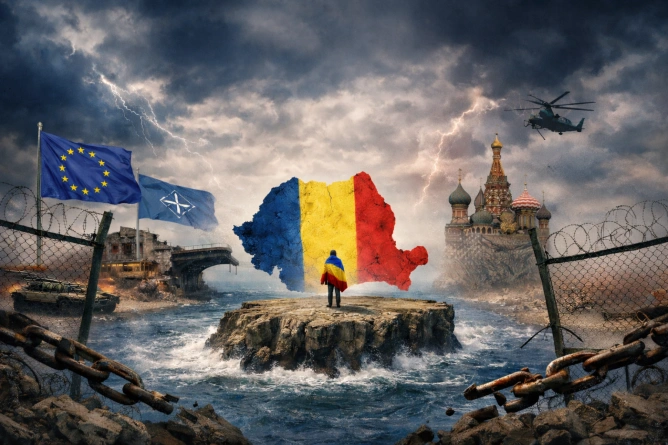
The last period has created the impression that Romania is becoming increasingly isolated, that it must fend for itself, and that more and more challenges are coming our way.
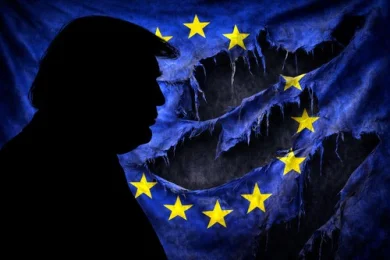
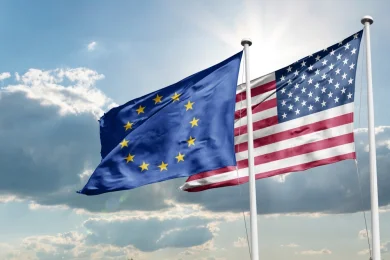
And the radical discourse encourages the rejection of partners, the dismissal of all proposals (the European Union is criticized for asking too much and for conditioning its support on rules we do not want; NATO is rejected for the increasing cost of defense; America is rejected because Trump is an unusual leader, different from the diplomatic style of the last decades). Attention, this rejection of others does not come only from so-called sovereignist parties (AUR, SOS, POT, etc.), but also from voices within traditional parties (for too many pro-Europeans, the equation proposed by the American administration has become complicated, for example). We hear this radicalism even from those who mistakenly criticize Trump, not understanding the logic of the global competition in which he operates.
Yesterday's vote in Parliament, which accepted a greater American presence at the military base near Constanța, illustrated a rare moment. Like "in the old days," the majority of parliamentarians agreed with what our American partners requested. Without nuances, without excuses. It is an exceptional moment, but it must be treated in a broader context. And it is a moment that can give political leaders, media influencers, and educated people in Romania the opportunity to remind us what matters in difficult times.
In this broader context, we must recognize that there is no longer a general, cross-party agreement, about who Romania's partners should be, and what the axis of foreign policy should be. Confusion is dominant, and there is speculation about improvised solutions (maybe we rely more on the French, maybe we go it alone, maybe we form regional alliances, maybe we reopen dialogue with China, maybe we ask for more money from the Americans for the use of military bases, maybe we do like the Hungarians in their terrible relationship with the EU, etc.). It is very easy to serve this type of discourse in which you attack partners from just yesterday. Words cost nothing, and extremism is extremely easy to illustrate – especially on social networks, on new TikTok accounts where too many believe the engagement numbers through which the non-transparent Chinese platform continues to attract supporters.
What is the social effect of this frenzy? Romanians are losing faith in their partners. Pro-Europeans believe less in the Trump-led USA, because they do not understand either the style or the direction. Pro-Trump supporters no longer believe in the European Union. Sovereignists no longer believe in anyone. And ordinary Romanians, affected by the budget crisis, by cuts and austerity in the last year, are beginning to fear the major cost that "foreigners" impose on us. Fortunately, trust in Russia is not increasing, which remains the most hated state by Romanians, with a majority of 90%. But the unity of transatlantic trust is fragmenting, with complicated effects in the medium term. The public that previously trusted both the USA, NATO, and the EU is increasingly divided and marked by uncertainties.
What is the political effect? This is the real risk. Parties were used to having a big partner (the USA, usually) that would always "ask" them to do something, and that would "give" them something in return. For years, this type of diplomacy has been listened to, in which the Romanian role has been minimized even by politicians and diplomats. Many of our Romanians, in the face of American proposals to take on a larger role in the region, have always said that we have nothing to boast about, that we are not good at anything, and that it makes no sense to try something on our own. They have always waited for others to "give" us, because they, on their own, have not had the courage to build much. However, politics and respect are made by leaders who know how to show that they can do things too. We should not ask the EU, from Brussels, to scold politicians and give us directives. We should not wish for "guidelines" or directives. We are mature enough democratically to take steps ourselves. We just need to learn that it depends on us – on each of us (citizens can mobilize their elected representatives, civil society can have projects, the media can support campaigns, institutions can pursue their own strategies – in the end, democracy means harmonizing all these dynamics into paths, strategies, and great dynamics).
Our partners do not "get upset" if we have initiatives. On the contrary, they would like us to have more. To stand more on our own feet, to keep our word when we say something, and to remain "trustworthy." We can be patriotic, we can support Romanian capital, we can build economic champions with regional and international presence – and we will not attract anyone's anger! We can adopt Western models in the economy, in democratic consolidation, in the fight against corruption, in the transition to European models, but always adapting them to local specifics, without this meaning that we are less European. For too long, the argument has been forced that if we do not do exactly what our external partners tell us, they will abandon us and we will quickly return to the arms of the Russians. And the factual reality constantly shows us that this is not the case. If we have local initiatives, this will not lead to the flight of either Americans or Europeans. On the contrary, we will find that our partners (especially the Americans) will respect us more, will invite us to more joint actions, will treat us more as equals and not as some poorer brothers.
If, however, our leaders continue to be passive and wait for orders from elsewhere (from embassies, from meetings in other capitals, from forests or other forms of relief), Romania will be increasingly alone, increasingly left out in almost all power equations. When we realize that the world respects those who are courageous and have initiative, and that this does not tarnish our trust and respect, we might find that we can have both a national discourse and local pride, alongside openness to the Western model, to the free world and its advantages.
The United States will continue to be the clear leader of this world. The alternative to the American model is, at present, the Chinese model (economic growth in a totalitarian state) or even the Russian one (where there is neither growth nor freedom). I know that many announce, as an alternative, a European model, but it will take at least 10 years to build military, financial, and economic capacities for the continent. Without them, that model cannot count on a global level. However, once it is built, because we are heading in that direction, the transatlantic relationship will not be a competitive one, but a complementary one (because there is a huge cultural compatibility between the two sides of this ocean).
What do we choose in the meantime? To isolate ourselves more and more, hoping that someone will knock on our door, from time to time, with a request? Or do we seek ways to break out of the vicious circle of recent years? The choice is simple, in my opinion. Together with our partners, Romania is much safer. Together with the European family that brings us prosperity and freedoms. But also alongside America, interested in defending this region of the world from increasingly complex assaults coming from outside our civilization.
Latest News
23:00
22:55
22:47
22:39
22:33
See more news
NEWS ON THE SAME TOPICS