Today's pessimism is correlated with yesterday's illusion of security.


Always see our news on Google
Last week we talked about the INSCOP survey marking four years since the beginning of the war in Ukraine. Additionally, we studied some press materials, so to speak, from that era and the reality is that no one believed there would be a long-lasting war. Or, I beg your pardon, not this long. Just as few believed that the Russian pressures that began in 2015 in eastern Ukraine would culminate, after years of negotiations and a pandemic, with a large-scale invasion.
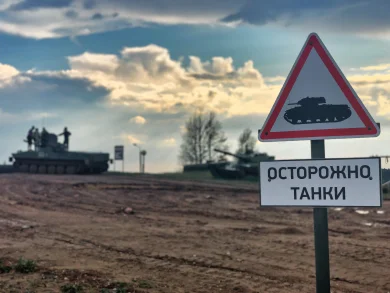
The invasion on February 24, 2022, did not just mark the beginning of a regional war within the ex-Soviet world. It was a true return to the past, but not to the 90s, and not even to the Cold War era. It was a leap back to ways of conceiving war as it was 70 years ago or worse. Do not just look at drones and other military technologies. First and foremost, it is about a classic way of waging war, with much destruction and civilian casualties, with infantry, with tanks, with massive and already unpopular conscriptions, with trench warfare. It is not that postmodern war with small professional military formations solving specific problems, which military sociology magazines dreamed of between 1995 and 2010.
Now we must seriously consider, and I have written about this here before, whether we have lived after the fall of communism in a fantasy of a global and unipolar world where dictatorships and long, large-scale wars are more like aberrations of the system than everyday realities. In the mid-90s, the paradigmatic confrontation between the end of history and the clash of civilizations was in vogue. Until around 2015, it seemed that the first theory had won. Now, we do not know anymore.
It is a specific feature of international relations theory, as a multi-paradigmatic academic discipline (that’s what it’s called). This specificity is given by the fact that, unlike other disciplines, including social-political sciences, in the case of international relations theory, if you change the macro-theoretical approach, you often change the very conception of the object of study. So, perhaps the international system between 1990 and 2015 was not as friendly as we liked to see it. Perhaps we simply viewed it incorrectly.
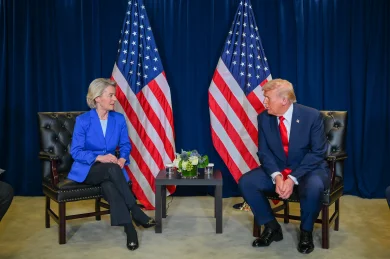
The real question, however, is how we will view this system from now on. We, all: governments, military personnel, investors, ordinary citizens, even analysts who write or speak about it. For example, one of the conclusions of the survey conducted by INSCOP for the New Strategy Center is the incredibly low trust of the public in Romania in almost all international leaders. None exceed a third in trust. Not even Donald Trump, "the man who will stop the war in 24 hours."
Similarly, only 30% of Romanians believe that the war will end in 2026.
Also, 30% believe that Russia will start a new war in Europe in the next 3 years. It is the shock of a problem that apparently disappeared. After our entry into NATO and the EU, the fear of war and interest in the eastern space completely disappeared from the radar of the public in Romania. Probably, many of us thought that the problem had been subcontracted to a "caretaker": NATO, the Americans, the EU, the professional army, etc. Subsequently, when troubled times returned, some began to tell us that we are a small country, located at the intersection of great empires. And Donald Trump, who seemed likable, said that all of Europe must pay for security. It is no wonder that only 33% of Romanians trust him. It’s like that couplet from the New Year’s Eve of ’92: don’t we have a caretaker? We thought that his first concern is to pay for himself.
Latest News
20:44
20:29
20:20
20:12
20:01
See more news
NEWS ON THE SAME TOPICS