What anxieties does Romania have? Transient symptoms and structural illness


Always see our news on Google
What is, truly, the great vulnerability of Romania today?
If we look at the screens of televisions or the pages of financial publications, the answer seems redundant: chronic budget deficit, still unbridled inflation, the upward curve of public debt, or, eternally on stage, political instability. However, all of these are just surface fevers. They are symptoms, not the disease.
However, I believe that Romania's structural problem is much deeper and infinitely more subtle: we have stepped into the territory of a radically new world without having previously decided through which lens we choose to view it.
We live, without a doubt, in the golden age of strategic anxiety, a concept I continue to write about here. It is that historical time in which states, large corporations, and settled societies discover, simultaneously and brutally, that the old formulas of success no longer provide guarantees. Military security, energy stability, industrial competitiveness, and technological advancement are no longer separate files managed by different ministries; they have melted into the same existential equation.
And Romania is not a comfortable exception. Perhaps for the first time since the historic moments of joining NATO and the European Union, our most acute fears are no longer generated exclusively from within. They come from beyond the borders, and for this reason, they are almost impossible to control through domestic levers.
We are rightly concerned about the echo of the war at the border, the structural fragility of public finances, logistical dependencies, energy volatility, and social polarization that erodes trust in institutions. But beyond this background noise, a more serious and quieter question demands an answer: Is Romania strong enough for the world that is now being born before our eyes?
For a lucid answer, we must weigh national assets and liabilities. Romania possesses substantial soft power, which it systematically refuses to acknowledge and leverage. We are irreversibly anchored in the Euro-Atlantic architecture, we offer (still) one of the most predictable strategic orientations in the region, and we have accumulated substantial Western credibility over the last two decades, yet in a geography affected by volatility, Bucharest now risks no longer being seen as a reliable partner.
From here springs, however, the first great anxiety: Romanian soft power is one of adoption, not of its own kind. We exist through belonging, not through direct influence. We are integrated into the great Western structures, but we rarely shape their decision-making agenda. We participate in voting, but we very rarely configure strategic directions. In other words, we sit at the table of great negotiations, but almost never are we counted among those who set the menu. This is the fine but essential line between being protected and being influential.
From the perspective of hard power, things are not simpler either. Romania does not have the economic critical mass of Poland, nor the industrial capabilities of Germany, and even less the financial resources of the major economies in the West. And yet, we possess a package of strategic assets that few European states accumulate on the same map: the unique geopolitics of the Eastern Flank and the vital opening to the Black Sea; a diversified energy mix, nuclear potential, and gas reserves; major port infrastructure capable of becoming a turning point for Central and Eastern Europe.
The domestic tragedy is not the lack of these resources, but the paralyzing fear that we will not be able to convert them into real power. In the new global security economy, the rules have changed: mere possession of an advantage no longer guarantees anything. The world of tomorrow rewards only the ability to organize these advantages into a coherent national project.
Today, energy means influence, infrastructure has become a geopolitical tool, and technology is the new currency of power. Romania must urgently decide whether it wants to remain just a passive corridor through which the great transformations of the region pass or an actor that contributes to their design.
The Black Sea is the textbook example for this paradigm. For decades, we treated this region as an isolated periphery of Europe. Today, it has transformed into the strategic epicenter of the continent. Here, energy security, global logistics, and competition among great powers intersect in a Gordian knot. History has practically shifted the center of gravity of Eastern Europe closer to us. It remains to be seen whether the political and economic leadership in Bucharest will have the scope and courage to occupy the space that geography and context provide.
Thus, the most dangerous symptoms of our internal anxiety emerge in discussion: chronic execution incapacity and speed deficit. Romania does not lack strategies, nor beautifully crafted plans on paper, or programmatic documents delivered to Brussels. What we utterly lack is implementation. In the new global dynamic, this administrative slowness is no longer just a tolerable defect, but becomes a fatal vulnerability. Major strategic opportunities do not wait for sluggish bureaucracy; they appear once in a generation, and if they are not seized quickly, they disappear forever.
The conclusion is as simple as it is uncomfortable: Romania does not suffer from a crisis of resources, but from a crisis of transforming resources into power. Our anxiety does not stem from impotence, but from the terrible fear of missing, due to indolence, the historic chance to become relevant. Healing this state of mind will not come from patriotic speeches or from the sterile optimism-filled reports of the administration. It can only be built through the methodical strengthening of four fundamental pillars of national power: Energy security (through smart exploitation and interconnection); Strategic infrastructure (road, rail, and port); New generation industrial capacity; Real institutional influence within the Western decision-making core.
This is the real stake of the next decade. It is not just about ticking off some percentage of economic growth, nor about the mechanics of absorbing European funds, and even less about a political calm facade. The real stake is transforming Romania from a mere passive consumer of Western security and prosperity into a net provider of stability, energy, and regional dynamism.
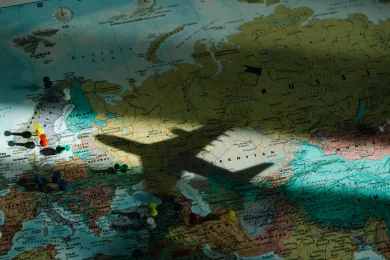
The major challenge for Romania is not to find its place on the map – geography has already generously drawn that. The challenge is to finally have the courage to assume the power that its own position offers it by right.
Latest News
22:56
22:53
22:47
22:45
22:38
See more news
NEWS ON THE SAME TOPICS