A brief additional note about the psychocultural profile of the country. The concentration of social power as an additional vulnerability in these times.




Always see our news on Google
After the publication of the psychocultural analysis of the country and the world today, I received a series of questions related to the specifics of Romania.
I mentioned in these previous analyses that institutions (from social-civil to political) are challenged in these times to change in all countries, under the pressure of anti-system movements, triggered by the horizontalization of democracy and the emancipation of people through social media and the relativization of rules and truth in this context.
As I have already shown, in Romania the pressure is greater, because the area of functional illiteracy amplifies conspiracies and aggression, further challenging institutions through anti-system attitudes.
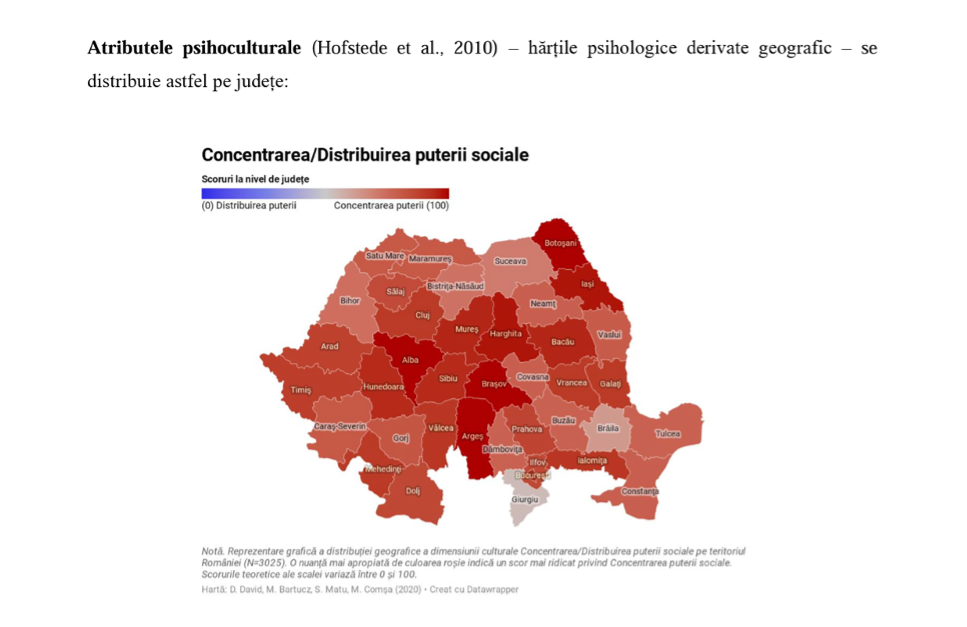
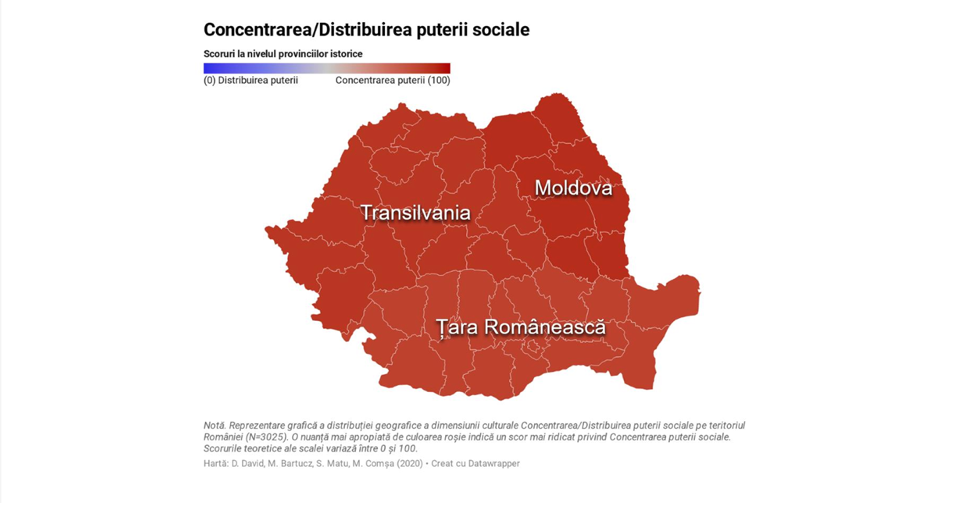
I now explicitly add that the format of Romanian institutions is hierarchical, concentrating power, which further makes them vulnerable! Indeed, as I have already discussed in the monograph dedicated to the psychology of Romanians (in 2015), Romania has one of the highest scores for the concentration of social power in the European Union (90, on a scale from 0 to 100) according to the model of Dutch psychologist Hofstede:
In societies with a concentration of social power, the psychosocial distance between leaders and those who are led is large, with the latter not being encouraged to take initiatives and participate in decisions. In societies with more distributed social power, power is shared among various institutions, and the participation of those led in decisions is better represented.
Therefore, the fact that Romanian democratic institutions have not consolidated sufficiently after the Revolution of 1989 and that their structure strongly presents the hierarchical element of social power concentration makes them highly vulnerable in these times! This is beyond the general international causes (the anti-system movement) or the specific ones (functional illiteracy-conspiracies-aggression that amplify the anti-system movement) already discussed.
To remain in the paradigm of a modern society based on knowledge, democratic and competitive, our institutions need to reinvent themselves, by increasing competencies and horizontalization processes, especially along the lines of co-decision-making between leaders and those they represent.
I remind in this context, for informational and additional purposes, a psychocultural evaluation made together with several colleagues, which shows the distribution of social power in the country, at various levels (David, Bartucz, Matuș and Comșa, 2020).
Latest News
15:27
15:25
15:25
15:24
15:12
See more news
NEWS ON THE SAME TOPICS