A critique of political communication


Always see our news on Google
At the beginning, public personalities and institutions were tested with personal interest. In surveys, I refer to... Surveys began with those questions regarding trust, either in politicians and other public figures, or in institutions. Subsequently, some patterns related to trust in opposition leaders, respectively those in power, were observed, related to the erosion of trust during the term of an officeholder (for example, a President, from the moment they received their mandate to the moment they completed it) etc.
Then that hierarchy was established which places political institutions at the bottom (parties and Parliament being the best examples), executive, social, and public order institutions (but also European and international ones) in the middle, and the Army, the Church, and possibly the Firefighters at the highest positions. Over time, usually over long periods, the general level of trust in institutions has continuously decreased.
Eurobarometers attest that at the level of the public in EU member states, trust in European institutions has structurally decreased between 2007 and 2015. More jokingly, more seriously, it seems that we have come, as they say, to the end of the fair... I have written here and in other places about all this, most often correlated with figures from INSCOP surveys. And it was not necessarily a great scientific discovery, sociologists and political scientists collecting data and commenting, often in contradictory ways, what could be called the erosion of trust in the institutions of advanced democracies, respectively apathy as a behavior associated with the current political culture of a large part of the public that does not have anti-system tendencies. In addition, trust in leaders does not show great stars that would ignite the public's imagination on the horizon – and certainly not in the area of mainstream party cadres.
However, these phenomena that have been discussed here since we came out of communism, then since we changed the post-December left government with the first right government (1996), then since we joined NATO and the European Union, then since we found ourselves with the pandemic, with the war, with who knows how many economic crises etc., all these phenomena, I said, had to reach a maturity. For us, it has been commented for decades as if it were a static everyday reality, not an evolving one.
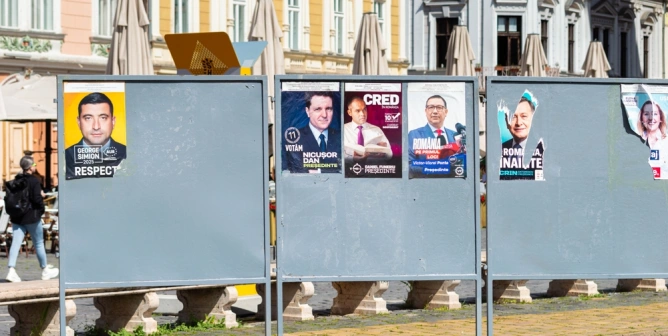
For several years now, it is a perpetual wonder that the European public's appetite for anti-system political solutions (with the nuances from each country, of course) does not erode. Or if a party or a leader of this type erodes, another one immediately appears in their place. This happens because the main value in the current European political system, viewed from the public's perspective, is dissatisfaction. A structural dissatisfaction, coupled with long-term distrust, which is underpinned by the perception that the system does not work and that it is also exploited for the benefit of those in power. As I have said, we do not live in such a bad world, at least in the EU space, compared to other closer or more distant periods in history. But this is not about a rational evaluation of what has happened in the last 30 years, for example, nor about how the public weighs the political solutions promised by anti-system parties, nor about a rigorous analysis of what was before 1989, but about the gap between expectations and perceived reality. For the dissatisfied person, only critical discourse makes sense. This statement contains the entire political history of Europe in the last 5-7 years.
Unfortunately, the European political establishment, for many years, treated this dissatisfaction as transient. You may not know, but the term anti-system has a long history. It did not appear with the Le Pen family, nor with Nigel Farage, nor with Beppe Grillo. Moreover, recently, it has had quite bizarre uses: in many political analyses, Viktor Orban has been appearing for years as an anti-system leader. So you can be the system in your country, but you can be anti-system in relation to the European Union, let’s say.
The anti-system is also a discourse, after all, now served in Europe as an extremely complicated ideological cocktail, combined with populism, anti-elitism, new-style euroscepticism, but also with some conspiratorialism, authoritarianism, and possibly dissolved radicalism.
The question is whether there are discourses and themes that can still save mainstream politics. With trust in institutions and with the breeding ground of leaders of traditional parties, we have pretty much clarified.
Latest News
18:14
18:03
17:57
17:49
17:39
See more news
NEWS ON THE SAME TOPICS