Dubai, Dubai…


Always see our news on Google
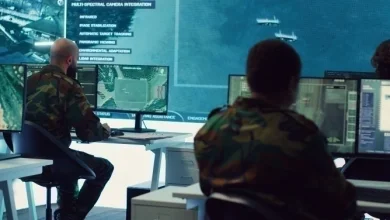
I had barely finished the discussions prompted by the 4th anniversary of the Russian invasion of Ukraine when the planet caught fire again, in other places. First, Pakistan carried out airstrikes in Afghanistan, something hard to understand for those who are not informed about this sensitive geopolitical neighborhood. However, it didn't take long to hit the front page of newspapers, as the weekend program was dominated by the preemptive strike – as it was said in the good old days of the George W. Bush administration – against Iran. Since then, we have been watching the exchange of missiles like a tennis match, and the comments of analysts, often the same ones, from TV studios do not help us understand much. Ultimately, the discussion points to a broader issue of journalism in our region. I am not making a case against intentions, but we need to understand the following: at one point, with the help of my students, I conducted a micro-research based on content analysis of several samples from news television programs. Specifically, I found, without claiming generalization for now (but perhaps the study deserves to be extended), that the overwhelming majority of productions broadcasted by news televisions do not consist of news, but rather of opinions. You know, it's like that Russian joke from before 1989, referring to two famous newspapers from the era of Soviet propaganda, there is neither Izvestia (Information) in Pravda (Truth), nor Pravda (Truth) in Izvestia (Information). Because, it’s not like that, where verified information ends and hidden sources begin, but also the instant comments of analysts, it makes room, with all their good intentions, for the sinister head of fake news, a phenomenon that has been discussed until it has eroded but, unfortunately, has been less scientifically studied in our region.
Do not misunderstand me, I have nothing against talk shows. I have participated in many myself. Society relies on communication, it is normal to discuss what scares us and what delights us, it is normal to look towards people who have a certain expertise in the field of an issue that concerns us at a given moment. Only it is hard to say who validates these people. The specialized literature on the sociology of knowledge and public sociology talks about the disappearance of experts, in the context where anyone behaves like a little scientist, based on information and interactions on the internet and social networks. It is not surprising, given that you wait three days to find a doctor to give you a paracetamol, it seems you have to manage on your own. Only that the disappearance of experts is the phenomenon, but rather the appearance of an expert on every street corner.
A simple scan of the discussions on TV regarding the crisis in Iran takes us through a wide spectrum of comments, from technical and interesting descriptions regarding capabilities (there is already inflation in the use of this term) of the parties in conflict, recalling historical episodes, behavioral patterns of the involved states, to long, essentialist, and stupid discussions of false psychology of peoples, or conversations about Sunni and Shia at the level of Wikipedia or lower, or worse, to apocalyptic geopolitical fantasies without any contribution to clarifying the situation for viewers. We won't even talk about forecasts: if we evaluate what has been predicted in TV shows on international relations in recent years, we would be pulling our hair out. But no one conducts this audit. And it is also hard to make such forecasts, especially when we discuss interactions with authoritarian or harsher regimes, in which there is a specific unpredictability. In the case of Iran, for example, no one thought that the regime in Tehran would target so many and such random ones from Arab countries not directly involved in the conflict. Of course, trying to force their leaders to put pressure on the US and Israel to cease operations, the Iranians are trying to impress and convey that otherwise, Dubai, Dubai, a route to Heaven will become Dubai, Dubai, you reach Heaven. Blocked oil, blocked tourism, scared people, pre-existing disruptions of international flights, reverberations, as we see, even in European states and not only, which have woken up to find they have a multitude of citizens to recover from the area.
What can we do? News is verified journalistic products, not rumors, not gossip, not things found on the internet. Opinion is opinion and news is news. It is a matter of common sense to understand that the talk show is primarily a show of ideas and less a news program. It is a program of opinions, some with agendas, some absolutely individual, some of higher quality, some downright absurd. It is normal for them to exist, by virtue of freedom of expression. But it is normal for them to be correctly labeled. After all, as they say in sponsor advertisements, "this program contains placement of... ideas". The war against fake news has been lost because the war against the differentiation between opinion and information has been lost. And let’s not wander through that area these days... Your boss tells you to wait three more weeks.
Latest News
23:06
22:49
22:37
22:22
22:03
See more news
NEWS ON THE SAME TOPICS