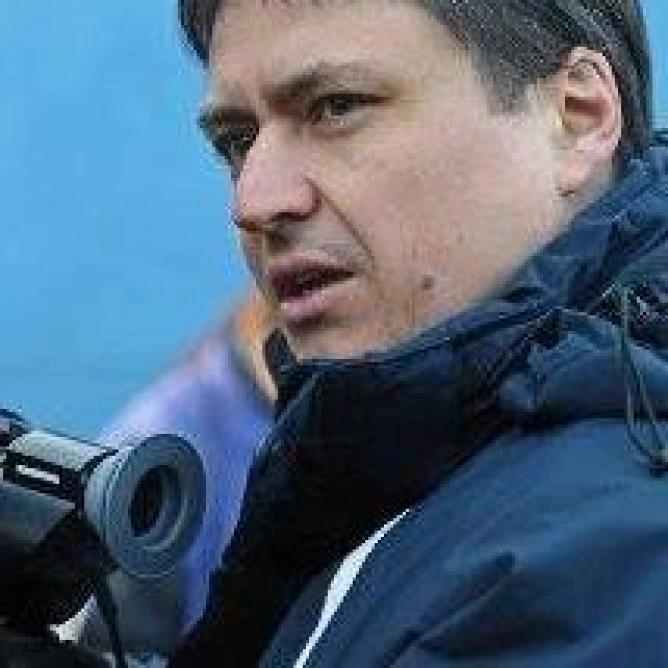
Sever Voinescu, Dilemma: Did we really start, Mr. Bolojan?



Always see our news on Google
To see how we are, a real example: a minister of the Bolojan Government, in the first days after taking office, taking over the portfolio of his predecessor, saw that he had signed a commitment to carry out a certain extremely complicated and large project within an unrealistically short timeframe. The commitment was part of the already famous PNRR – that is, if you do it, you get money, if not, the corresponding share of money is cut from the total amount allocated to Romania. The execution deadline was very close. Interested, the new minister found out that absolutely nothing had been done in the assumed direction. Bureaucracy hadn't even moved the first papers, let alone that there was something on the ground. As I repeat, anyway the assumed deadline was unrealistic, the new minister picked up the phone and called his predecessor to understand: "How did you think when you promised to do this so quickly? What was the idea based on which you signed this commitment?" The answer was astonishing: "I knew the deadline was unrealistic, but the apparatus in the ministry told me to sign even though it is impossible to achieve what we assumed because, anyway, the Commission will extend the deadline. It doesn't matter if we don't meet the assumed objective, we will go to Brussels, we will tell them that for one reason or another we need to renegotiate the deadline, and they will accept in the end, because the PNRR has to be done." "Well, but nothing has moved in the ministry." "Well, of course," says the old minister, "if we were all sure that they would extend the deadline, what was the point of doing anything?" Do you understand with what mentality the central bureaucracy works on European projects and why we are lagging behind with them? But don't take this true story just as a proof regarding European projects. Think that the same mentality exists in all directions.
It seems that the governments of Romania can only live in two budgetary states: either they spend foolishly, or they cut expenses foolishly. Aware that it is fleeting like an olfactory effect, the Romanian governor lives frantically in the present of his governing days as if it were some kind of astral moment of the planet. Everything that was before him is a disaster, everything that will come after him will be an error, he is a happiness and a blessing, he is the unparalleled peak of the administration of the domain over which the party has placed him. An important feature of the Romanian governor is that he cannot manage money with an eye on tomorrow, being careful not to repeat yesterday's mistakes. For him, everything happens now, immediately. It is fair to say this too: the governor responds in this way to a starving people. We want more money in our pockets here, now, it doesn't matter where it comes from, it doesn't matter how, it doesn't matter what price we will pay or those after us will pay for this money. Here, now, as much as possible! We live a crazy carpe diem (we have money, we spend it until we no longer have it), then we go through brutal cuts, pauses, under an urgency that demands national sacrifice. Neither our governors nor we think about either spending or cutting. We spend without discernment and then cut without discernment. This unconscious carpe diem transfers into the way governors behave with the country's budget. It's as if the country's budget is our enemy: when it has it, we plunder it, when it doesn't have it, we punish it.
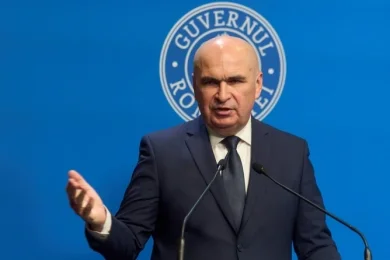
Recently, Romania entered what is called a technical recession, meaning we recorded two consecutive quarters of economic decline. Prime Minister Bolojan's reaction was: "We have begun the transition from a model based on deficit and consumption, apparently generating prosperity, but in fact destructive, to a model based on investments, productivity, exports, and budgetary discipline.
The temporary technical recession is part of the anticipated and inevitable cost of this transition, which will ultimately lead us to a solid economy, healthy growth, and real prosperity, based on what we produce, not through ever-increasing and more expensive loans." Mr. Bolojan is right: changing the economic model is absolutely necessary. The economic model we need to move towards is "supply-side economy" or, more precisely, an economy based on the theory of "supply-side economics." Simplistically, perhaps too simplistically, this is an economic arrangement in which the engine of growth is supply (that is, production), which leads to stimulating demand (consumption). According to all the books and especially after the entire practice of this kind of economy, because we have in recent history a rich case study of the application of this model, supply-side economy involves:
1. Tax cuts. First of all, income taxes, capital gains taxes, and profit taxes are reduced to encourage people to work more, invest, and develop. Honestly, I would lower labor taxes to half or even lower for anyone taking a second job.
2. Deregulation. Reducing the volume of rules and regulations, restricting bureaucracy leads, obviously, to freeing initiative, increasing the mobility of investments, and easily opening new production capacities.
3. Encouraging investments in equipment, new technologies, research, and human capital (education/training, health). For investments in technologies and people especially, every leu spent by a private entity in these directions should not only be tax-relieved but also somehow "protected" by the state: for example, through co-financing, guarantees, co-participations, etc.
4. Maintaining a relatively low level of interest rates. In any case, the authority must show a clear willingness to be more inclined to lower interest rates than to maintain or raise them, and the market must understand this "preference," which eases lending.
5. Privatization and contracting out: This involves increasing integrity and efficiency in public procurement, as well as professionalizing state companies to become interesting for private investors.
I do not see in the Government's policies any of these classic directions that lead to this economic model. Therefore, I ask myself: have we really started towards this economic model? I may be told that building the model is the second stage. In the first stage, the current economic model must be destroyed, and only then do we move on to the construction of the new model. I respectfully draw attention to the fact that the scenario of a film with two or more episodes cannot pass the first episode if it means the "murder" of the current model. Death as a condition of resurrection is a theological idea, not an economic one. In reality, replacing the old economic model with a new one must be done in one long episode: demolish and build with the same gesture, build as you demolish. For now, we cut, stop, suppress, and boast that we spend less. If the goal is to spend as little as possible, it means that the highest performance would be to spend nothing at all. The goal should be to earn as much as possible a profit that is as secure and constant as possible.
It is correct, in this context, to conclude with a comment. The criticisms against Mr. Bolojan coming from the pesedei or from the peneleii who were in previous governments (such as the eternal hopeful Burduja, who now suddenly has a problem with state spending) are disgusting. These people do not deserve a reply, but rather a hearty "Boo!"
https://www.dilema.ro/tilc-show/chiar-am-pornit-domnule-bolojan
Latest News
13:59
13:56
13:51
13:44
13:43
See more news
NEWS ON THE SAME TOPICS

.webp)