How much would the blockage in the Strait of Hormuz cost - a shock of 13% for the global economy




Always see our news on Google
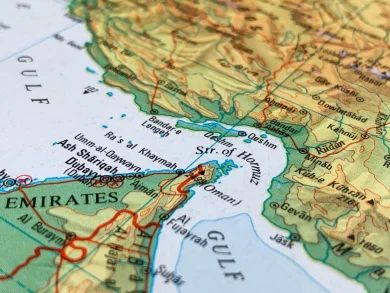
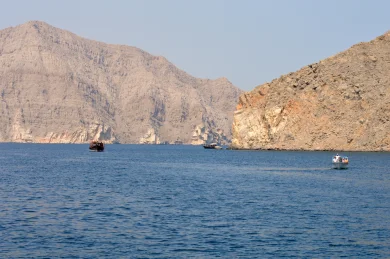
The Strait of Hormuz is not just a point on the map. It is the energy artery of the world. Through this narrow corridor between Iran and Oman, approximately 20 million barrels per day of oil (mb/d) and petroleum products normally pass — almost 20% of global consumption.
The Strait of Hormuz is the only maritime exit from the Persian Gulf to the Indian Ocean. Through it, approximately 20 mb/d of oil and petroleum products normally transit – about one-fifth of global consumption. In logistical terms, this means about 100 ships per day, over 3,000 per month. There is no direct maritime bypass. If Hormuz is completely closed, the global market instantly loses access to one-fifth of its vital energy flow. And by 2026, the scenario is no longer theoretical.
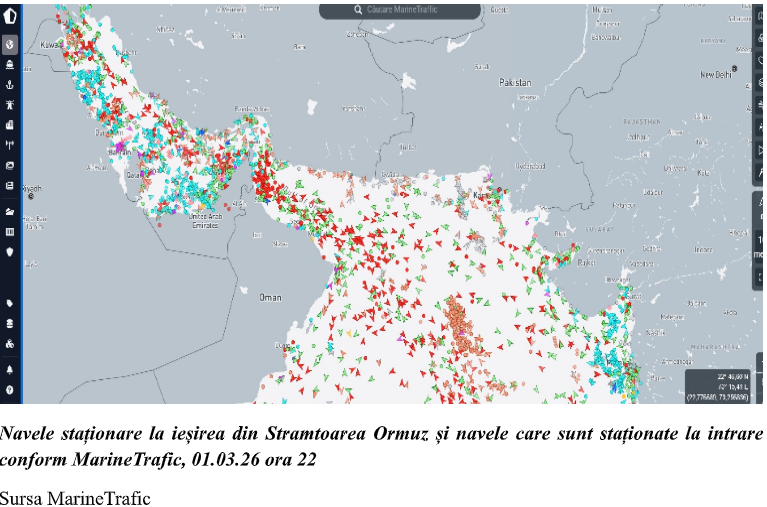
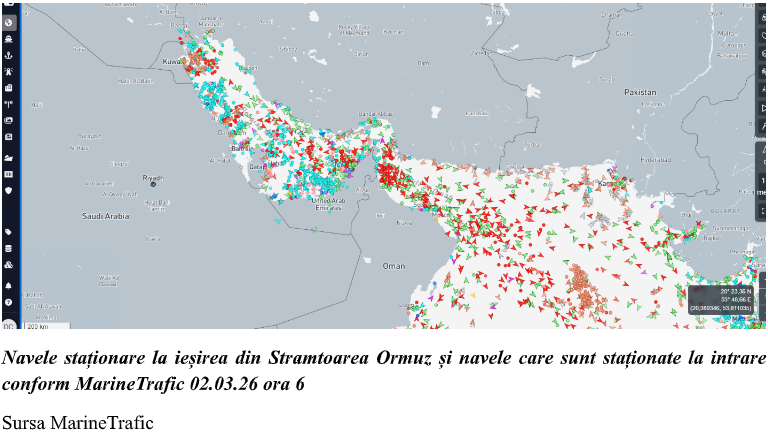
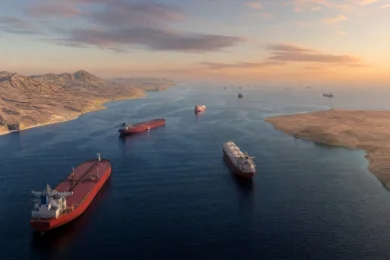
250 ships waiting at the entrance/exit of the Strait of Hormuz
According to MarineTraffic data, it is reported that:
• about 150 crude & LNG tankers are anchored in the Persian Gulf
• another approximately 100 cargo and oil ships are stationed near the coasts of the UAE and Oman
Companies are avoiding entry into the strait. Many of the ships already in the Gulf are not completing their transit. In logistical theory, this is the pre-blockage phase: the clogging of flow before formal stoppage.
In the event of a blockage of the Strait of Hormuz, pipelines are the only real bypass of the Strait
There is no direct maritime bypass for oil from the Gulf. If Hormuz is completely blocked, the only realistic "bypass" is through pipelines to ports located outside the Persian Gulf. East-West Pipeline (Petroline) – Saudi Arabia
• Connects eastern Saudi Arabia to the port of Yanbu (Red Sea)
• Capacity: 5 mb/d
• Allows the export of approximately half of Saudi production (10 mb/d)
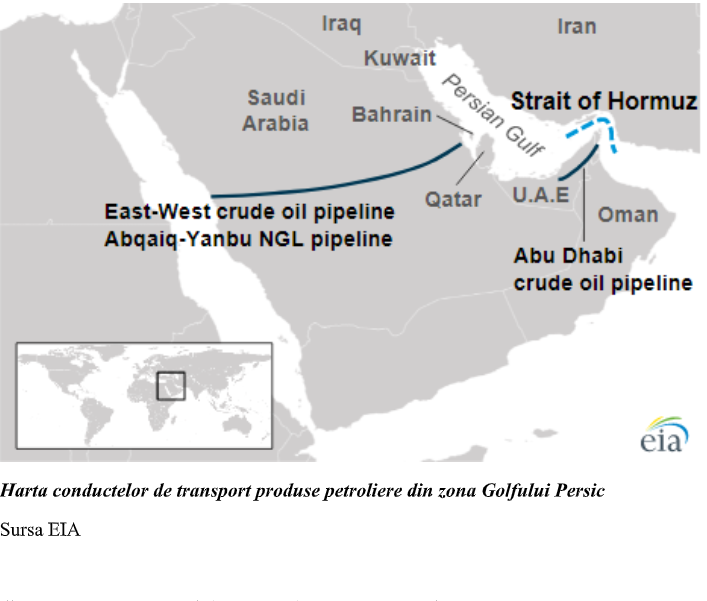 • Connects Abu Dhabi to the port of Fujairah (Gulf of Oman)
• Capacity: 1.5 mb/d
• Covers almost all UAE oil exports
Brutal mathematics of the shock of a potential blockage of the Strait of Hormuz Normal flow through Hormuz: 20 mb/d
Alternative capacity through pipelines: 6.5 mb/d
Gross deficit: 13.5 mb/d
This means approximately 13% of global production. For comparison, the oil shock of 1973 reduced global supply by about 7% and caused a price increase of 300%. It lasted 5 months. Here we are talking about double.
Countries directly affected by a potential blockage of the Strait of Hormuz
States almost completely dependent on transit through Hormuz:
• Kuwait: 2.5–2.7 mb/d
• Iraq (Basra): 3.5–4 mb/d
• Qatar (LNG): ~200 thousand tons/d
• Bahrain: 0.2 mb/d
These volumes have no functional alternative routes.
Can the global deficit of 13.5 mb/d be compensated in the event of a total blockage of the Strait of Hormuz?
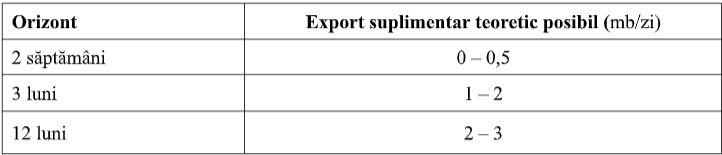
a) Short-term increase in production capacity in other parts of the world
There are countries like the USA, Canada, and Brazil that could theoretically increase their oil production capacity
b) Drawing on strategic stocks
OPEC+ has agreed to increase daily production by 200,000 barrels per day, but part of this increase could be blocked by the blockage of the Strait of Hormuz. The oil market has rigid short-term demand; it cannot quickly reduce global consumption by 13.5 mb/d. That is why prices may react violently.
To prevent the emergence of crisis situations, there are established strategic oil stocks worldwide. Strategic oil stocks are reserves of oil held by governments and, in some cases, by private companies, to be used only in major crisis situations (war, production disruptions, transport blockages, etc.). They are not normally used to cover daily demand.
The total strategic oil stocks held by countries (including the official stocks of OECD members) are estimated at approximately 1.5 billion barrels and could theoretically provide about 111 days of coverage for the global oil deficit in the event of a total blockage of the Strait of Hormuz (covering the deficit of 13.5 million barrels/day). In practice, not all of this volume can be released quickly, and in some cases, stocks are in the form of refined products, stocks are in different locations (caverns/terminals), bidding/allocations are needed before their release, but also the need to align available capacities on pipelines, ports, and refineries. This means that stocks mitigate a temporary shock, but do not completely eliminate it if the deficit is large and prolonged.
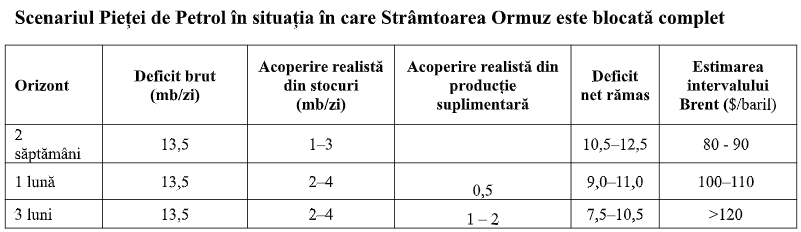
A complete blockage of the Strait of Hormuz is not just a regional crisis. It is a global systemic shock of 13% in supply.
• Pipelines can only save one-third of the flow.
• Alternative production has inertia.
• Strategic stocks can cushion, but cannot replace.
• Oil prices would enter a crisis zone.
In the economy, supply shocks in energy have a multiplier effect:
• inflation
• increased logistics costs
• pressure on interest rates
• economic slowdown
The Strait of Hormuz is not just a strategic point. It is a barometer of the stability of the global economy. And the numbers clearly show that a total blockage would not only be expensive. It would be destabilizing.
Latest News
22:59
22:55
22:44
22:40
22:40
See more news
NEWS ON THE SAME TOPICS