About providential leaders as subcontractors


Always see our news on Google
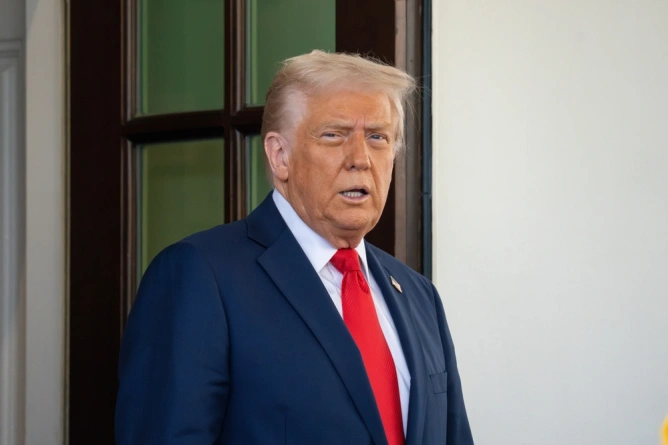
The strange war in Iran has become a daily reality. I say strange, because it seems to consist of a missile exchange between parties, somehow longer than anything we have seen so far. Over this reality, we have President Trump's comments, which do not help to make the situation more intelligible. We understand war communication, strategic communication, and psychological warfare, but it seems that a little predictability in international behavior, at least as it used to be, wouldn't be bad.
According to the latest INSCOP survey (April 1-7), when asked how much longer they believe the war in Iran will last, 28% of Romanians think it will last more than a year. About 50% believe it will last less than a year (responses distributed across several options: less than a month, 2-3 months, 3-6 months, between half a year and at most a year). About a quarter cannot assess the duration of the conflict, a situation understandable when, if you follow the evolution of the case, from one day to the next, an agreement may come, or the end of the world may come...
Voters of AUR and PSD believe to a greater extent than those of PNL or USR that we are talking about a conflict longer than we would expect. This observation is interesting because we are talking exactly about the audience that a year and something ago was convinced that the war pedal was being pressed from the other side of the American political spectrum and associated Donald Trump with the political option that would put a stop to the spiral of war and armament, which worries, after many years, especially our corner of the world. 56% even believe that the economic effects of the war will persist for a long time, even after its conclusion. A small theory of the providential leader is preparing to enter the crisis. Politics, especially foreign policy, is out of time, as the chronicler would say. Things do not turn out as you want just because you say so. Being a global leader is not an easy task and neither is it a perpetual chariot of victory.
That's why I say that even from the public's perspective, things are not that simple anymore. The ugly head of cognitive dissonance is emerging. There has been much talk about the need for father figure for our public... And in multiple electoral contexts, we are no longer strictly talking about the current political configuration. Some have associated it with an authoritarian temptation of audiences unaccustomed to democracy. But what do you do when there is more and more data that overlaps this option over very young generations, who have no image of life outside a global and pluralistic political system? If we start from the assumption that, beyond the nostalgic for communism (we have talked about them), others appreciate the freedoms of current European political systems (and the narrative of freedom appears even among those who reject mainstream politics), it results that the perpetual expectation of a savior is more likely a reflex of consumer society than a remnant of totalitarianism. That moment when you imagine that you can subcontract your problems to an authoritarian leader, but whom you see as competent and benevolent – and in which you also have the feeling that your vote has become useful. But let’s not forget that, these days, the Hungarian electorate has just terminated the contract of such a long-term service provider of governance.
Latest News
22:25
22:21
22:20
22:03
21:44
See more news
NEWS ON THE SAME TOPICS

















.webp)