Editorials and opinions
EXCLUSIVE | A decision in the national interest
Remus Ștefureac, director INSCOP


.webp)
Opinions
Foto: inscop.ro

Always see our news on Google
In an international context dominated by strategic uncertainty, realignments of alliances and regional tensions that can escalate rapidly, every diplomatic gesture of a state at the intersection of major spheres of influence gains much greater importance than in periods of stability. Romania, through its geographical position and its status as a member state in Western political-military structures, is in a permanent balance between prudence, solidarity, and self-interest. In such moments, the decisions of leaders can no longer be judged exclusively through the lens of internal political sympathies, but must be analyzed in relation to their effects on security, the economy, and external credibility, specific to the particular context in which we live.
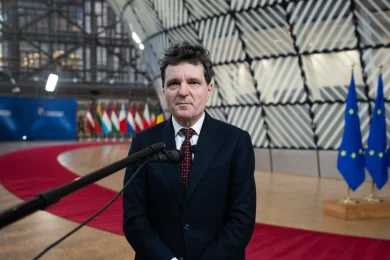
The particular geography of Romania in relation to the geopolitical conditions marked by proximity to the theater of war in Ukraine, the fragmented internal political climate, the hyper-polarized public opinion due to unprecedented informational aggressions, and the critical need to guarantee the country's security at any cost make President Nicușor Dan's decision to participate, as an observer, in the Peace Council initiated by the US president a wise, pragmatic choice in the national interest of our country.
Participation as an observer does not imply the automatic assumption of definitive commitments, but offers, in return, direct access to information, to the dynamics of negotiations, and to the ability to understand the directions in which the decisions of major global actors may head. Moreover, it is an open door to the strategic partner in a very complicated period for us. From this perspective, being present at the dialogue table represents not only a prudent diplomatic option but also a way to protect strategic interests through anticipation and adaptation. Absence, on the other hand, would equate to a voluntary reduction of visibility and influence, leaving space for other states to define the parameters of discussions, and for older or newer competitors or adversaries, declared or undeclared, to discredit us in Washington.
The mix of ideologies and political passions in this matter, although inevitable, must be ignored.
In moments when national security and regional stability are at stake, public discourse needs lucidity and a minimum convergence of vision, even among political actors in competition. Ideological divergences are natural in a democracy, but they become counterproductive when they hinder the cold evaluation of strategic decisions. A mature approach involves separating state interest from immediate electoral capital and understanding that certain diplomatic options do not belong to a political camp, an ideological tribe, but to the security architecture of the entire nation.
Latest News
19:25
Italian authorities dismantled a network that exploited 84 foreign workers, including Romanians, confiscating nearly 800,000 euros
19:19
A celebration of the Romanian community at the center of a political dispute in Italy / Criticism over the absence of the opposition and accusations of the event’s political use
19:10
EP rapporteur calls for €47.4 billion for Erasmus+ in 2028–2034 and grants adjusted to the cost of living
19:05
Daniel Buda calls for urgent funding for ports, commercial vessels and counter-drone defense in Romania and Bulgaria
18:49
An American Democratic candidate was detained by Israelis in the West Bank along with approximately 80 other activists while they were picking olives alongside Palestinian farmers
See more news
NEWS ON THE SAME TOPICS
Exclusive
EXCLUSIVE Romania, Trump and the new Atlantic equation: how much is the bet on a single man worth

International
SPECIAL Informat.ro / From the Arctic to the Black Sea: why the summit in Rovaniemi matters for Romania

Personalized news feed, AI-powered search, and notifications in a more interactive experience.