The Commission wants a new European cultural identity



Always see our news on Google
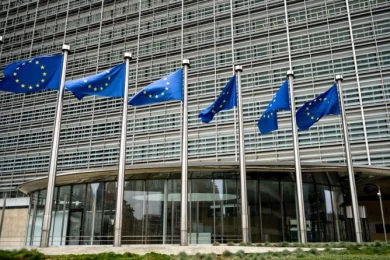
Brussels, November 12, 2025 - The European Commission has launched the "Culture Compass for Europe", a new strategic framework that transforms culture from a sectoral domain into a tool for political integration. Through this initiative, Brussels aims to build a common European identity based on cultural values, creativity, and artistic freedom, at a time when Europe is facing political fragmentation and distrust in its institutions.
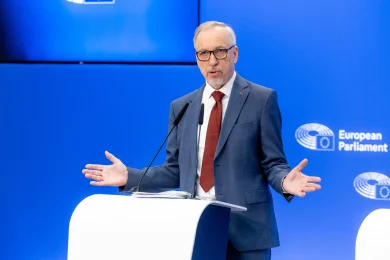
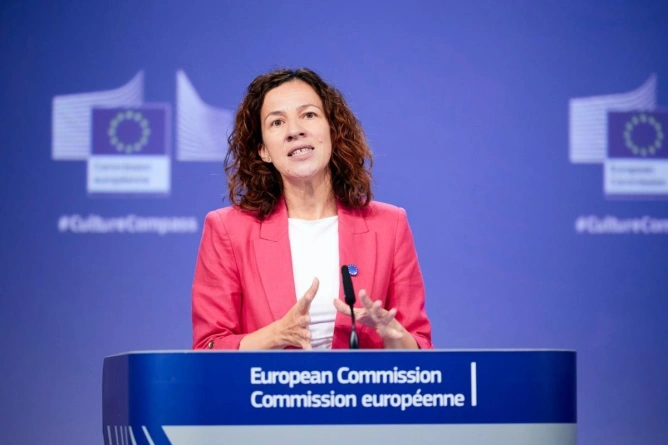
The launch event, led by Executive Vice-President Roxana Mănzatu and Commissioner for Youth and Culture, Glenn Micallef, had a clear stake: reaffirming culture as the common language of Europe. "Culture is not a secondary story. It is the story of Europe. It defines who we are. It deserves our attention and strong policies," Mănzatu stated. For Micallef, the message was social and direct: "Applause does not pay the rent. Nearly eight million Europeans earn their living through art and creativity. But too many still face insecurity. That needs to change."
The Culture Compass proposes twenty actions for the next decade, aimed at creating the political infrastructure of a "cultural Europe". Among these: a "EU Artists' Charter" for fair working conditions, a strategy for the use of artificial intelligence in culture, an annual report on the state of artistic freedom, and a proposal to double the cultural budget in the future Multiannual Financial Framework 2028–2035.
The Commission sees culture as a strategic resource for European unity. Under the motto "Europe for Culture, Culture for Europe", the new framework places art, heritage, and creative industries alongside the single market and the green transition in the political architecture of the Union. According to the latest Eurobarometer, 87% of Europeans believe that cultural heritage contributes to the sense of European belonging, a solid social basis for a new identity agenda.
Against the backdrop of rising populism and global competition for attention, Brussels seeks to use culture as a tool for political cohesion. The Compass is not limited to funding but aims to provide a common narrative: Europe as a space of artistic freedom and democratic creativity. "Culture is the first line of defense for democracy," Micallef said, reiterating a central argument of the Commission that cultural pluralism is the antidote to polarization and disinformation.
But this vision also has a price. Some observers point out that the Culture Compass could turn culture into a tool of identity politics, risking the homogenization of European diversity. In a Union that promotes "unity in diversity", defining a "common cultural identity" remains a delicate exercise: how much cultural integration can exist without losing national specificity?
The most concrete component of the Compass is the "EU Artists' Charter", intended to establish common principles regarding working conditions, remuneration, and social protection. The initiative responds to a reality, the precariousness of cultural workers, but without a binding legal basis, it risks remaining a moral commitment. Social regulations largely fall under the competence of member states, and harmonizing them at the European level will be challenging.
Another major theme is the relationship between art and technology. The Commission will develop a strategy for the use of artificial intelligence in culture, aiming to harness digital innovation without undermining copyright. "Technology must serve art, not replace it," Micallef said, warning of the risk that AI could become a substitute for human creativity. The subject is sensitive: according to a recent survey, 97% of respondents cannot distinguish music produced by humans from that generated by algorithms. This strategy also raises legal dilemmas. The AI Act and the Copyright Directive impose strict rules regarding the use of protected content in training artificial intelligence models. The new cultural framework will need to balance the rights of creators with technological innovation, a gray area where economy, ethics, and politics intersect.
The financial ambiance of the Compass is significant: the Commission proposes to double funding for culture in the next European budget. The argument is economic; every euro invested in culture brings double benefits through jobs, tourism, and innovation. However, in the context of budgetary pressures generated by defense, industrial competitiveness, and the green transition, this doubling seems difficult to achieve. Member states with strict economic priorities may contest the expansion of the cultural budget.
Politically, the Compass foresees a Joint Declaration on Culture, signed by the European Parliament, Council, and Commission, an attempt to fix culture as a pillar of European integration, alongside social, ecological, and digital dimensions. If adopted, this would represent the first formal recognition of culture as a strategic domain of political cohesion.
Through the Culture Compass, the Commission seeks to do more than just fund events or museums. It aims to create a framework for European identity that responds to a fundamental question: what does it mean today to be European? Behind the technical language and budget plans, the initiative expresses a deeper concern, that of giving the Union a common story in an era of global cultural competition.
"When culture wins in Europe, Europe wins," Micallef said at the conclusion of the event. It remains to be seen whether this victory will translate into concrete programs or remain a political vision exercise. The Culture Compass is not just a policy for artists, but an attempt to rebuild the sense of European belonging through culture.
https://2eu.brussels/articol/analize/comisia-vrea-o-noua-identitate-culturala-europeana
Latest News
22:57
22:53
22:42
22:30
22:28
See more news
NEWS ON THE SAME TOPICS