Ukraine enters the EU budget architecture: the war influences the future Multiannual Financial Framework



Always see our news on Google
EU leaders link support for Ukraine to the future multiannual budget, indicating that security, defense, and resilience will weigh more heavily in the Union's financial allocations after 2027.
Brussels, December 19, 2025 – The European Council confirmed that financial and military support for Ukraine will become a structural element of the future Multiannual Financial Framework (MFF) of the European Union, signaling that the war triggered by Russia directly influences the EU's budgetary priorities for the post-2027 period.
In short
The European Council discussed the future MFF in the context of support for Ukraine.
The war is becoming a structural factor in the EU's budget planning.
Increased priorities for security and defense are being considered.
Support for Ukraine is correlated with long-term budgetary guarantees.
An agreement on the new MFF is aimed for by the end of 2026.
In the conclusions adopted at the meeting on December 18-19, 2025, EU leaders analyzed the future multiannual budget in parallel with decisions regarding funding for Ukraine for the years 2026-2027. This approach marks a shift in perspective, with support for Ukraine being treated not as an exceptional measure, but as a lasting component of EU policies.
The Council emphasized that the security needs generated by the war must be reflected in the structure of the post-2027 budget, alongside competitiveness and cohesion.
Integrating support for Ukraine into budget discussions raises questions about the redistribution of resources between traditional EU policies, such as cohesion and the common agricultural policy, and new priorities related to security, defense, and external support.
Although the conclusions do not go into details regarding the amounts or targeted programs, the political signal is clear: security is becoming a top budgetary priority.
The European Council took note of the "negotiating box" prepared by the Danish Presidency and called for continued work towards an agreement on the MFF before the end of 2026. Such a timeline would allow for the adoption of the necessary legislative acts in 2027 and avoid delays in accessing funds starting from 2028.
This acceleration is justified by the geopolitical context and the need for increased budgetary predictability for member states and beneficiaries.
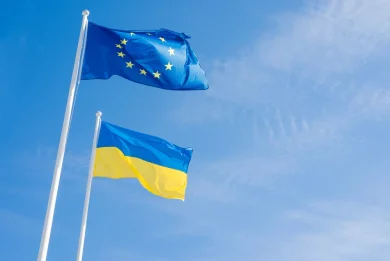
The budgetary discussion is closely linked to the EU's support for Ukraine's European path. EU leaders reiterated that the gradual integration of Ukraine into European policies involves significant budgetary costs, which must be anticipated and planned in advance.
Thus, Ukraine is increasingly treated as a future structural beneficiary of the EU budget, even before formal accession.
The current Multiannual Financial Framework covers the period 2021-2027. Negotiations for the next budget, which will start in 2028, are taking place in a context marked by the war in Ukraine, pressures on European security, and the need to strengthen the EU's strategic autonomy.
The European Commission will continue to prepare budget proposals, and the Council and the European Parliament will intensify negotiations in 2026. Support for Ukraine is expected to remain a central point of budgetary debates in the next two years.
Latest News
22:34
22:28
21:56
21:29
21:25
See more news
NEWS ON THE SAME TOPICS