Mercosur, explained calmly, without passion and without panic



Always see our news on Google
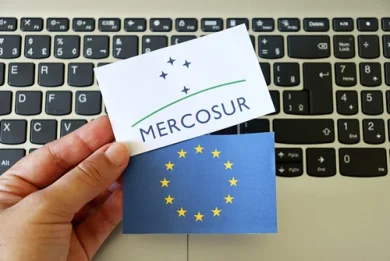
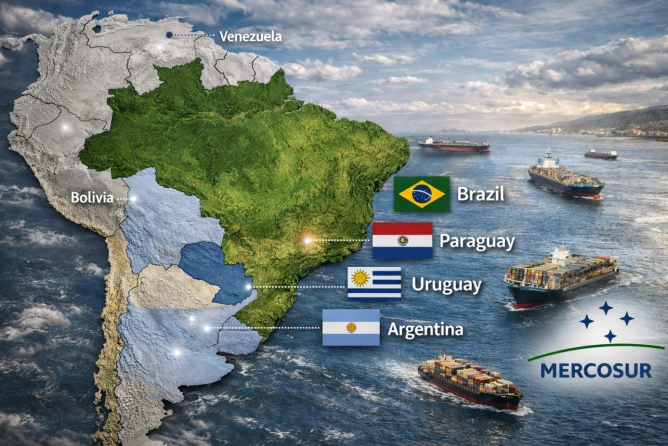
The EU–Mercosur agreement has been discussed for nearly 25 years, but it was politically unblocked in a context of accelerated geopolitical pressure. Beyond the emotions surrounding the subject, the real stake lies in how the European Union makes trade decisions in a fragmented world, where trade has become an instrument of security, not just of economic growth.
The feeling of "moving quickly forward" in the evolution of the Mercosur file comes from the almost apocalyptic way it is discussed, in political terms, as an economic agreement negotiated and renegotiated at a technical level for nearly 25 years. The nuances are essential, because the reality is that European leaders have not "closed" an old and dusty file, but have politically unblocked it. This is a recognition of a profound change in the way politics is conducted and in interpreting economic relations, not just in terms of mutual benefits, but in relation to the balance between welfare, risk, and security.
In short
The EU–Mercosur agreement has been negotiated for almost 25 years and was politically unblocked in 2025, without full consensus in the Council.
The decision reflects a change in the global context, where trade is increasingly treated as an instrument of security.
The EU gains expanded tariff access for industrial exports and strengthens its investment position in Latin America.
The political and social costs are concentrated within the EU, especially in the agricultural sector.
A complex procedural stage follows, with signing, possible provisional application, voting in the European Parliament, and national ratifications.
After a quarter of a century of intermittent negotiations, relaunches without finality, and recurring blockages, the agreement has advanced because global events, from the pandemic to the war in Ukraine and even to the accelerated fragmentation of the global economy, have demonstrated that the lack of action can become riskier than compromise. Mercosur is not a classic victory of European trade policy. It is, rather, a decision made in a global system where trade no longer functions as a neutral space.
After hybrid attacks, drones, and technological warfare, Europe enters a new phase of confrontation: an economic one, visibly direct on markets and shelves. Mercosur does not mark the end of these tensions, but the beginning of a period in which trade decisions will be judged not only in terms of economic efficiency but also in terms of the ability to manage systemic risks.
The decision was not the result of broad consensus but of a cold political calculation within the Council of Ministers of the European Union. Mercosur was not "voted" with enthusiasm. The balance of power among member states has changed enough to no longer allow blockage, without the opposition disappearing. This is an essential detail, as it reflects the new way in which the European Union makes trade decisions in a fragmented world.
Germany was the main engine of the unblocking. Berlin's position has been consistent: Mercosur is an industrial and geopolitical agreement, not an agricultural one. For the German economy, tariff access to large markets for cars, machinery, and chemical products has been considered a priority, especially in a context of intensified global competition and increased pressures on supply chains. Spain and Portugal supported the agreement for structural reasons, related to deep economic ties with Latin America and the extensive presence of Iberian companies in the region. The Nordic economies and the Benelux states were also favorable, citing the general benefits of trade openness and the safeguard mechanisms included in the agreement.
In opposition, France remained the main pole of resistance. Paris's arguments were not technical but deeply political: protecting agriculture, pressure from farmers, and fears related to competition from South American products. Austria adopted a similar position, including through explicit parliamentary resolutions against the agreement, while Ireland expressed strong reservations, motivated almost exclusively by the impact on the beef sector.
Between these two camps were the states that ultimately decided the fate of the file. Italy, Poland, Romania, and other economies from Central and Eastern Europe were not promoters of the agreement, but neither did they choose to block it. For these states, Mercosur was an ambivalent file: sensitive agriculture, but also interest in investments, industry, and access to external markets. Their decision not to join a blocking minority was the key moment of political unblocking.
The context explains this change. In recent years, and with particular intensity in 2024–2025, global economic decisions have visibly accelerated. Measures that previously required years of negotiation are now adopted in a matter of weeks. Trade has moved out of the technical area and into that of security. Governments talk less about efficiency and more about control. Openness is reinterpreted as exposure, and growth is subordinated to resilience. Industrial subsidies, filters for investments, export restrictions, and standards considered strategic are no longer exceptions but current tools of public policy.
The European Union has experienced this logic since March 2020, in the midst of the pandemic, when it introduced a prior authorization mechanism for the export of medical equipment. It was not about tariffs or sanctions, but about an administrative filter explicitly justified by security considerations. Trade was selectively suspended to protect internal capacity. The precedent was temporary but significant: the market could be subordinated to political decision when the stakes became existential.
Official data from the EU Council clearly show the economic stakes. Trade in goods between the European Union and Mercosur exceeds 110 billion euros annually, relatively balanced between exports and imports. The EU is Mercosur's second-largest trading partner, after China, and Mercosur ranks among the top ten trading partners of the EU. The structure of exchanges clearly benefits Europe in the sectors where it is competitive: machinery, industrial equipment, chemical and pharmaceutical products. In services, the EU records a significant surplus, exporting more than twice what it imports. The Union is also the main foreign investor in Mercosur, with a stock of direct investments of nearly 400 billion euros. From this perspective, the agreement strengthens the EU's external economic position and reduces the political risk for European investments in a strategic region.
The legal content of the agreement reflects these structural advantages. Mercosur commits to eliminate tariffs for over 90% of EU exports, including extremely high tariffs for cars, which in some cases reach 35%, gradually eliminated over transition periods of up to 15 years. For the European industry, this means predictable and long-term access to a large market, without sudden shocks. At the same time, the EU eliminates tariffs for about 92% of Mercosur exports, but does so with shorter transition periods and protection mechanisms for sensitive sectors.
However, the first major tension arises here, which explains the political fracture in the Council. The document confirms substantial agricultural concessions, through tariff quotas and preferential quotas. Even though they are accompanied by safeguard clauses and the possibility of temporarily suspending preferential treatment in case of serious disruptions, these concessions directly expose the European agricultural sector to additional competition. The risk is not legal but political and social, and it is almost exclusively internalized in the EU. The benefits of the agreement are widely distributed among industry, exporters, and investors, while the costs are geographically and sectorally concentrated.
The European Union tries to remain a normative actor, relying on rules, standards, and institutional mechanisms. The Council document confirms this approach through the complex architecture of committees and subcommittees, consultation mechanisms, temporary suspension rights, and chapters dedicated to sustainable development. These instruments represent a clear advantage for the EU, providing control capacity and legal reaction. At the same time, they involve high administrative costs and permanently politicize the agreement, transforming it into a continuous management process, not into a stable and self-sufficient arrangement.
The agreement does not mark the EU's return to a globalization it controls. It marks the acceptance of the fact that it no longer controls it. It strengthens Europe's industrial and investment position but exposes the agricultural sector and generates persistent internal political tensions. It offers solid legal levers but requires constant political management.
What will happen next with this file
After the political unblocking in the Council, the EU–Mercosur file enters a complex but predictable procedural phase. The decision made by the member states does not mean that the agreement already produces economic effects, but that the European Union has decided to move forward, assuming internal political risks. The process moves out of the negotiation phase and into the legal and political validation phase.
The first step is the formal signing of the agreement in two formats. On one hand, the comprehensive partnership agreement, which is a mixed agreement. On the other hand, a separate interim trade agreement, created precisely to allow faster advancement of the trade component. The signing confirms the existence of the agreement as a legal act, but does not automatically make it applicable.
Immediately after signing, the agreement can be provisionally applied. The text allows the European Union and Mercosur to temporarily apply, fully or partially, the trade provisions, before all ratification procedures are completed. This option exists to avoid prolonged blockages and is frequently used in the EU's trade agreements.
In parallel, the file reaches the European Parliament, which must also give its consent. This is the first point of real political risk. The Parliament cannot modify the text, but it can vote "yes" or "no," or it can delay the decision. Intense debates are expected, especially on agriculture, the environment, and sustainable development clauses, especially as the increased public attention in recent days amplifies tensions. A negative vote or a major delay could block the full application of the agreement, even if it is already provisionally applied.
If the European Parliament gives its consent, the next step is the "conclusion" of the agreement in the Council, which finalizes the EU law part for the components under the exclusive competence of the Union. From this moment, the EU is legally committed at the European level. For the interim trade agreement, this step is sufficient for full application.
The comprehensive partnership agreement, being a mixed agreement, then enters the longest and most unpredictable stage, that of national ratifications. Each member state must go through its own constitutional procedures, usually a vote in the national parliament and, in some cases, a constitutional review. During this stage, long-lasting blockages may occur.
The agreement will officially enter into force at the moment when all parties notify the completion of internal procedures. Only then will the comprehensive agreement replace provisional application, and the institutional mechanisms, committees, and safeguard clauses will become fully operational. Until then, the EU will operate in an intermediate zone, where trade benefits may begin to apply, but internal political tensions will continue to influence the timeline.
Therefore, the unblocking in the Council did not close the Mercosur file, but moved it into a decisive phase. Only now will it be seen whether the European Union can transform a decision made under geopolitical pressure into a functional agreement or whether it will enter a new cycle of internal contestation.
Mercosur is no longer just a test of trade policy but a test of the EU's ability to act coherently in a world where trade has become an instrument of pressure and, increasingly often, a pretext for hybrid confrontations.
https://2eu.brussels/ro/analize/mercosur-explicat-calm-fara-patima-si-fara-panica
Latest News
22:52
22:34
22:28
21:56
21:29
See more news
NEWS ON THE SAME TOPICS