The EU sets the conditions for a "just peace" in Ukraine: without negotiations, without Kiev, and without borders changed by force.


Always see our news on Google
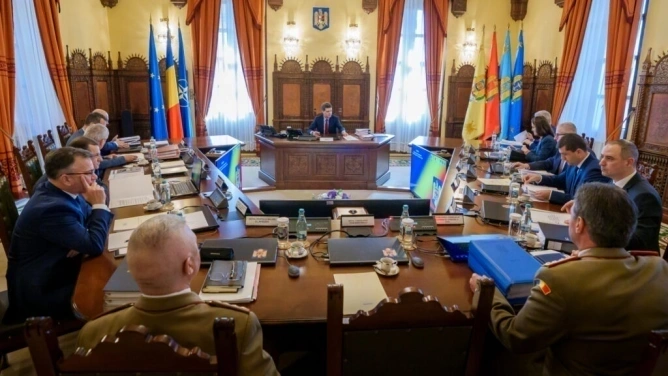
EU leaders assert that peace in Ukraine must respect the sovereignty and territorial integrity of the country and provide credible security guarantees, excluding any negotiated agreement without Kyiv's participation. Brussels, December 19, 2025 – The European Council has established a clear set of principles for a just, sustainable, and comprehensive peace in Ukraine, emphasizing that any negotiations must include Kyiv, that borders cannot be changed by force, and that Ukraine needs long-term security guarantees.
In short
1. The EU supports a just and sustainable peace based on international law.
2. There can be no negotiations without Ukraine.
3. Borders cannot be changed by force.
4. Any agreement must include long-term security guarantees for Ukraine.
5. The EU is ready to actively participate in peace efforts.
In the conclusions adopted at the meeting on December 18-19, 2025, the European Council reaffirmed its support for a peace in Ukraine based on the UN Charter and international law. EU leaders emphasized that any solution must respect the independence, sovereignty, and territorial integrity of Ukraine within its internationally recognized borders.
The Council welcomed ongoing diplomatic efforts but called on Russia to accept a complete, immediate, and unconditional ceasefire, to which Ukraine has indicated it is willing to adhere.
A central element of the EU's position is the principle that the path to peace cannot be decided without Ukraine. The European Council emphasized that the Union will only decide on matters that fall within its competencies or that directly affect EU security.
This wording explicitly excludes any diplomatic initiative that would impose negotiated conditions on Ukraine in its absence and reinforces Kyiv's role as a key actor in the peace process.
The European Council specified that a sustainable peace must include solid and credible security guarantees for Ukraine. The EU and its member states have expressed their readiness to contribute to these guarantees, including through cooperation with the United States and within the Coalition of the Willing.
The support aims to maintain Ukraine's ability to deter future aggression and defend its territory, including by strengthening its defense industry.
In parallel with the openness to diplomatic efforts, the EU has emphasized that it will maintain and intensify pressure on Russia to stop the war. The Council called for continued work on a new sanctions package, which is set to be presented at the beginning of 2026, as well as strengthening anti-evasion measures.
EU leaders reiterated that peace cannot be achieved through forced territorial concessions or by normalizing aggression.
The position of the European Council is inscribed in a previously formulated political line, including at the special meeting on March 6, 2025, which defines the parameters of an acceptable peace for the EU. This reflects the Union's experience in conflict management and the direct impact of the war in Ukraine on European security.
The EU will continue to actively participate in international peace efforts, in coordination with its partners, and will revisit the subject at the next European Council meetings, depending on the evolution of the situation on the ground and diplomatic processes.
Latest News
23:04
22:36
22:16
22:01
21:44
See more news
NEWS ON THE SAME TOPICS

.webp)