The EUISS director proposes a European negotiator with a joint mandate for talks on Ukraine



Always see our news on Google
Steven Everts argues that Europeans must coordinate their diplomacy so as not to be marginalized in negotiations between major powers. The recommendation appears in a commentary about relations with China and does not constitute the appointment of an envoy or an EU decision.
Europeans should appoint a single negotiator, with a clear mandate on their behalf, for diplomacy regarding the war in Ukraine, proposes Steven Everts, director of the European Union Institute for Security Studies, in a commentary published on October 30. He warns that a Europe that does not coordinate its position risks being marginalized in discussions between major powers.
In brief
1.Steven Everts recommends a single European negotiator, supported by a common and clear mandate, so that Europeans can defend their interests in discussions concerning Ukraine.
2.It is a proposal made in an analytical commentary by the director of EUISS. It does not constitute a decision by the EU institutions and does not announce the appointment of any person.
3.The author supports the participation of Ukraine and Europe in decisions that concern them. The proposal does not mean that Europeans should negotiate in place of Kyiv.
4.The text’s main theme is relations with China. Everts argues that Europe has economic and diplomatic instruments that it could use more effectively if it acts in a coordinated manner.
5.The official position of the European Council remains support for a just and lasting peace, based on Ukraine’s sovereignty and credible security guarantees. The path to peace cannot be decided without Ukraine.
The recommendation appears in a text in which Everts challenges the idea that Europe has too few means of influence in relation to Beijing. The commentary, initially published in the Dutch daily NRC on October 29 and republished in English by EUISS the following day, links relations with China to Europeans’ ability to act together on major security issues.
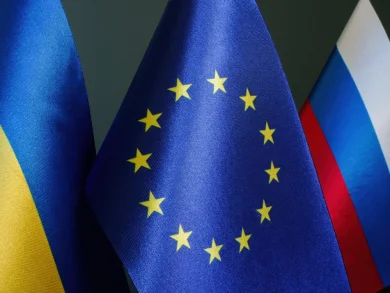
In his view, the European problem is not only access to the negotiating table, but also the ability to speak authoritatively on behalf of a common position. A negotiator with a clear mandate should reduce diplomatic fragmentation and prevent Europe from being treated as a mere spectator to agreements between Washington, Beijing, and Moscow.
Everts advocates more active diplomacy, including overcoming reluctance toward dialogue with Vladimir Putin. At the same time, he insists that decisions concerning Ukraine and Europe must include them. His argument does not give Russia the right to decide on Ukrainian territory and does not transfer representation of Kyiv to a potential European envoy.
The creation of such a position, the selection of the person, and the establishment of the mandate would require a subsequent political decision. The commentary does not announce that these stages have been completed. The author makes a foreign-policy recommendation in his capacity as director of an analytical institute; the text is not a position adopted by the European Council or the Commission.
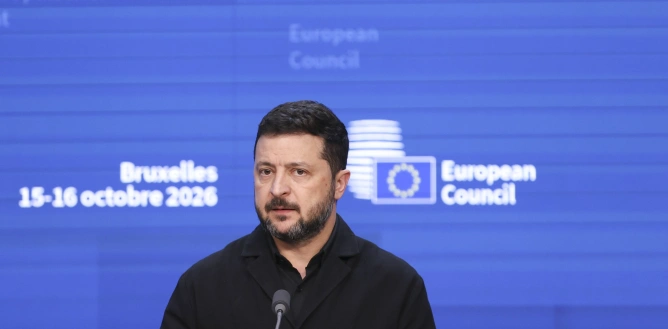
In the conclusions of the meeting of October 15–16, EU leaders reaffirmed their support for Ukraine’s independence, sovereignty, and territorial integrity. They called for a comprehensive, just, and lasting peace, based on the UN Charter and supported by credible security guarantees. The document states that peace cannot be decided without Ukraine and that the Union will decide on matters falling within its competence or affecting its security.
Regarding China, Everts argues that dependencies are reciprocal and that Europeans should use their market, trade instruments, and diplomatic relations more coherently. The proposal for a negotiator for Ukraine is an example of this idea: European influence depends not only on the resources available, but also on the existence of a common position that can be upheld in negotiations.
Latest News
13:15
12:52
12:28
12:25
12:07
See more news
NEWS ON THE SAME TOPICS
.webp)