Russian frozen assets become a key instrument in the EU's financial support for Ukraine



Always see our news on Google
The EU strengthens the use of frozen Russian assets as a financial and political tool, linking support for Ukraine to Russia's responsibility to pay war reparations.
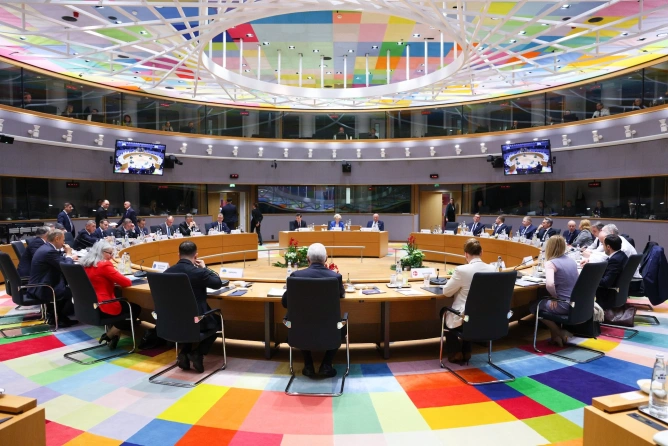
Brussels, December 19, 2025 – The European Council confirmed that frozen Russian assets will remain immobilized until the end of Russia's aggression war and the payment of reparations to Ukraine, with the European Union reserving the right to use them for the repayment of the 90 billion euro loan granted to Kyiv for the period 2026–2027.
In short
Russian assets remain frozen indefinitely.
The EU reserves the right to use them for the repayment of the 90 billion euro loan for Ukraine.
The measure is adopted based on Article 122 TFEU, as an emergency measure.
The repayment of the loan by Ukraine will only take place after the payment of reparations by Russia.
The decision creates a political and financial precedent at the EU level.
In the conclusions adopted in Brussels, EU leaders reaffirmed that the immobilized Russian state assets in the EU will not be unlocked until Russia ceases military aggression and compensates for the damages caused to Ukraine. At the same time, the European Council emphasized that the Union reserves the right to use these assets to cover the financial obligations generated by the support provided to Kyiv.
The decision marks a stage change in the use of financial sanctions, with frozen assets being explicitly integrated into a medium-term financing strategy.
The European Council reminded that, considering the "unprecedented situation", the EU has adopted exceptional, temporary, and justified measures to maintain the freezing of Russian assets, in accordance with EU law and international law.
The loan instrument for Ukraine is structured so that repayment is conditioned on receiving war reparations, and until that time the Union can use the immobilized assets as a last resort solution.
Through this decision, EU leaders send a clear signal that economic pressure on Russia will be maintained and expanded. Russian assets are no longer just a passive element of the sanctions regime, but become part of a financial accountability mechanism for the war waged against Ukraine.
The European Council emphasized that any use of the assets will respect the international legal framework and will be strictly linked to the objective of achieving a just and lasting peace.
At the press conference at the end of the meeting, the President of the European Council, António Costa, stated: "Russia will not recover its assets until it ends the aggression and pays reparations. The Union reserves the right to use these assets to repay the loan granted to Ukraine, in full compliance with international law."
Since the beginning of the war, the EU and its partners have frozen assets of the Central Bank of Russia and the Russian state worth hundreds of billions of euros. Discussions about using these for supporting Ukraine have gradually evolved, against the backdrop of Kyiv's increasing financial needs and political pressure for holding Moscow accountable.
The decision of the European Council fits into this process and strengthens the link between financial support for Ukraine and Russia's accountability for the damages caused.
The Council and the European Parliament will continue technical and legal work to finalize the loan instrument and operationalize the mechanism based on the frozen Russian assets. The subject will return to the agenda of the European Council at the next meetings.
Latest News
23:03
22:44
22:40
22:37
22:34
See more news
NEWS ON THE SAME TOPICS