SYNTHESIS Mojtaba Khamenei's appointment, a tough signal from Tehran: experts see a direct challenge to Trump



Always see our news on Google
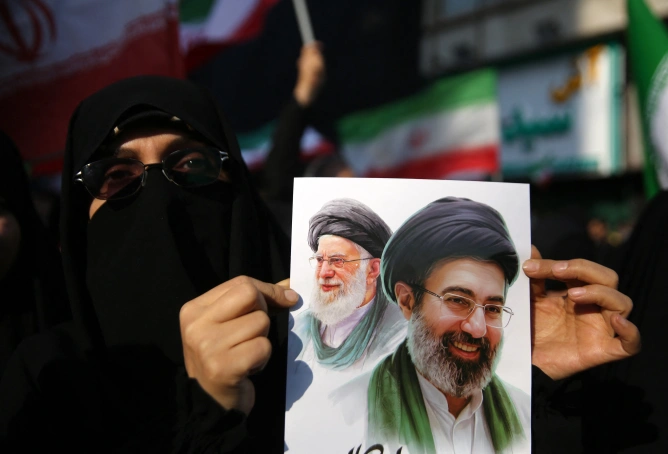
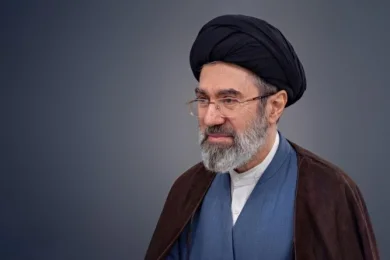
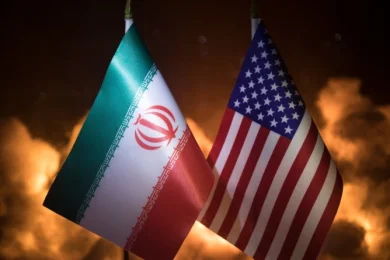
The appointment of Mojtaba Khamenei is a defiant gesture, a direct affront to Donald Trump and, in the terms of some analysts, a true strategic "humiliation" of the United States. By installing Ali Khamenei's son, who is more hardline, at the head of the system, Tehran conveys that it not only rejects Trump's demands but also doubles down on the stakes of confrontation.
When the religious leaders in Tehran confirmed that Mojtaba Khamenei, the son of the slain leader, would take the reins of the Islamic Republic, the message conveyed was not one of quiet continuity, but of open defiance. According to an analysis by Reuters, the Iranian establishment "has chosen confrontation over compromise," signaling that the succession will not open a window for de-escalation with the United States, but will cement the logic of confrontation.
A "humiliation" strategic for Trump
The decision comes at the end of a spectacular operation, coordinated by the US and Israel, which led to the killing of Ali Khamenei, an 86-year-old leader perceived as the architect of Iran's "shadow war" strategy in the region. From the perspective of several analysts cited by international media, the fact that, after such a military and intelligence gamble, Washington finds itself facing an even harder version of the old leader amounts to a strategic "humiliation" – a brutal demonstration of the limits of military force when not accompanied by a coherent political "day after" strategy.
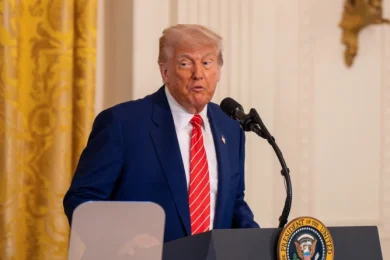
Reuters notes that Trump not only intensified pressure on Iran but went so far as to claim that the United States should have a say in the choice of the successor, explicitly rejecting the option of the leader's son coming to power. In this context, the fact that exactly Mojtaba, perceived as ultra-loyal to the Revolutionary Guards and almost unknown to the general public, is installed by the religious establishment can be read as a direct affront to the American president, a demonstration that the Islamic Republic asserts its sovereignty over the most sensitive internal decision without complex.
"It's the same playing card," explains analyst Alex Vatanka, quoted by Reuters, emphasizing that, essentially, the power structures do not change but radicalize. For him, the fact that the US "risked so much, just to kill an 86-year-old man" and to see him replaced by his son, who is even harder, represents "a great humiliation for the United States," a failure of the silent expectation that the removal of the leader would force the Iranian system to take a step towards moderation.
A Gulf official, also quoted by Reuters, goes even further, stating that Mojtaba's appointment "tells Trump and Washington that Iran will not back down, it will fight to the end." In this reading, the decision is not just an act of dynastic continuity but a declaration of political war: the Islamic Republic not only refuses to be shaped by external pressure but uses the moment of vulnerability to assert its resilience in the harshest possible terms.
Regional experts cited by Western media warn that Mojtaba's rise to power does not just mean a change of name, but the consolidation of an even tighter alliance between the Supreme Leader's office and the Revolutionary Guards. Khamenei's son is described as an opaque figure, deeply connected to security structures, with a base of legitimacy more in the coercive apparatus than in the religious or popular space, which may push those in Tehran into an even more pronounced logic of internal repression and external adventurism to compensate for the deficit of consensus.
Analysts invoked by international media speak of an Islamic Republic that has entered a phase of "hardening" – an ideological and institutional strengthening – in which the bet is no longer to convince the West but to confront it head-on. Hence the symbolism of Mojtaba's appointment: after decades in which Khamenei built a regional network of militias and influence, replacing him with his son sends the signal that the project does not close with the death of the architect but continues with a successor educated precisely in this paradigm of confrontation.
"Munition" for both critics and supporters of Trump
From the perspective of the internal American political narrative, the case provides ammunition for both critics and supporters of Trump. Opponents can argue, as some experts cited by the media already do, that the president overestimated the capacity of strikes to reshape the power architecture in Tehran, underestimating the resilience of the system and its ability to "close ranks" around a harder successor. Supporters, in turn, can present Mojtaba's appointment as proof that the regime was anyway irreformable, and the "maximum pressure" approach and military response only exposed the true nature of the Iranian elite.
However, in strictly regional terms, the quote from the Gulf official – "Iran will not back down" – summarizes the central concern. A leader even closer to the security apparatus, advised by the Revolutionary Guards' commands, at a time when fronts with Israel, the United States, and the Gulf monarchies are already open, suggests a period of escalation, not accommodation. And the fact that this transition was made despite, and not following consultations with Washington, amplifies the perception of "affront" and the prestige shock suffered by Trump and the United States.
For many observers, this may be the most painful aspect: not only did Khamenei's death not generate any kind of "reset" in relations with Iran, but it produced a power formula that shows, symbolically, that Tehran can survive even the most daring operations of its adversaries and can rearticulate into an even more intransigent version. In this sense, Mojtaba Khamenei's appointment is not just a defiance to Trump but also a brutal demonstration that regime change, when conceived in terms of "decapitating" a leader, can backfire against those who initiate it.
****Synthesis made with the help of a data monitoring flow provided by the media monitoring platform NewsVibe Romania. The analysis, data, and images presented have been enhanced with the help of Machine Learning and Artificial Intelligence tools.
Latest News
10:00
09:53
09:51
09:48
09:45
See more news
NEWS ON THE SAME TOPICS









.webp)