The European Union is testing home care for chronic diseases in rural areas.



Always see our news on Google
The European Union is funding a project that tests a care model for patients with chronic diseases in rural areas, where access to medical services is more difficult, and the aging population increases pressure on health systems.
In short The CRANE project develops an integrated care model for chronic patients in rural areas.
Tests are taking place in Region Västerbotten in Sweden, Extremadura in Spain, and Region Agder in Norway.
In these regions, over 30% of the population is at least 65 years old.
The model aims for over 80% of chronic patients to be able to transition to digitally supported self-care.
The proposed platform emphasizes secure medical data, home monitoring, and services tailored to individual needs.
The aging of the European population and the increasing number of people living with disabilities or chronic diseases compel health systems to find solutions for patient care outside of hospitals. The problem is more acute in rural areas, where access to quality medical services and support programs is lower than in cities and suburbs.
The CRANE project, coordinated by authorities in Region Västerbotten, Sweden, develops an integrated self-care model to improve the condition of chronic patients. The project utilizes the potential of medical data and tests in practice the logic of the European health data space.
The three selected regions, Region Västerbotten in Sweden, Extremadura in Spain, and Region Agder in Norway, are described as areas on the front line of demographic challenges. In each of them, over 30% of the population is at least 65 years old.
The model proposed by CRANE changes the role of the patient. The goal is to shift from a passive patient to an active participant in their own care, with the ambition that over 80% of chronic patients can reach forms of self-care.
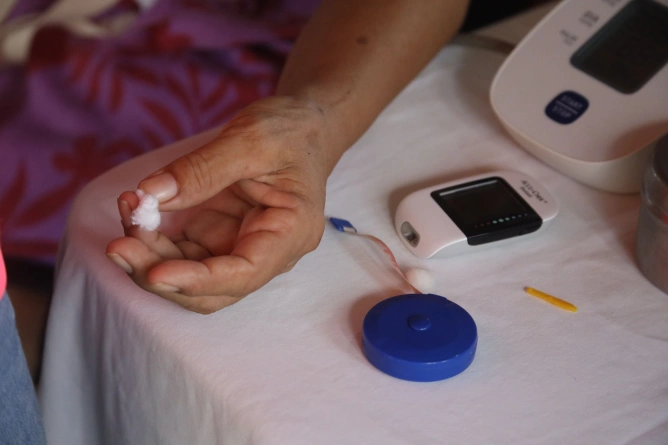
The project is based on two components. The first is home care, through monitoring and intervention technologies that use smart data processing for useful interactions with patients and to reduce the need for professional medical visits.
The second component is called the "care garden," an extended concept of integrated care that surrounds each person with a flexible network of medical and social services, family support, and service providers. This network must be dynamically adapted to individual needs.
The central technical element is a secure public-private data platform. The project's approach is that every citizen should own their own medical data and be able to transform it into concrete support for health.
The platform is designed to use modern encryption technologies and to build trust through transparent and open data policies. Feedback mechanisms should show users concrete health benefits, not just collect information.
CRANE also includes a value-based assessment framework, used throughout the pre-commercial public procurement process. The assessment follows four dimensions: value for the patient, economic value, clinical value, and organizational value.
This framework uses early assessment of medical technologies, systematic literature reviews, and consultation with involved stakeholders. The goal is to identify unmet needs, generate evidence, and prepare solutions that can be procured as value-based medical services after the project ends.
The pursued benefits go beyond strictly clinical outcomes. The project aims to improve mental health and social connectivity for older individuals, more efficient use of public health and care resources, and reduce hospitalizations and emergency interventions.
For rural regions, the project can also support local supply chains and create opportunities for European companies active in medical innovation. The solutions are designed from the outset to be transferable and scalable, including in larger urban contexts, in Europe and beyond.
CRANE shows how public procurement can be used not only for purchasing existing services but also for developing new solutions where health systems face difficult-to-solve problems. In European rural regions, the combination of aging, chronic diseases, and difficult access to medical services makes home care, secure data, and digitally assisted self-care central themes for the future of public health.
Latest News
23:00
22:55
22:47
22:39
22:33
See more news
NEWS ON THE SAME TOPICS

.webp)