The European Commission announces a package of €171 million for infrastructure and businesses in the Western Balkans. Serbia, absent from the list.



Always see our news on Google
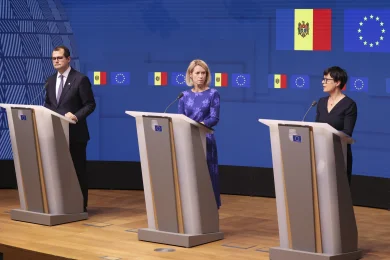
Brussels allocates funds for Albania, Bosnia and Herzegovina, Montenegro, and North Macedonia, under the Growth Plan. The investments target broadband, energy, education, and SMEs, with a total mobilization potential of €263 million. The European Commission announces a €171 million package for infrastructure and businesses in the Western Balkans. Serbia, absent from the list, displays the information of the image. European Commissioner for Enlargement, Marta Kos, announced on Monday a €171 million package for infrastructure and SMEs in the Western Balkans. Four countries benefit from funding - Albania, Bosnia and Herzegovina, Montenegro, and North Macedonia - while Serbia is not on the list. Brussels, January 27, 2026 – The European Commission allocates funds for Albania, Bosnia and Herzegovina, Montenegro, and North Macedonia, under the Growth Plan. The investments target broadband, energy, education, and SMEs, with a total mobilization potential of €263 million.
In short The package announced today by the European Commission includes: €94.7 million for infrastructure (of which €91.8 million direct investments and €2.9 million technical assistance) €76.3 million to support the private sector 7 infrastructure projects in Albania, Bosnia and Herzegovina, Montenegro, and North Macedonia Programs for SMEs: Western Balkans Forward, SME Go Green, and W-BOND (non-bank financing)
Of the total allocated, €91.8 million goes towards infrastructure projects in the four partner countries, funds expected to mobilize €263 million in total investments for seven projects in priority sectors: digital, clean energy, human capital, transport, and environment.
Key projects include the expansion of broadband infrastructure in Albania, the improvement of the electricity transmission system in North Macedonia, the construction and energy renovation of educational facilities in North Macedonia and Montenegro, the electrification of the Durres-Tirana railway line in Albania, and a drinking water and wastewater treatment project in Bosnia and Herzegovina.
Additionally, €2.9 million is allocated for four technical assistance projects in Albania and Bosnia and Herzegovina, aimed at supporting future investments in the energy, water, innovation, and research sectors.
On the private side, the package includes €76.3 million in contributions to programs that support the private sector. Among these, the Western Balkans Forward program helps small and medium-sized enterprises export more advanced products and services to the region and the EU, while the SME Go Green program promotes the green and circular economy, agribusiness, and investments in jobs and growth.
A novelty is the pilot program Western Balkans Opportunities by Non-traditional Debt (W-BOND), which offers SMEs access to financing by diversifying funding sources beyond traditional bank loans. Funds are also provided for strengthening public-private partnership capacities and governance in Bosnia and Herzegovina.
In the official statement, Commissioner for Enlargement Marta Kos emphasized: "Investment in our partners in the Western Balkans is essential to bring them closer to the EU. In more than two years since the adoption of the Growth Plan for the Western Balkans, we have worked, including through the Investment Framework for the Western Balkans, to turn commitments into action. From infrastructure development to strengthening business development, these investments create real opportunities for citizens and transform the EU into a lived reality across the region."
Following the approval by the Operational Council of the Investment Framework for the Western Balkans, projects can move to implementation. This includes finalizing necessary agreements with partner institutions and beneficiaries, launching preparatory studies for technical assistance activities, and completing necessary procedures for implementing projects in the private sector.
The Growth Plan for the Western Balkans aims to integrate partners from the Western Balkans into the EU single market, advance regional economic cooperation, deepen EU-related reforms, and increase financial assistance to accelerate socio-economic convergence with the EU.
The Reform and Growth Facility for the Western Balkans, with a total financial package of €6 billion for the period 2024-2027, is the key financial instrument of the Plan, transforming the progress in reforms of partners into tangible support. So far, 13 investment projects worth a total of €156 million have been approved under the Reform and Growth Facility since its launch in May 2024.
The Investment Framework for the Western Balkans (WBIF) is essential in implementing the Reform and Growth Facility, channeling €3 billion in grants and loans under the Facility to support priority investments in transport, energy, digital, and human capital. Additionally, it supports the implementation of the Pre-accession Instrument (IPA), aimed at assisting enlargement partners on their path to EU membership. Established 15 years ago, WBIF is a joint financial platform, bringing together the European Commission, financial organizations, EU member states, and Norway, directly contributing to the EU's Global Gateway Strategy.
The absence of Serbia from the list of beneficiaries raises questions in the context that it is the largest state in the Western Balkans and an official candidate for accession. The European Commission did not provide explanations in the press release regarding the selection criteria for the four beneficiary countries.
https://2eu.brussels/ro/stiri/comisia-europeana-anunta-pachet-de-eur171-milioane-pentru-infrastructura-si-afaceri-in-balcanii-de-vest-serbia-absent-de-pe-lista
Latest News
22:57
22:53
22:42
22:30
22:28
See more news
NEWS ON THE SAME TOPICS
.webp)