



SPECIAL Informat.ro: The midterm elections of Donald Trump's term: two opposing scenarios for the Trump administration, American democracy, and its allies



Always see our news on Google
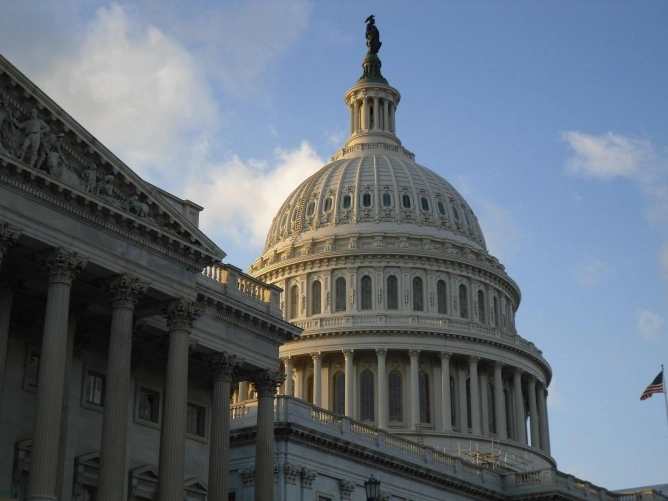
The midterm elections in 2026 in the United States represent a major political test for President Donald Trump and for the Republican Party's ability to maintain control over key power institutions, in a context marked by internal frictions and a surprising mobilization of the Democratic camp. Beyond the classic confrontation between Republicans and Democrats, a struggle is emerging to redefine the rules of the electoral game, the legitimacy of the elections, and the relationship between the executive power and the mechanisms that guarantee the integrity of the vote.
A fragmented and tense electoral landscape
In 2026, the midterm elections no longer present themselves as a simple "classic" vote, but as a series of simultaneous tests at the local, state, and federal levels, all centered around Donald Trump. The recent special elections outline a worrying trend for the Republican Party. Democrats have surpassed Kamala Harris's performance from 2024 by more than ten points in several state races, even winning seats in districts that Trump had previously won by comfortable margins, such as the 9th Senate district in northern Texas. The differences between current results and Trump's scores from 2024 suggest a high level of enthusiasm in the Democratic camp and a visibly less mobilized Republican base.
The mobilization crisis in the Republican Party
Within the GOP, concerns are accumulating regarding voter turnout and "Trump fatigue," even in areas that seemed impregnable. Internal analyses cited by the press indicate a consistent gap of about ten points between the results of Republican candidates in the special elections of 2025 and 2026 and the score obtained by Donald Trump in 2024, a difference interpreted as a sign of reduced mobilization among the conservative electorate.
The Trump administration has taken a series of controversial initiatives that seem more oriented towards controlling the electoral process than towards positively mobilizing the electorate. From pressures for the federal adoption of strict voter ID laws to directives to the Department of Homeland Security to investigate alleged electoral fraud, the White House is testing the legal and institutional limits of executive involvement in managing elections.
The war over the rules of the game: from the SAVE Act to DHS
One of the central issues that will mark 2026 is the attempt to rewrite electoral rules through bills like the SAVE America Act, which impose strict citizenship proof requirements to vote. Intuitively, the argument "only citizens have the right to vote" seems indisputable, and data and analyses show that illegal voting by non-citizens is extremely rare. Existing legislation already allows for the sanctioning of these cases.
Critics point out that the real effect of such a measure would be the exclusion from the polls of entire categories of eligible voters who do not possess the required documents or for whom obtaining them involves significant costs and bureaucratic procedures. Beyond the technical debate, statements from key officials, such as Homeland Security Secretary Kristi Noem, suggest that the political goal of these initiatives is to ensure that "the right people" vote and that "the right leaders" are elected, which reinforces the perception that the administration is trying to arbitrarily tilt the balance.
In parallel, the Department of Homeland Security is criticized for diverting national security resources to investigate an alleged massive electoral fraud, which some experts consider practically non-existent on a systemic scale. These maneuvers fuel accusations that the Trump administration is "testing the waters" to undermine the credibility of the electoral process and to prepare the ground for contesting the results in the event of an unfavorable scenario.
The Republican Party's strategy
The Republican Party is structuring its strategy for the 2026 elections around strengthening Donald Trump's political brand and gaining firmer control over Congress. The Republicans' goal is to maintain or expand majorities in the House of Representatives and the Senate to ensure the rapid adoption of the reform projects desired by the president. In this context, pivotal states like Georgia, Texas, or Virginia become testing grounds for the party's ability to mobilize the electoral base and to convince undecided segments.
Investigations and disputes with federal agencies are transformed into arguments for the need for a "loyal" Congress to the president, willing to support a profound reform of the administration. Additionally, the inclusion of figures like Elon Musk in discussions suggests that Republicans see major tech platforms and their relationship with the press as an important front in the political battle. Themes related to freedom of expression, censorship, and media bias are used to mobilize the electorate and to strengthen the sentiment that Trumpism is facing opposition from a hostile establishment.
The Democratic Party's strategy
In the Democratic camp, the reaction to these developments is structured on two levels. On one hand, local leaders and new political figures, such as Virginia Governor Abigail Spanberger, are building an image of pragmatic moderation, harshly criticizing the Trump administration's policies in areas like immigration, but sometimes avoiding frontal attacks that could fuel polarization.
Democrats are trying to preserve traditional strongholds like California and New York and to maintain their influence in major urban centers to prevent total Republican dominance at the federal level. On the other hand, Democratic strategists are using the very good results from recent special elections as a template for 2026. Successful candidacies in pro-Trump areas demonstrate that a message focused on concrete economic issues, such as the cost of living and basic services, can attract voters who previously supported Trump, without requiring them to explicitly abandon their political identity.
On a national level, however, Democrats face the classic dilemma: how to denounce what they describe as the illiberal drift of the administration without confirming the Republican narrative about a "party of elites" disconnected from the concerns of ordinary people. The response they give, especially in competitive areas, consists of shifting the focus from Trump himself to the concrete effects of his policies on the economy, public services, and the functioning of institutions. Media support mainly comes from progressive publications, which present the 2026 midterms as a critical line of defense against a political project perceived as illiberal. They also need to demonstrate that they can offer credible alternatives in areas such as justice, civil rights, health, education, and the environment, in a context where public attention is primarily drawn to the direct conflict with the president.
The consequences of a Republican victory
A clear victory for the Republican Party in the 2026 elections would strengthen President Trump's position and provide him with additional legitimacy to assert that his political direction is confirmed by the electorate. Domestically, such a victory would allow the administration to accelerate the adoption of reform projects and significantly reduce the opposition's ability to block important legislative initiatives.
In such a scenario, discussions about reforming federal institutions, especially those perceived as hostile, such as certain law enforcement agencies and independent administrative structures, would intensify. This could lead to increased tensions between the executive and oversight institutions and to intense debates about the balance of powers in the state.
In foreign policy, a Republican victory would be interpreted as a confirmation of the "America First" orientation, with an emphasis on renegotiating international arrangements, recalibrating multilateral commitments, and adopting a more transactional approach to relations with allies. The focus would be on the concrete contributions of partners to security and defense, as well as their alignment with Washington's strategic priorities.
The consequences of a Democratic victory
Domestically, a Congress more favorable to Democrats would open a period of conflictual cohabitation, in which the opposition could block key legislation and intensify investigations and oversight mechanisms over the executive. The relationships between the White House, Congress, and oversight institutions, such as the FBI, would become major axes of political confrontation.
In foreign policy, a stronger Democratic Congress would seek to influence the direction of sensitive issues, such as sanctions regimes, defense budgets, or international aid programs. This would introduce an additional degree of unpredictability for external partners, who would need to take into account both the administration's positions and legislative conditions.
Additionally, Democrats could generally lean towards a more multilateral foreign policy than that promoted by Republicans, with an emphasis on cooperation within NATO and other alliances, coordination with European partners, and the use of diplomatic and economic tools – such as sanctions and international agreements – before unilateral measures. This approach contrasts with the more transactional and negotiation-focused style of Republicans, who often privilege power relations and strictly condition American support on the concrete contributions of allies.
Implications for Romania and for US allies
For Romania, the stakes of these elections are not limited to the question of "who wins" in Congress. It is essential how the outcome will influence the priorities of the Trump administration in areas such as European security, the relationship with NATO, the policy towards Russia and China, and the sanctions regime, which directly affect the strategic environment in which Bucharest operates.
A Congress comfortably dominated by Republicans, loyal to the "America First" line, could mean increased pressure on allies to raise their contributions to security and to align their foreign policy more closely with Washington. In contrast, a more balanced Congress or one partially controlled by Democrats would introduce more counterweights in the administration's decisions, including regarding defense budgets, military presence programs in Europe, and the sanctions regime. For Romania, this would mean a more complex environment, in which it would need to cultivate close relationships not only with the executive but also with key leaders in Congress to maintain a coherent bilateral agenda.
Regardless of the final configuration of Congress, the 2026 elections will clarify the direction in which American democracy is heading concerning its fundamental rules and the principle of alternation in power. For Bucharest, a fine understanding of these dynamics, beyond ideological labels, is crucial to timely calibrate Romania's positioning and to transform uncertainty into a space for diplomatic and strategic opportunity.
Analysis conducted with the support of NewsVibe and Perplexity
Latest News
11:39
11:35
11:28
11:19
11:02
See more news
NEWS ON THE SAME TOPICS





.webp)



.webp)


