



ANALYSIS Under what conditions do European states repatriate their citizens stranded in the Middle East due to war



Always see our news on Google
European states use the same general framework for the repatriation of citizens from the Middle East – national consular assistance plus the European Civil Protection Mechanism – but there are clear differences in capacity, payment philosophy, and formalization of prioritization criteria between Romania and countries such as France, Germany, Spain, and Sweden.
Romania – a model of "consular crisis" with high dependence on the EU
In Romania, the Ministry of Foreign Affairs activates the crisis cell and centralizes requests through embassies, consulates, emergency lines, and registration platforms, then decides between "assisted repatriation" (commercial/charter flights, with tickets paid by the citizen) and "civil or military evacuation" for individuals in special situations. The declared priority is given to the vulnerable – injured or sick individuals, the elderly, families with children, individuals without their own evacuation alternatives, and those very close to conflict zones or blocked infrastructure.
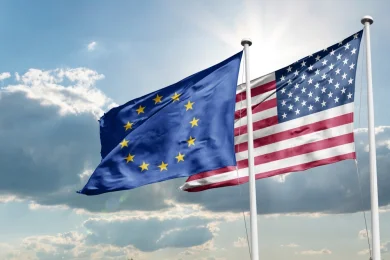
Financially, Romania relies heavily on the European Civil Protection Mechanism: flights that take on citizens from multiple member states can receive up to 75% co-financing from the Commission, and flights contracted directly by rescEU can even be fully covered. For the remaining costs, funds from the MFA budget are used and, in certain cases, reimbursement commitments signed by citizens, especially in assisted repatriations. Essentially, Romania has a reactive model, with rapid mobilization, but with limited logistical resources and a constant need for European coordination or detour routes (for example, flights via Egypt for evacuation from Israel).
France – high own capacity and focus on "vulnerables"
France operates through its crisis unit in the Ministry for Europe and Foreign Affairs, which has extensive experience in evacuations from war zones and uses both dedicated charters and reserved seats on commercial flights. The French authorities have explicitly emphasized, in the current wave of evacuations from the Middle East, the repatriation of "vulnerable nationals": the elderly, individuals with medical conditions, families with small children, or individuals without local support networks, while the rest of the citizens are taken "based on available seats" and their registration in the Ariane system.
At the policy level, France pre-finances the organization of flights from the national budget and only later does European co-financing come into play if the aircraft also transport citizens from other member states. The official discourse in major crises is in the sense of free evacuations for vulnerable categories, with any potential cost recoveries to be treated on a case-by-case basis (through ticket fees or subsequent arrangements), indicating a more solidarity-based political approach rather than a strictly accounting one. A distinctive element is the systematic use of the Ariane portal – the database of registered citizens, which helps with prioritization and rapid contact in case of crisis.
Germany – military "air bridge" and clear reimbursement obligation
Germany combines a very structured MFA crisis management with a major role of the Bundeswehr, which provides military transport aircraft and builds real "air bridges" from conflict zones. The official philosophy is that "any German who wants to leave must be able to leave", with practical priority for vulnerable individuals and those in immediate risk areas, but with the ambition not to leave anyone behind within the limits of transport capacity.
The difference in policy compared to other states is in the area of costs: the Federal Republic fully covers the evacuation expenses at the moment – "no one pays on the spot" – but the legal framework provides for the obligation of citizens to later reimburse part of the costs. The Ministry sends notifications after the operation, and the amounts are gradually recovered, allowing for an aggressive consular response in the crisis phase, while maintaining the principle of individual responsibility in the medium term. Dedicated budgets and experience accumulated in previous evacuations (tens of millions of euros in some campaigns) make the German model one of the most robust in the EU.
Spain – alignment with EU standards, with medium capacity profile
In the case of Spain, the specialized literature and examples from consular cooperation show a model aligned with the European standard: the MFA organizes special flights or reserves blocks of seats on commercial flights, usually in close coordination with other member states and through the Civil Protection Mechanism. The priority criteria are similar: residents without exit alternatives, vulnerable individuals, and organized groups (tourists, pilgrims, workers), within a framework of EU consular solidarity where embassies support each other.
Financially, the Spanish state usually pre-finances evacuations and can later request partial reimbursements or ticket payments, based on commitments signed by citizens, exactly as the European doctrine of consular assistance stipulates that repatriation is not an absolute right, but a service that can be conditioned by the beneficiary's contribution. Unlike Germany or France, Spain is less distinguished by its massive own capacity and more by its integration into the "EU network" of common flights.
Sweden – a combination of state-insurance and warning culture
Sweden has a strong model anchored in a culture of travel warnings and in the role of private insurance, alongside the direct intervention of the state. The Ministry of Foreign Affairs works with three clear levels of alerts – from "avoid non-essential travel" to "call to leave the country" – and the decision to evacuate is correlated with these levels and the existence of lists of registered citizens.
Financially, the state finances special evacuation flights (as it did in Israel and Palestine), but the national framework provides that travel insurance can reimburse up to 10,000 SEK of the return costs or additional expenses when no flights are available, which shifts part of the burden from the public budget to the private sector. Depending on the case, the citizen may pay part of the costs, the insurance may cover the rest, or the state may intervene additionally, resulting in a mixed model, more sophisticated than in southern and eastern European countries.
Poland – balance between caution and punctual military "airlift"
In the case of Poland, the overall architecture is aligned with the European standard: the MSZ manages travel warnings and consular assistance, and evacuations are primarily based on commercial routes and the responsibility of travel agencies and airlines, with the state intervening directly mainly for groups without alternatives and for vulnerable individuals. The peculiarity of the current crisis in the Middle East is the declared use of military resources – Prime Minister Donald Tusk authorized military aircraft for the evacuation of Poles from several Gulf states – which pushes the Polish model into an intermediate area between the "medium" profile of market-dependent states and the "air bridge" infrastructure of Germany.
Financially, the costs of military operations and state flights are initially covered from the public budget, but the general framework of assistance for repatriations provides for the possibility of treating these expenses as advances to be reimbursed by the beneficiary, with exceptions in special cases, in line with the EU doctrine that sees repatriation as a conditioned service, not an absolute right. In practice, Poland thus combines firm solidarity in the face of acute risk (accepting the use of the military for evacuations) with a strong emphasis on individual responsibility and the use of the market in situations where security allows return via commercial flights.
Policy conclusions: where Romania stands
Viewed in comparison with France and Germany, Romania has a correct institutional architecture, aligned with EU standards, but it lacks both its own logistical capacity (military transport aircraft, "air bridge") and comparable crisis budgets, which is why it structurally depends on European co-financing and commercial or charter flights. In relation to Spain, the model is very similar, with an emphasis on European consular coordination and the possibility of requesting reimbursement of certain costs, while compared to Sweden, the differences lie more in the sophistication of the warning system and the role of private insurance, much stronger in the Nordic countries.
Analysis conducted with the support of Perplexity
Latest News
11:45
11:31
11:15
11:12
11:04
See more news
NEWS ON THE SAME TOPICS










.webp)


