"The Tyrant" Sanchez and Musk's "Wild West." An open conflict between "digital tyranny" and the "epidemic" of addiction and online violence among children.



Always see our news on Google
Several countries are discussing or have adopted measures to ban minors from accessing social media, but Spain stands out with its plan to hold social media platform leaders criminally accountable and to criminalize the way algorithms amplify illegal or hate-inducing content. The following provisions have led to an open conflict between Elon Musk and Spanish Prime Minister Pedro Sánchez and have turned the debate into a school case about the clash between child protection and online freedom of expression.
What Spain proposes: a ban for minors under 16 and accountability for platforms
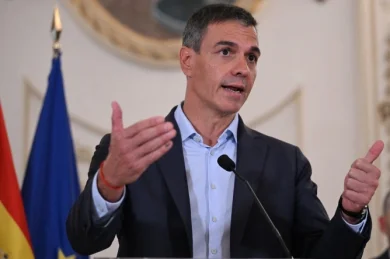
The Sánchez government has announced that it will introduce a ban on access to social networks for children under 16, accompanied by strict and "effective" age verification systems, not just by ticking a birth date upon registration. Platforms will be required to put real access barriers for minors, otherwise risking severe penalties, including criminal liability for platform directors if they do not remove illegal or hate-inducing content.
In his speeches, Sánchez describes the current digital ecosystem as a "Wild West" or a "failed state," where laws are ignored and crimes tolerated, highlighting minors' exposure to addiction, exploitation, pornography, manipulation, and violence. He argues that technology cannot be allowed to operate under the logic of "move fast and break things" when the mental health and rights of children are at stake.
European and political context
Spain's plan comes against the backdrop of a broader trend in the EU and other democracies to limit minors' access to social media and to strengthen platform accountability. Countries like France, Denmark, or Australia have already introduced or are preparing age verification schemes and special rules for online child protection, although not always with a total ban under 16.
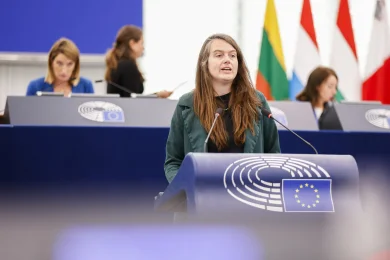
At the European level, the package announced in Madrid overlaps with the architecture created by the Digital Services Act (DSA), which already obliges large platforms to manage systemic risks, including those concerning minors. Sánchez's initiative goes further on the national level, using the leeway of member states to impose clear age limits and criminal mechanisms on company leadership, which opens the discussion about the fragmentation of rules in the digital single market.
Domestically, the project still needs to pass through the Spanish Parliament, where the government does not have a clear majority, but is receiving signals of support from the Popular Party, while the far-right Vox party expresses reservations about potential abuses and extensions of state control.
Escalation of the conflict: from "failed state" to "tyranny"
The direct trigger for the exchange of accusations was a speech given by Pedro Sánchez at the World Government Summit in Dubai, where the Prime Minister denounced social networks as a "failed state," accusing them of favoring disinformation, hate speech, and violence, and announcing the legislative package for the protection of minors and sanctioning platforms. Sánchez explicitly pointed to Musk's platform X as an example of a platform that amplifies controversial content, including in connection with Spain's decision to grant accelerated residency rights to 500,000 migrants and asylum seekers.
Elon Musk immediately responded on X, calling Sánchez "a tyrant and traitor to the Spanish people" and using the insulting nickname "Dirty Sánchez," accompanied by a poop emoji. He later went further, describing him as a "true totalitarian fascist," presenting the Spanish regulatory package as a threat to freedom of expression and a dangerous precedent for online censorship.
Sánchez replied, accusing Musk of using X to amplify disinformation about the Spanish government's immigration policy and highlighting, with a dose of irony, that Musk himself is a migrant. Additionally, the Prime Minister suggested that prosecutors would examine potential violations of the law by Musk's Grok chatbot, as well as by other platforms like TikTok and Instagram, reinforcing the perception of a direct conflict between the Spanish executive and tech giants.
The stakes for X: criminal liability, moderation, and business model
For X, the Spanish legislative package hits several sensitive points: the minimalist moderation model, exposure to extremist content, and the declared "maximum" freedom of speech. One of the measures announced by Sánchez aims to change the law so that platform directors can be held criminally liable if they do not remove illegal or hate-inducing content, which would mean that CEOs could be investigated and potentially charged in Spain for failing to moderate.
The plan to ban access for minors under 16 would require X to implement robust age verification systems—from documentary checks to intrusive technical solutions—contradicting both the platform's ethos of "minimal friction" (minimal obstacles) and its audience growth model. In a context where a large part of advertising revenue is based on volume and engagement, restricting access for an entire age category and the risk of fines or criminal prosecution would increase compliance costs and could lead X to reduce or recalibrate its presence in the Spanish market.
Although the technical details of the law are yet to be presented, the explicit inclusion of the idea of "criminalizing algorithm manipulation" suggests that Spanish authorities could also evaluate how feeds recommend content for minors and the general public. For X, whose editorial direction is heavily influenced by Musk's personal preferences and an opaque algorithm, this opens an additional front of legal risk.
Effects on the social media ecosystem
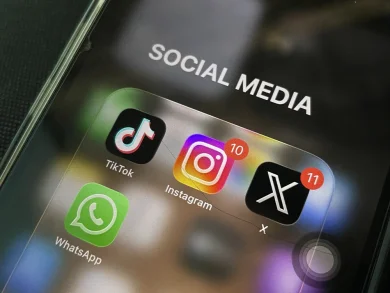
The plans from Madrid do not target just X, but the entire social media landscape: from TikTok, Snapchat, and Instagram to Facebook, YouTube, Reddit, Twitch, Kick, and Threads. All these services would need to block access for those under 16 in Spanish territory or face considerable fines, which could lead to product changes and policies specifically tailored to the Spanish market, including "age-gated" areas and filtered versions for minors.
In the short term, the debate triggered by the Musk-Sánchez dispute risks polarizing public discussion between two extremes: rhetoric about "digital tyranny" and alarmism regarding the "epidemic" of addiction and online violence among children. In the medium term, however, Spain's case could become a laboratory for the rest of the EU: if the package is adopted and survives legal challenges, other governments might copy the under-16 ban model and extended criminal liability, with structural effects on how platforms operate in Europe.
An illustrative example: in Australia, regulations already require platforms to prevent access for minors under 16 through age verification, with fines in the millions for non-compliance, and the applicable list explicitly includes X, Instagram, TikTok, Snapchat, YouTube, or Reddit. Spain seems to be drawing inspiration from these models but adds its own emphasis on criminal tools and a tough political rhetoric towards major tech players, which explains Musk's disproportionately aggressive reaction.
Investigations and legal issues for X since Musk's takeover
Since the takeover of Twitter in 2022 and its rebranding to X, the platform has faced a series of investigations and legal confrontations related to content moderation, disinformation, hate, and data protection. In the EU, the European Commission has opened the first formal procedures under the Digital Services Act against X, suspecting non-compliance with obligations regarding the removal of illegal content, combating information manipulation, and transparency of algorithms and advertisements. At the end of last year, the European Commission fined X 120 million EUR for violating its transparency obligations under the Digital Services Act (DSA).
In parallel, X has been involved in several lawsuits in the US, challenging state laws that require disclosure of moderation policies for hate-inducing speech, while courts have dismissed some actions taken by the company against NGOs documenting the rise of hate on the platform. Nationally, Brazil temporarily blocked X for non-compliance with Supreme Court orders regarding the suspension of accounts that spread hate and disinformation. Most recently, French prosecutors raided X's offices in Paris as part of an extensive criminal investigation targeting possible complicity in the dissemination of images of child abuse, sexualized deepfakes, and violations related to algorithms and the Grok chatbot, and Musk has been summoned for hearings.
Read on Informat.ro an extensive analysis about how access for minors to social networks is regulated in Romania, Europe and worldwide.
The synthesis was made with the help of a data monitoring feed provided by the media monitoring platform NewsVibe Romania. The analysis presented has been enhanced with the help of Machine Learning and Artificial Intelligence tools.
Latest News
09:19
09:15
09:14
08:57
08:38
See more news
NEWS ON THE SAME TOPICS