ANALYSIS The Russia-Ukraine peace negotiations: European spies contradict Trump's optimism, labeling the discussions in Geneva as "theater." What risks does the difference between the two assessments entail?



Always see our news on Google
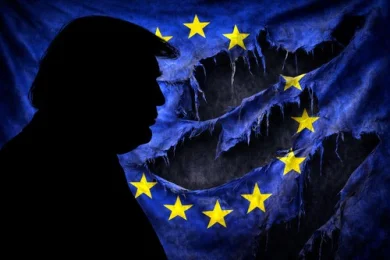
Five European intelligence chiefs place the negotiations in Geneva in a zone of strategic cynicism, not diplomatic optimism, emphasizing that Russia is not genuinely pursuing a quick end to the war, but rather maintaining military pressure and seeking relaxations of sanctions and bilateral business with the US, according to Reuters. The assessments of the five come as the White House claims that an agreement is "reasonably close" and intends to finalize it before the American congressional elections in November 2026. This divergence reflects different methods of assessing reality and distinct geopolitical priorities.
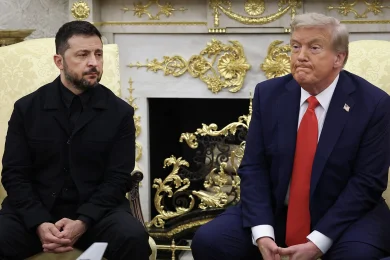
While Donald Trump speaks of a "reasonably close" compromise, the recent rounds in Geneva ended without progress on the territorial issue, especially regarding Donbas, with Kyiv rejecting further concessions and denouncing American pressure for flexibility.
The press in Romania – from HotNews to Radio Romania Actualitati – underscores the same dissonance: negotiators like Rustem Umerov talk about "edifying, but substantial" discussions, while President Volodymyr Zelensky describes the outcome as "unsatisfactory" and calls for direct European involvement to balance the Washington-Moscow tandem. In this context, the verdict of European spies – "Russia is not seeking peace, but achieving unchanged strategic objectives, from regime change in Kyiv to transforming Ukraine into a 'neutral' buffer zone" – turns the current negotiations more into a battle of narratives and resilience than into an imminent peace process.
Assessment of intelligence services on Russia's intentions
European intelligence services, based on human sources, communications intercepts, and strategic analysis, conclude that Russia is not pursuing peace, but rather maintains unchanged strategic objectives: removing Zelensky from power and transforming Ukraine into a "neutral" buffer zone against the West. One of the intelligence chiefs emphasizes that the Russian economy "is not on the brink of collapse," which removes the economic pressure that Washington considers a driver of Russian concessions. One of the intelligence chiefs warns that any potential concession of Donbas would only represent "the beginning of the actual negotiations" — Moscow would then formulate additional demands.
The White House's motivations regarding the proximity of a peace agreement
Trump's optimism has different foundations: he is motivated by the desire to build a legacy as a global "peace-maker," by the electoral calendar (the midterm elections in November 2026), and by a transactional approach in which the "deal" takes precedence over the strategic context. In January 2026, Trump told Reuters that it is not Russia, but Ukraine that is blocking the agreement — a rhetoric that is in direct contradiction with European positions.
At the Munich Security Conference (February 13-15, 2026), Secretary of State Marco Rubio reaffirmed the US commitment to NATO but sent a clear message: Europe must take on more responsibility for its own security. Meanwhile, American negotiators — Steve Witkoff, a real estate developer friendly with Trump, and Jared Kushner, the president's son-in-law — criticize European officials for their lack of specific diplomatic expertise on the Russian-Ukrainian issue.
The US-Russia bilateral factor
Two intelligence chiefs signaled that Moscow is trying to separate negotiations into two tracks: one regarding the war and another regarding US-Russia bilateral arrangements, including the relaxation of sanctions. Zelensky revealed that his intelligence services informed him about US-Russia bilateral discussions regarding cooperation agreements worth up to $12 trillion, proposed by Russian envoy Kirill Dmitriev. This dynamic fuels European fears that American economic interests could prevail over European security in the long term.
The strategic risk of an agreement that does not produce real peace
If a hasty agreement is reached, built on territorial concessions from Ukraine without solid security guarantees, Europe would be left with a "frozen" conflict at its borders. Moldovan expert Marin Gherman, quoted by Moldova 1, warned at the end of last year that "there is no legal way for the Ukrainian parliament to cede territories — the Ukrainian Constitution prohibits this," and that "any discussion about territories, in a society deeply affected by the serious crimes committed by Russian soldiers, is explosive." Zelensky himself stated on February 18 that such an agreement "would be rejected by citizens in the event of a referendum."
Economic risk for Russia — but insufficient
A third European official signaled that Russia faces "very high" financial risks in the second half of 2026: limited access to capital markets, high borrowing costs (the reference interest rate at 15.5%), and a sovereign reserve fund that has halved since the invasion in 2022. However, the dominant assessment of European services is that Russia remains a "resilient society," capable of absorbing considerable economic difficulties.
Transatlantic risk: erosion of Western unity
The Munich Security Conference 2026 highlighted this tension. Macron insisted that Europe "must be part of the conversation" regarding Ukraine and called for a reevaluation of the French nuclear doctrine within a European framework. Zelensky urged Europe not to accept a "half-baked peace agreement" and requested a concrete date for Ukraine's EU accession. In contrast, Trump suggested earlier this year that Zelensky, not Putin, is the one stalling peace — a deeply destabilizing message for Western cohesion.
Diplomatic risk: unsuitable negotiators
A subtle but important element that emerges from the assessment of spies cited by Reuters is the criticism directed at the competence of the negotiating teams. One European intelligence chief signaled a "very limited" level of competence in negotiating with Russia across the entire West, including on the European side. The American team — led by Witkoff and Kushner, without diplomatic training or expertise on Russia — amplifies this risk.
The context of the Geneva negotiations
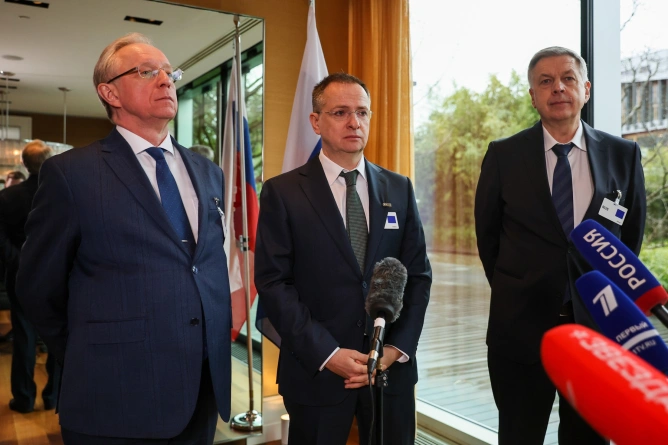
The round from February 17-18, 2026 — the third this year — ended after just two hours of discussions on the second day, without progress on the territorial issue. Ukrainian chief negotiator Rustem Umerov described the discussions as "intensive and substantial," while Zelensky labeled them as "unsatisfactory," accusing Russia of "trying to prolong the negotiations." Russian negotiator Vladimir Medinski promised new rounds, without specifying a date. The two previous meetings in 2026, held in Abu Dhabi, also ended without significant progress.
Why the difference in assessments between European spies and Trump's optimism matters
The divergence between the assessments of European intelligence services and the optimism of the White House is not a simple diplomatic disagreement. It signals the risk of a negotiation in which long-term European security interests are sacrificed for a transactional agreement that satisfies the American electoral calendar. European spies — with access to classified information about the Kremlin's real intentions — warn that an agreement that does not address Russia's unchanged strategic objectives will not produce peace, but only a pause before the next escalation.
Analysis conducted with the support of NewsVibe and Perplexity
Latest News
12:49
12:46
12:45
12:33
See more news
NEWS ON THE SAME TOPICS