Parliamentary elections in Hungary: Viktor Orban or Peter Magyar? A decisive test for the relationship with the EU


Always see our news on Google
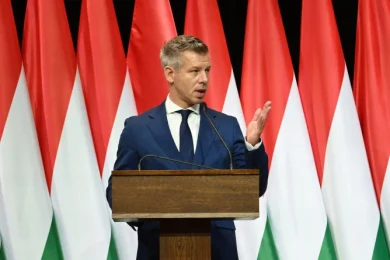
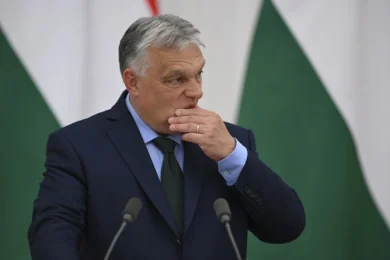
Viktor Orban and his party Fidesz are preparing to enter the campaign for the parliamentary elections on April 12, 2026, against the most serious opponent in the last 16 years, the center-right Tisza party, led by Peter Magyar, a former Fidesz member who has become the main opponent of the ruling party. Recent polls place Magyar at the top of voting intentions, but the architecture of the political system created by Orban makes a change of government far from guaranteed. The outcome of the election will influence Budapest's relationship with Brussels, the EU's position towards Russia and Ukraine, as well as how the Union manages its own democratic values.
Polls putting pressure on Orban
The latest poll, conducted by the Publicus Institute between January 21 and 24 and published by the daily Nepszava, shows that Tisza is credited with 48% of decided voters, while Fidesz stands at 40%, an eight-point lead for Magyar's party, unchanged since December. Tisza is presented as the main opposition party, after surpassing in 2024 the liberal and socialist parties that have dominated the anti-Fidesz camp until now.
At the same time, however, government-affiliated institutes are sketching a different reality: a poll by the Nezopont Institute, conducted between January 26 and 27, did not measure voting intentions by party, but reveals a personal approval rating of 46% for Viktor Orban, compared to 35% for Peter Magyar.
Nezopont also shows where the prime minister's power base stands: support for Orban is particularly high among older voters and in rural areas, exactly the segments where voting discipline is traditionally higher. In contrast, the Publicus poll indicates a high level of general dissatisfaction: 63% of Hungarians believe that the country is heading in the wrong direction, with the percentage rising to 71% among pensioners, a signal that Orban's advantage in this segment is supported more by networks and benefits, not by satisfaction with the country's developments.
For context, it should be mentioned that Hungary has been marked in recent years by economic stagnation and the highest inflation rate in the European Union (peaking in 2023), a situation that the Budapest government has tried to compensate for through immediate impact measures, such as aid for pensioners and tax benefits for families.
Since when and how Orban dominates the political scene
Viktor Orban and Fidesz have been governing uninterrupted since 2010, a period during which they have profoundly reshaped the institutional architecture and the rules of the political game in Hungary. In the early years after returning to power, comfortable majorities allowed the adoption of constitutional and electoral reforms that consolidated the position of the ruling party.
A key element is the electoral system reform of 2011: the number of deputies was reduced from 386 to 199, and the proportion of single-member constituencies increased significantly, reaching 106 mandates won in a majoritarian system, the rest being allocated proportionally on party lists. Being the largest party, Fidesz thus managed to win the majority of single-member constituencies, transforming a relative advantage in the popular vote into an oversized majority of mandates, including with the help of redrawing constituencies in a way favorable to the government. On this background, the analysis by the consulting firm Eurasia is clear: to obtain a majority in parliament, Tisza must surpass Fidesz by at least four to five percentage points, which means that a simple lead in polls is not enough for a change of power. This "representation bonus" is doubled by Fidesz's solid control over the media environment, especially public television and most of the local press in rural areas, where government messages reach much more easily than those of the opposition.
The advantages of Viktor Orban and Fidesz
Despite the fact that, for the first time in many years, his party is behind the opposition in most independent polls, Viktor Orban remains a formidable actor, with multiple advantages in this campaign.
The first is the political and media infrastructure. Fidesz has a very well-organized party machine, with strengthened networks in rural areas and small towns, where many of the single-member constituencies are played out. This network is complemented by a friendly media ecosystem, from public television to local newspapers, which act as a megaphone for government messages, reducing the space for opposition expression outside the major cities.
The second advantage is the capital of trust among the elderly electorate. The Nezopont poll shows that Orban enjoys a 46% approval rating, compared to 35% for Magyar, with particularly high support in rural areas and among older age segments. This electorate is generally more disciplined at the polls and more receptive to messages about stability and continuity that the prime minister conveys.
The third element is the package of social and fiscal benefits announced before the elections. The government has extended the income tax exemption for mothers with three or more children to mothers with two children, while pensioners received a bonus in January and are set to receive another in February.
Such "electoral dividends" are designed to strengthen loyalty among key segments, even against the backdrop of an economy marked by stagnation and high inflation.
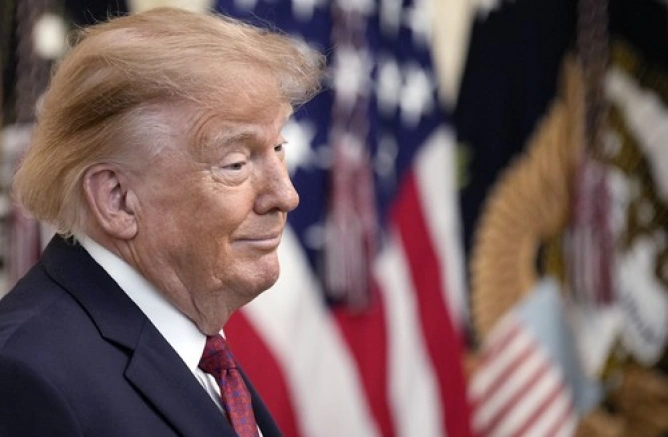
Ideologically, Fidesz presents itself as a defender of national sovereignty, conservative values, and a pragmatic foreign policy, including maintaining cordial relations with Russia, despite criticism from European institutions. Orban positions himself as a leader who defends Hungary against the pressures of Brussels and as an ally of American President Donald Trump, a relationship that places him at the center of a radical right-wing network at the European level.
Peter Magyar and the rise of Tisza
The phenomenon of Peter Magyar is probably the most spectacular development in Hungarian politics in recent years. His rise begins in early 2024, when, as a former Fidesz member and former husband of the Minister of Justice, he publicly reveals the efforts made by close associates of the power to protect officials involved in covering up a case of child sexual abuse. This gesture abruptly breaks ties with the governing camp and gives Magyar a strong insider profile denouncing the corruption and abuses of the system.
Subsequently, he takes the lead of a small party, Tisza, and, in just a few months of intense campaigning, achieves a score of 30% in the European Parliament elections in June 2024. That performance validates the existence of a real demand for a distinct center-right opposition both from Fidesz and from the liberal and socialist parties that have led the criticism against Orban until now.
The Tisza program and Magyar's profile are carefully calibrated. The opposition leader promises to combat corruption, unblock billions of euros from frozen European funds – money that, in his view, should be used to revive the economy – and firmly anchor Hungary in the European Union. At the same time, Magyar avoids positions perceived as "liberal" in a conservative society: he does not confront Orban head-on regarding his attitude towards Ukraine, preferring to focus his discourse on pocket issues, such as inflation, economic stagnation, and the degradation of public services, with an emphasis on hospitals.
Tisza deliberately distances itself from the old opposition. Magyar has severed ties with the parties that have led the anti-Fidesz camp in the last decade, and Tisza's parliamentary candidates, selected in November, are largely newcomers to politics but with a respected role in their communities. This combination – a messenger with experience within the system and a team perceived as new – reinforces the narrative of a "different kind of opposition" that does not carry the burden of previous failures.
Orban vs. Magyar: two right-wing leaders, two state projects
Although both leaders claim to come from the center-right area and use conservative language, the differences in policies, statements, and biographies are significant. Viktor Orban is the architect of what he has called an "illiberal democracy," in which the state assumes a strong role, institutions are brought under the control of the majority, and sovereignist rhetoric – often critical of Brussels – is complemented by a foreign policy aimed at maintaining cordial ties with Russia.
Peter Magyar, on the other hand, presents himself as a convinced pro-European. He promises to repair the relationship with EU institutions, unblock frozen funds, and bring Hungary back to the center of the European project, without giving up references to conservative values. While Orban mainly talks about stability, national identity, and the protection of the traditional family, Magyar emphasizes transparency, the rule of law, and the professionalization of administration, but deliberately avoids themes that would push him into the realm of a liberal left.
The personal histories explain to a large extent these options. Orban has dominated the Hungarian political scene for over three decades: he started in the 1990s as a leader of a more liberal and anti-communist force, only to gradually shift his party towards a nationalist conservative position, consolidating control over governments and state institutions after 2010. Magyar, on the other hand, comes from the same political family but presents himself as a "convert": he was part of the Fidesz system for years, including through his marriage to the former Minister of Justice, and now says that this very experience makes him capable of seeing the deviations and correcting them.
While Orban is perceived as a career politician, with an extensive network of loyalists in administration and business, Magyar builds his image on the idea of an outsider insider: he knows the internal mechanisms but is no longer their prisoner and promises to dismantle the "system" that he considers corrupt. For an electorate tired of the polarization of recent years, this opposition between personalized continuity and a promise of reset coming from within the old power can be decisive.
Can Peter Magyar replace Viktor Orban?
Beyond the profiles of the two leaders, the central question remains whether Tisza's advance in polls can translate into a real change of government. In strictly numerical terms, Tisza is at the threshold considered necessary to obtain a majority in the new parliament: 48% for Tisza and 40% for Fidesz among decided voters means an eight-point lead, above the four to five points mentioned by Eurasia as the "minimum margin" to overcome Fidesz's structural advantage.
However, translated into mandates, this gap may not be sufficient. The single-member system, the redrawn constituencies, and Fidesz's organizational resources in rural areas mean that a close score in the popular vote could produce a majority of mandates for the ruling party, as has happened in previous elections. Additionally, the Publicus poll indicates that, apart from Tisza and Fidesz, only the far-right party Mi Hazank would pass the 5% threshold for entering parliament, which significantly narrows coalition options in a fragmented parliament scenario.
On the other hand, there are several factors that could tilt the balance in Magyar's favor. The high level of dissatisfaction with the direction in which Hungary is heading, reflected in the 63% of Publicus respondents who believe that the country is heading in the wrong direction, suggests a significant potential for mobilizing critical voters. If Tisza manages to transform this frustration into voter participation – especially among those affected by inflation and the deterioration of public services – the advantage in polls could amplify.
Another factor is Tisza's ability to penetrate the rural environment, where Fidesz is currently dominant. The stakes for local candidates, less known in national politics but with status in their communities, are precisely to break Fidesz's monopoly in these constituencies. And Magyar's credibility when he promises to unblock European funds – money that, if it reaches the economy, could alleviate pressure on personal budgets – could transform the issue of the relationship with the EU from an abstract file into a concrete argument for change.
At the same time, the obstacles remain considerable. Political scientist Peter Kreko from the Political Capital think tank warns that "there will be free elections, but not fair ones," a phrase that describes the imbalances in resources, Fidesz's media advantages, and how the rules of the game have been calibrated in favor of the ruling party. Additionally, Orban's higher personal popularity, measured by Nezopont, may partially compensate for dissatisfaction with government performance and keep Fidesz competitive even in a hostile context.
Last but not least, Tisza is a new party, without governing experience, and this may be a source of hesitation for a cautious electorate, especially in a regional context marked by the war in Ukraine and tensions within the European Union. For some voters, the question is not only whether they want to sanction Orban, but also whether they trust that a new team can manage the multiple crises facing the country.
In this framework, Peter Magyar's chances of replacing Viktor Orban in power are real but fragile. The advance in polls and the dynamics of the campaign show that, for the first time since 2010, the system built around Orban is seriously contested, including from within his own political family. It remains for voters to decide whether their dissatisfaction with the current direction of the country is strong enough to overcome the structural advantages of a leader in power for 16 years and whether they are willing to trust a politician who builds his project precisely on a spectacular break from this system.
Why the parliamentary elections in Hungary are important for the EU
In the last decade, Hungary has become the main test for the European Union's ability to respond to deviations from the rule of law within its borders. The European Parliament and member states have triggered an Article 7 procedure against Hungary, limited or blocked access to billions of euros in European funds, and have constantly documented the erosion of judicial independence, media concentration, and repeated changes to electoral legislation. How Hungarian citizens vote in 2026 will determine whether this structural tension eases or, on the contrary, intensifies.
A potential government led by Peter Magyar and Tisza, which promises a rapprochement with Brussels and the unblocking of frozen funds, could relaunch Hungary's dialogue with EU institutions and reduce pressure on conditionality and sanction mechanisms. However, if Viktor Orban and Fidesz maintain their majority, it is expected that the dispute over the rule of law and the use of European funds will continue, impacting the political cohesion of the Union.
The war in Ukraine and the EU's foreign policy
Hungary plays a disproportionately important role in the EU's foreign policy because it has frequently used its veto power on sensitive issues, especially regarding European support for Ukraine and sanctions against Russia. Orban's government has delayed or blocked sanction packages, questioned the long-term funding of military aid to Kiev, and openly opposed steps towards Ukraine's European integration.
The outcome of the 2026 elections could change or consolidate this position. A government led by Tisza, closer to the mainstream EU line, could reduce the risk of repeated blockages at the European level and facilitate quick decision-making regarding Ukraine, Russia, and energy security. The maintenance of Orban in power, who presents the elections as a choice between "the Brussels road" and "the Hungarian road of peace and growth," would signal that his policy of balancing between the West and Russia remains the preferred option for the domestic electorate, with direct consequences for the political coherence of the EU.
Why we should pay attention to the results of the parliamentary elections in Hungary
At the European level, the election in Hungary is seen as a barometer of the resilience of the "illiberal democracy" model in an EU member state. International organizations, think tanks, and European institutions warn that a new mandate for Orban could legitimize, in the eyes of other national governments, similar tactics of subordinating independent institutions and using public funds for electoral purposes. On the other hand, a victory for Peter Magyar would be interpreted as proof that a consolidated regime can still be changed by vote, without breaking away from EU membership, which would also encourage other pro-democratic forces in the region.
For the countries of Central and Eastern Europe, including Romania, the direction Hungary will take matters for economic and security reasons. A Hungary that normalizes its relations with Brussels and aligns more with common policies regarding Ukraine and energy can contribute to a more predictable and less vulnerable region to external pressures. In contrast, a scenario in which Budapest continues to block or slow down sensitive EU decisions while cultivating special ties with Moscow and Beijing would maintain a zone of uncertainty in the heart of the Union, with effects on all its neighbors.
In this context, it remains essential to monitor not only who wins the elections on April 12, 2026, but also with what majority, what the new parliament in Budapest will look like, and what political mandate the future government will have in relation to Brussels, Kiev, and the major capitals of the world.
Synthesis made with the help of a data monitoring flow provided by the media monitoring platform NewsVibe Romania. The analysis presented has been enhanced with the help of Machine Learning and Artificial Intelligence tools.
Latest News
23:00
22:55
22:47
22:39
22:33
See more news
NEWS ON THE SAME TOPICS