How can the ban on access to social networks for minors be applied, even though the authorities in Romania say it cannot be done?



Always see our news on Google
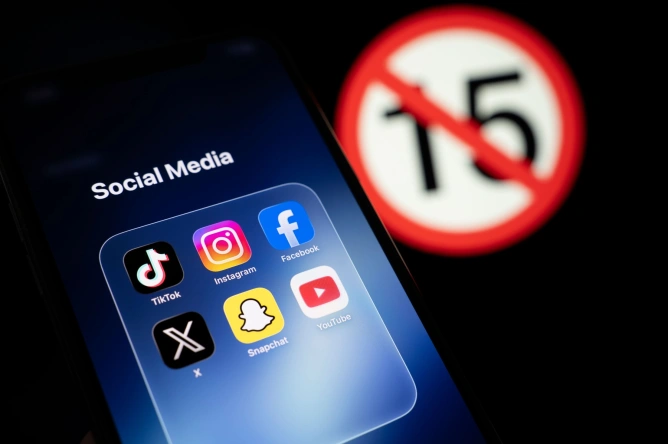
More countries have already moved from debate to legislation when it comes to limiting minors' access to social networks, and their experience shows that the discussion is not about "if it can be" banned, but about "how" and at what political, technical, and legal costs this is done. Meanwhile, in Bucharest, Prime Minister Ilie Bolojan and ministers argue that such a ban is not realistic.
Save the Children Romania has requested the Government to implement urgent legislative measures to completely ban access for children under 13 to social networks and to allow conditional access for children between 13 and 15 years old, only with parental consent. The organization emphasizes the need for sanctions for platforms that allow minors to create accounts.
However, the Prime Minister said it cannot be done.
"It is difficult to take a measure that would practically enforce such a ban, because young children can circumvent these things. However, we can take preventive measures, educate, and regulate parental access as much as possible," the official stated. "I find it hard to believe that you can come up with bans if you cannot implement them practically," Ilie Bolojan said last week.
More and more countries are announcing that they will or are about to ban
France has just approved in the National Assembly a bill that bans the use of social networks by children under 15, while Spain is announcing a package for a ban up to 16 years old, with implementation details still unclear. Here, the central idea is that platforms are not allowed to legally offer services to these age segments unless they prove otherwise through verification mechanisms. Similar measures have also been announced by the Netherlands and Portugal.
What states are actually doing: laws, fines, and obligations for platforms
The first layer is primary legislation, which defines the minimum age and legal responsibility. In France, the law adopted in 2023 requires parental consent for any user under 15, and the new text voted in 2026 goes further towards an explicit ban on access to networks for children under this threshold. The project provides for fines of up to 1% of the revenue of non-compliant platforms, which turns age compliance into a real business risk.
Spain, which has just announced its intention to ban access up to 16 years old, is preparing additional obligations for platforms: robust age verification systems and the possibility of holding digital company directors criminally or administratively liable for serious violations. In political rhetoric, this line is framed as a "fight against tech oligarchs," a divide between government and "algorithm magnates," aimed at making the measure digestible for the public.
In the United States, the first states to legislate – Utah and Arkansas – have imposed obligations on platforms to verify age through third parties and not allow account creation for minors without verified parental consent. Utah insisted on three elements:
mandatory parental consent for any minor account;extended parental access to the settings and content of the child's account;the prohibition of serving advertisements and collecting certain data from minor users.
Arkansas followed a similar model, but a good part of the law has been suspended by courts for constitutional and imprecision issues.
At the European level, the Digital Services Act (DSA) does not directly ban access but obliges large platforms to assess risks for minors and implement "effective" age verification tools, leaving member states the freedom to raise or lower age thresholds through national legislation. Thus, Italy and Germany currently prefer a "soft" line, based on consent and education, while France and Spain are pushing for stricter bans.
How it works in practice: age verification and technical control
The technical knot of these policies is age verification: how do you prove that a user is 12, 14, or 16 years old without turning every login into a nearly bank-like identification procedure.
French authorities do not impose a single technology but recommend so-called "double anonymity" methods: a third party (a specialized company or telecom operator) verifies the identity document, and the platform receives only a "yes/no" regarding being above or below a certain age. In practice, two types of solutions are already used for porn sites and are also considered for social networks:
scanning an official identity document together with a selfie, to ensure consistency between the document and the person;
estimating age based on a selfie photo, using artificial intelligence algorithms, without storing civil identity.
In parallel, the European Commission is testing a pan-European digital "age wallet" application, which is already being piloted by six states (France, Spain, Greece, Denmark, Italy, and Portugal). The idea is for the user to verify their age once in a regulated environment and then be able to prove, through the application, that they exceed a certain threshold (for example, 16 years old), without revealing the rest of their personal data to platforms.
In Utah, verification is done through third-party providers, who compare the data entered by the user with public or private databases and issue an age confirmation to the network. The law also provides for a "digital curfew": in the absence of a derogation set by parents, minor accounts cannot be accessed between 10:30 PM and 6:30 AM, a period determined by IP and time zone settings.
China goes further with an "underage mode" integrated into the operating system and main applications: screen time is capped, access to certain features is limited, and usage time slots are preset based on age. Unlike Western democracies, this model relies on much more intrusive control of digital infrastructure and the state's ability to quickly impose changes at the ecosystem level.
All these mechanisms, however, have evident limitations: some minors will circumvent the bans using their parents' identity data, VPNs, or foreign accounts, and the risk of "subterranean" online behaviors is real, as specialists in adolescents cited in the Spanish press show. Effectiveness depends not only on technology but also on the level of cooperation from platforms and the willingness of parents to actively participate in supervision.
In Europe, the Commission currently prefers to focus on the DSA and on self-regulation and cooperation tools with platforms, avoiding imposing a "single digital age threshold" for the entire Union.
What "it cannot be done" means for Romania
For the public in Romania, the experience of other countries offers some uncomfortable conclusions. First of all, the assertion that "it cannot be done" to ban minors' access to social networks is becoming increasingly difficult to sustain in a context where France is voting for a ban under 15, Spain is preparing a threshold of 16, and six EU states are already testing official age verification applications. It can be done - the question is at what cost and with what degree of social acceptance.
Secondly, Romania does not start from scratch: GDPR already allows member states to set the age of digital consent between 13 and 16, and comparable European allies (Italy, Germany) have used this framework to formalize parental consent in the minor-platform relationship.
Adding a sanctions regime for companies that do not verify age - as already requested by organizations such as Save the Children Romania - would be more of an adjustment of an existing framework, not a legislative revolution.
Thirdly, any serious ban variant would require the state to enter into a technical partnership with major platforms: without integrating an "age wallet" solution or a similar anonymous verification system, the law remains a communication exercise. This means investments, secondary regulations, interoperability agreements, and, inevitably, debates about data protection and the risk of digital surveillance.
On the other hand, the experience of other countries also shows the limits of a purely prohibitive model: where the ban is very strict, behaviors do not disappear but move "underground," to fake accounts, adult profiles, or harder-to-monitor platforms, which actually reduces parental control and visibility over risks. Between "it cannot be done" and "we ban everything" there is a zone where Romania can also build its own mix: a realistic age threshold, verifiable parental consent, clear sanctions for companies, and a digital education strategy that does not leave families alone in front of screens.
How the "mechanics" of a ban would look, according to a Romanian specialist
Andrei Marinescu, an entrepreneur and expert in national security, data analysis, and AI, explains in a material Libertatea how a ban can be implemented from a technical standpoint. The model proposed in the article from Libertatea starts from a simple idea: the child can no longer create an account directly, but only through an identified adult. In practice, the ban does not mean "the child can no longer go online," but that they can no longer create an account on networks by themselves. The flow would look like this: the platform first requires a verified adult account (parent), who confirms their identity with an ID and a video or photo selfie. The adult then creates "under the child's account," legally linked to them, and any age modification or suspicion obliges the user to re-verify. Exactly this type of scanning (document + selfie, processed by a third party) is being tested or already used in France, Australia, Malaysia, but also directly by platforms like Instagram.
Synthesis made with the help of a data monitoring flow provided by the media monitoring platform NewsVibe Romania. The analysis was enhanced with the help of Machine
Learning and Artificial Intelligence.
Read also:
ANALYSIS. Access of minors to social networks. Regulations in Romania, Europe, and worldwide
Latest News
22:57
22:46
22:39
22:25
21:55
See more news
NEWS ON THE SAME TOPICS