SPECIAL Informat.ro / The China – Taiwan Conflict: the militarization of the Taiwan Strait and the risk of a global shock to economic security



Always see our news on Google
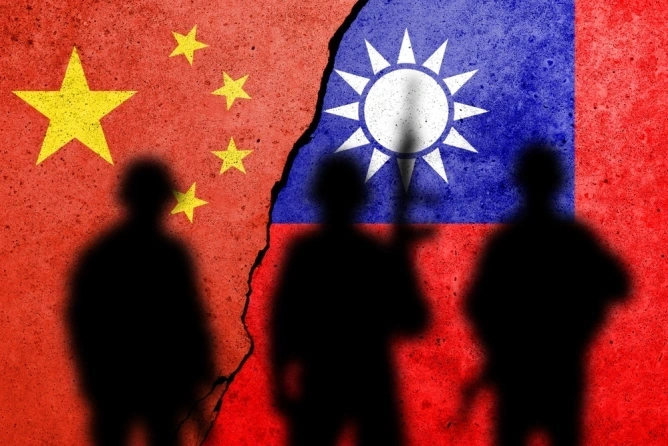
Tensions between China and Taiwan are in a paradoxical phase: militarization is accelerating around the Taiwan Strait, but parallel political initiatives are emerging that seek to open channels for dialogue and avoid an open confrontation with global effects.
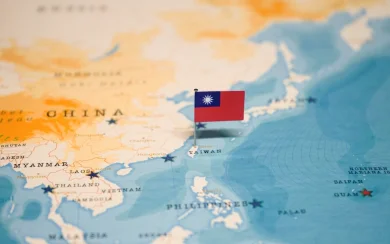
China continues to consider Taiwan as part of its territory and does not rule out the use of force to take control of the island, which maintains a high structural level of tension in the Taiwan Strait, the maritime channel that separates the island from the eastern coast of mainland China. Beijing constantly condemns Taipei's official contacts with the United States and regional allies such as Japan, labeling these relationships as "collusion" with Taiwanese independence forces and a justification for diplomatic sanctions. At the same time, Taipei relies on Washington's security support and strengthening ties with European parliaments to bolster its de facto position and deterrent capability.
Military Dynamics in the Region
Japan is rapidly transforming its defense posture in the East China Sea, deploying ground-to-sea missiles with a range of approximately 1,000 km in the Kumamoto garrison on Kyushu Island, as well as Hyper Velocity Gliding Projectile systems to defend remote islands. These capabilities position Tokyo more firmly against China's military ambitions, in a context where Japan explicitly signals the link between strengthening defense and tensions related to Taiwan and the Taiwan Strait, a key area for Beijing's power projection. China, in turn, is strengthening its naval projection by introducing Type 055 destroyers into service, ships over 12,000 tons described as "super-carriers," with 112 vertical launch cells and a key role in escorting aircraft carriers and amphibious assault forces, with a clear eye towards scenarios related to crossing or blocking the Taiwan Strait.
Political and Diplomatic Dimensions
Amid tensions, two competing political lines are emerging in Taiwan: the administration led by William Lai Ching-te, which relies on strengthening defense and close cooperation with the U.S., and the opposition led by the Kuomintang (KMT), oriented towards dialogue and deepening exchanges with mainland China. KMT President Cheng Li-wun accepted an invitation for a visit to China in early April, explicitly presented as an effort for "peaceful development" of relations and "peace in the Taiwan Strait," a message that seeks to mitigate the perception of the inevitability of conflict in this strategic maritime corridor. However, Beijing maintains external political pressure through targeted sanctions, such as those imposed on Japanese parliamentarian Keiji Furuya, accused of collaborating with "Taiwanese independence forces," which deepens the diplomatic rift with Tokyo and sends a warning to other actors who are intensifying ties with Taipei.
Involvement of the United States and Europe
The United States remains the main informal supporter of Taiwan, through arms deliveries and a legislative framework that allows systematic military support in the absence of formal diplomatic recognition. A bipartisan delegation of American senators in Taipei supports the adoption of a special defense budget of $40 billion, blocked in the opposition-controlled parliament, warning that delays could weaken the island's ability to deter Chinese military pressure in the Taiwan Strait. The visit triggered a strong protest from Beijing, which rejects any official interaction between American and Taiwanese leaders, but at the same time confirms that Washington treats Taiwan's defense and the security of the Taiwan Strait as a central issue in the strategic competition with China. Meanwhile, a delegation from the European Parliament is visiting Taipei, with an agenda focused on armament, protection of submarine cables, combating disinformation, and resilience in defense matters, indicating that European states, even without formal diplomatic relations, are increasing their security profile in the Indo-Pacific.
The Global Echo of a Possible Escalation
The escalation of a military conflict around Taiwan and the Taiwan Strait would have immediate global consequences, starting with trade flows and the economic security of Asia. Asian markets are already showing sensitivity to regional shocks, with the Taiwanese stock index recording significant declines in the context of the ongoing security crisis in the Middle East (Iran, Strait of Hormuz), suggesting how quickly geopolitical risks can propagate in investors' assessments. A confrontation in the strait would directly affect global supply chains and telecommunications, given European interest in protecting submarine cables and discussions regarding the resilience of critical infrastructure traversing the Indo-Pacific. From a strategic perspective, Beijing is already analyzing recent military campaigns led by the United States in other regions to understand American capabilities and limits in a potential conflict for control of the Taiwan Strait and the island, indicating a military anticipation game with implications far beyond the region.
*****Synthesis made with the help of a data monitoring flow provided by the media monitoring platform NewsVibe Romania. The analysis, data, and images presented have been enhanced with the help of Machine Learning and Artificial tools
Latest News
22:52
22:48
22:43
22:38
22:20
See more news
NEWS ON THE SAME TOPICS