Under the sign of the demolition of the global order: The Munich Security Conference begins with maximum tensions between Europe and Trump's America.



Always see our news on Google
The Munich Security Conference in 2026 takes place against the backdrop of an international order described by the organizers as being "under demolition", with an agenda dominated by the transatlantic relationship, the war in Ukraine, crises in the Middle East, and the reconfiguration of Europe's role in the global security architecture.
General context and major tensions
The conference takes place between February 13 and 15, with the participation of over 50 heads of state and government and delegates from approximately 120 countries, maintaining its status as the main informal forum for debate on international security issues. The agenda is loaded with topics related to defense, global order, human security, sustainability, and technology, focusing on conventional threats as well as emerging risks. The organizers note that, over 80 years since the beginning of the construction of the post-1945 order, the international system led by the USA "is on a path of self-destruction", under the pressure of a "bulldozer" type policy that prefers the demolition of existing institutions instead of gradual reform. This diagnosis overlaps with an erosion of the USA's reputation among European allies and an increasingly volatile rhetoric from Washington towards NATO, including threats related to Greenland, which cast doubt on the predictability of American guarantees.
What will be discussed in Munich
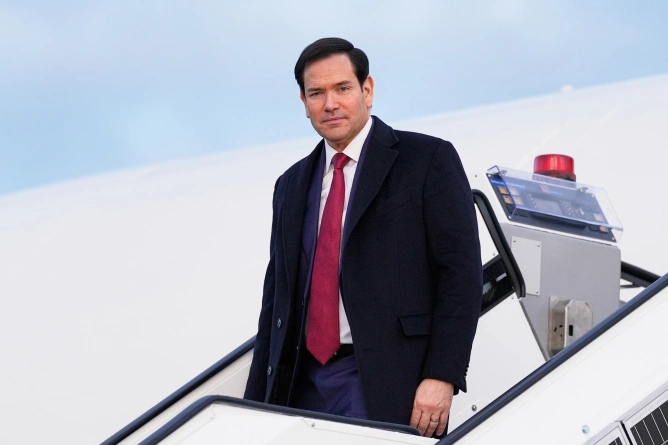
According to the agenda and reports from the venue, the main thematic blocks are: strengthening European defense, the future of the transatlantic relationship, great power competition, and its economic and technological effects. European security and NATO: the conference focuses on how Europe can strengthen its defense capabilities and resilience, in a context where Washington demands a fairer burden-sharing and redirects some of its attention towards the Indo-Pacific and its own internal security. US Secretary of State Marco Rubio announces that he will use his Saturday intervention to urge Europeans to "reassess" their role in the new geopolitical era and to discuss future support for Ukraine.
Ukraine and the eastern flank: discussions regarding the war in Ukraine remain central, with Rubio expected to meet in Munich with President Volodymyr Zelensky to coordinate positions regarding Ukraine's defense and sanctions against Russia. In parallel, the role of Europe as a last-resort guarantor of continental security is debated if US involvement dilutes.
The Middle East and Iran: against the backdrop of increased US naval presence in the Middle East and Donald Trump's warnings about possible new strikes against Iran, the conference addresses the risks of regional escalation, energy security, and the vulnerability of maritime routes.
Global order, economy, and technology: the MSC report allocates separate chapters to Europe ("Detachment Issues"), the Indo-Pacific ("Pact or Fiction?"), and the global economy ("Terms of Trade"), analyzing how the fragmentation of the international order affects trade, supply chains, and technological regimes.
Democracy, public opinion: alongside plenaries, events such as the European Defense Townhall take place, where citizens, press, and communicators engage directly with decision-makers about the future of Europe, or the series "Security and Literature", which discusses themes such as "The Uncertain Future of Ukraine" and "How to Make Democracies Great Again".
Among the peak political moments are the speeches of German Chancellor Friedrich Merz (on the first day), French President Emmanuel Macron (in the evening), and British Prime Minister Keir Starmer, as well as a meeting in E3 format (France, Germany, UK) to coordinate the European position.
Guests and fault lines: who contradicts whom
The conference brings together actors with divergent visions on the future of the international order, which explains the potential for tension in the discussions.
USA versus continental Europe: MSC organizers, led by Wolfgang Ischinger, indicate the current American administration as the strongest actor that "hits with a wrecking ball" the existing rules and institutions, through a transactional policy that places narrow national interests above norm-based cooperation. In response, the US ambassador to NATO, Matthew Whitaker, publicly rejected the idea that the post-1945 order is "under destruction", signaling that Washington contests this narrative of systemic decline.
Divergences within Europe: the Paris-Berlin relationship is marked by conflicts on issues such as eurobonds, the joint European fighter jet project, and competitiveness, even though France and Germany try to present a common line in Munich regarding the need for "more autonomy" from the USA. France pushes the idea of a Europe capable of acting independently on key security issues, while Berlin remains more cautious and more attached to the NATO umbrella.
Europe and the Trump administration: recent policies and statements by Donald Trump – from threats to NATO to attempts to link trade tariffs to the Greenland dispute – have created a climate of distrust, including among some traditionally close European allies of Washington, who are now discussing "post-America" scenarios in European security. Politico emphasizes that there are capitals that still hope for a "reset" of the transatlantic relationship, but also governments that "no longer have illusions".
Critical voices versus official lines: at the 2025 edition, US Vice President JD Vance used the MSC platform to accuse European allies of "suffocating freedom of expression" and warned of a "civilizational erosion", generating shock at the European level and reinforcing the perception of a fundamental rupture in common values.
This year, Rubio is expected to adopt a more diplomatic tone, but "philosophically similar", which could maintain underlying tensions regarding burden-sharing and mutual commitments.
Symbolically, the presence of a large American delegation, EU leaders, and actors from the Indo-Pacific and the Global South transforms the conference into a barometer of geopolitical realignments – from debates on how Europe relates to a more unpredictable Washington to how states in Asia or Africa perceive the competition between great powers.
Romania's positions and impact on our country
Official MSC information shows that Romania is present in line with its status as a NATO state on the eastern flank, directly interested in the security of Ukraine and the Black Sea. Up to this point, the public positions of Romanian representatives, as reflected in the press, fall within three key messages: Support for the rules-based order and NATO: Romanian officials emphasize the importance of maintaining American security guarantees in Europe, defending Article 5, and countering any drift towards a purely transactional order, where decisions are made solely based on the balance of power.
Insistence on support for Ukraine and security in the Black Sea: Bucharest aligns with the messages of the Baltic states and Poland regarding the need to avoid "strategic fatigue" towards Ukraine and to strengthen military and civilian infrastructure on the eastern flank, including in the context of drones and incidents near Romanian territory.
Warning about "competitive authoritarianism" and internal risks: The MSC report draws attention to the fact that trends of democratic erosion in the USA – described in the report as a possible "competitive authoritarianism" – compel Europe, including Romania, to take its own strategic autonomy more seriously, without breaking ties with Washington.
In the Romanian public discourse, the conference is presented as "the most important annual international security conference", and the report "Under Destruction" is used as a tool to explain the global climate, emphasizing that only a small portion of G7 citizens believe that current policies will improve the lives of future generations – which also puts pressure on the political elites in Bucharest.
What is the "Under Destruction" report and what does it mean
The official conference report, "Under Destruction – Munich Security Report 2026", is an analytical document coordinated by Tobias Bunde and Sophie Eisentraut, which seeks to explain how global politics has reached a stage where "demolition" of rules and institutions seems more seductive than reforming them. In simple terms, the report states the following:
We live in an era of "demolition politics": more and more political leaders, especially from democratic states, promise to "bring down" the existing system – institutions, treaties, rules – on the grounds that they are too bureaucratic, too legalistic, and unable to produce results for ordinary people. People no longer trust that classic reforms work: the survey included in the Munich Security Index 2026 shows that in all G7 countries, only a minority believes that current policies will make future generations live better, which fuels sympathy for leaders who "promise to break the system" – metaphorically, those with bulldozers, wrecking balls, and chainsaws. The role of the current US administration is central: the report shows that "the strongest" among politicians who are "hitting" the existing rules is none other than the President of the USA, Donald Trump, who presents himself as the leader who "liberates the country from the constraints of the existing order" to take it towards a new "greatness". The risk: a world of transactions, not rules: the authors warn that demolition politics does not necessarily create something better in its place, but risks leading us into a world governed by bilateral "deals", where private interests push public ones to the background, and the fate of regions is decided more by the will of great powers than by a set of rules accepted by all.
At the same time, the report is not purely pessimistic: it emphasizes that states and actors who want to defend the rules-based international order have begun to organize more effectively, seek formulas for cooperation less dependent on American leadership, and "expand their toolkit" to project their own security visions.
In short, "Under Destruction" can be summarized as follows: the world we have known since 1945, with NATO, the UN, the EU, and a relatively stable set of rules, is being shaken even by some of those who built it, led by the current American administration, and this creates a void of rules in which brute force and momentary transactions can count more than long-term commitments.
Why this conference matters for Europe's security architecture
From the perspective of European security architecture, the Munich conference plays three essential roles:
A barometer of the transatlantic relationship: after JD Vance's harsh attack on European allies in 2025 and against the backdrop of Donald Trump's unpredictable statements, the 2026 edition tests whether there is still a minimum political consensus between Washington and European capitals for maintaining a rules-based order and common security guarantees. A speech by Rubio confirming American commitment, even in a recalibrated form, could stabilize European expectations; one that is too conditional or transactional would accelerate discussions about Europe's "strategic autonomy". An intra-European coordination forum: in the context of disagreements between Paris and Berlin and pressures from Eastern states for a tougher line against Russia, Munich offers an open space where leaders can negotiate quick compromises – from higher defense budgets to common defense architectures and industrial initiatives in the defense sector. A bridge between Europe and the rest of the world: through the presence of actors from the Indo-Pacific and the Global South, the conference allows Europe to explain and legitimize security projects in front of partners who view both US and European policies with suspicion. In a world where the order is "under destruction", Europe's ability to build broad coalitions around norms – from international law to arms control – becomes a structural security element.
For Romania and for states on the eastern flank, the outcome of these discussions has direct consequences: it influences whether NATO remains robust and coherent, how firm support for Ukraine will be, and what maneuvering space EU states will have to build their own defense capabilities without undermining ties with the USA. In a Europe caught between a less predictable America and Russian pressure, the Munich conference is not just a networking event, but a critical node in redesigning the continent's security system.
Romania is represented at the Munich Security Conference by a delegation consisting of the Minister of Defense, Radu Miruță, the Minister of Foreign Affairs, Oana Țoiu, and the Director General of the Cybersecurity Directorate, Dan Cîmpean. Radu Miruță will participate in plenary sessions and bilateral meetings to discuss regional security and support for partners affected by the war in Ukraine.
Synthesis made with the help of a data monitoring flow provided by the media monitoring platform NewsVibe Romania. The analysis presented has been enhanced with the help of Machine Learning and Artificial Intelligence tools.
Latest News
07:20
23:12
22:53
22:53
22:25
See more news
NEWS ON THE SAME TOPICS