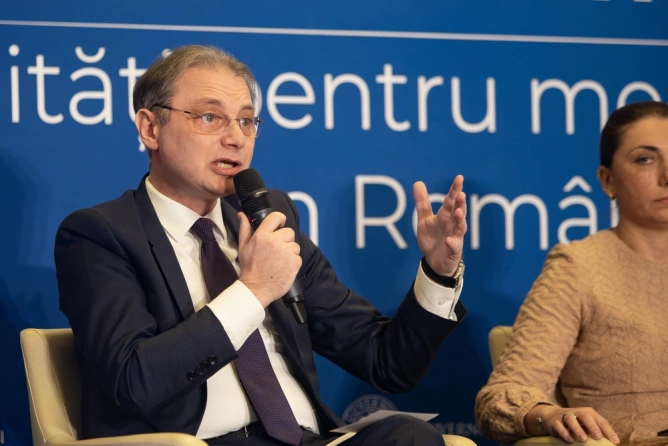
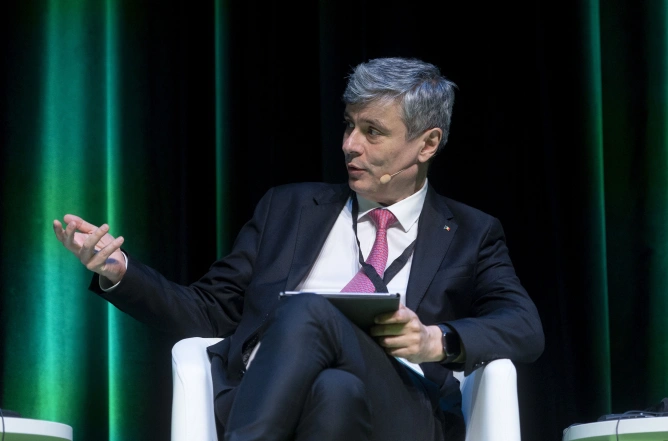
Virgil Popescu believes that European funds, including those remaining from the PNRR, can be used to support social housing.



Always see our news on Google
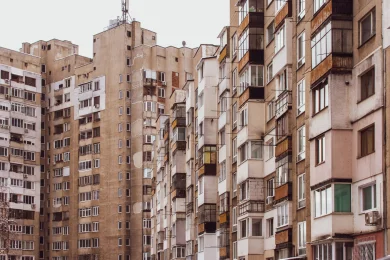
Virgil Popescu states that the adopted recommendations regarding the housing crisis pave the way for the use of remaining European funds from the PNRR for the construction and renovation of social, public, and affordable housing, and welcomes the inclusion of the PPE proposal regarding voluntary national plans for housing aimed at young people.
Virgil Popescu states that the recommendations adopted in the European Parliament regarding the housing crisis create conditions for the use of European funds, including the remaining money from the PNRR, for the construction and renovation of social, public, and affordable housing, and says that the text also includes the PPE proposal regarding voluntary national plans for housing aimed at young people.
In short
Virgil Popescu says that he voted for the recommendations that are to be implemented to ensure the necessary conditions for the right to have a roof over one's head.
He states that the housing crisis in the European Union is a reality that also affects Romania.
According to him, the text also includes the PPE proposal that calls for voluntary national plans regarding housing for young people.
Popescu welcomes the emphasis on the possibility of using the remaining funds from the PNRR for the construction and renovation of social, public, and affordable housing.
He links the recommendations to the energy transition, through standards regarding insulation, energy efficiency, and air quality.
Virgil Popescu presents the adopted recommendations as a political response to the housing crisis in the European Union, which he describes as a real problem, with effects also in Romania. In his formulation, the vote in the European Parliament goes in the direction of ensuring the necessary conditions for the "right to have a roof over one's head".
One key element that the MEP highlights is the political result for the PPE. He says that the result was "very positive for the PPE", as the text also included the group's proposal for requesting voluntary national plans for housing aimed at young people. The message is that the issue of young people's access to housing has been explicitly introduced into the architecture of the adopted recommendations.
The second central point of his intervention concerns funding. Popescu says he is pleased that emphasis has been placed on the possibility of using the remaining funds from the PNRR for the construction and renovation of social, public, and affordable housing. In the logic of his speech, this is the element with the greatest practical impact for member states with high budget constraints, including Romania.
The MEP explicitly formulates this connection with the internal situation, saying that, "given the budget constraints we have in Romania, the possibility of having European funds for the construction of social housing is an enormous gain." In this construction, European funds appear as a tool that can reduce pressure on national budgets in a costly social area that is difficult to finance exclusively from internal resources.
Popescu extends the argument to the broader economic and social dimension of investments in housing. He says that through this possibility, "we thus come with concrete investments in the social field, known to be a chapter that always puts pressure on national budgets." Thus, housing is presented not only as a social issue but also as a budgetary policy file.
The speech also introduces a clear connection with the energy transition. According to Popescu, the recommendations go further with this process, "due to the quality standards that will need to be met regarding insulation, energy efficiency, and air quality." In this formulation, housing policy is not separated from the green agenda but is integrated into a set of requirements that target energy performance and the quality of the housing stock.
The MEP links these effects to the construction sector. He states that the adopted recommendations "come to solve a series of problems that we have been stumbling over in Romania, in order to succeed in revitalizing the housing construction sector as well." Here, the emphasis is on the idea that the measures can also have an economic effect of reviving investments and activity in construction.
The end of the statement also introduces a social dimension related to labor mobility. Popescu says that these recommendations offer "a new perspective for workers, who may return home with more enthusiasm." At this point, housing is linked not only to accessibility and public investment but also to the perspective of the return of a part of the workforce.
Overall, his intervention builds a connection between four levels: the housing crisis, the use of European funds, pressure on national budgets, and energy efficiency standards. The political message is that the adopted recommendations can be used both as a social instrument and as an economic and energy transition tool.
Virgil Popescu's speech places the housing crisis within a broader European framework, in which access to affordable housing begins to be treated as a public policy issue with direct social, budgetary, and economic implications. The emphasis on social, public, and affordable housing suggests an attempt to open up more space for public intervention and for the use of European funds in the housing sector.
At the same time, the intervention links housing policy to two major files of the Union, the flexible use of remaining European funds and the objectives of the energy transition. In this logic, housing is presented not only as a response to a social emergency but also as part of a broader investment agenda, energy efficiency, and economic revitalization.
Latest News
11:47
11:17
11:09
11:02
10:59
See more news
NEWS ON THE SAME TOPICS

.webp)