European Commission mobilizes more than 100 experts to facilitate financing for affordable housing



Always see our news on Google
A new European group will develop tools to make it easier for social, affordable and energy-efficient housing projects to secure public and private financing. The initiative comes at a time when the Commission estimates that Europe needs approximately €150 billion in additional annual investment in housing. The work programme is expected to run for up to 18 months, and the launch meeting does not constitute approval of a new European fund.
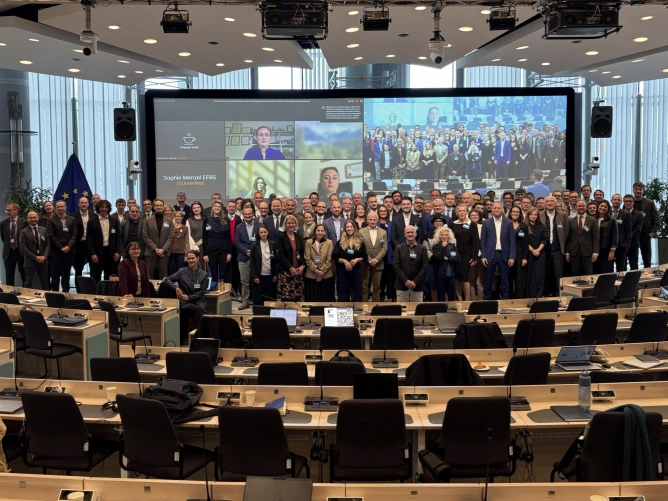
More than 100 experts from financial institutions, public authorities and the housing sector began work in Brussels on 20 October 2026 as part of a European group aimed at facilitating investment in affordable and sustainable housing. The European Commission initiative has a work programme of up to 18 months to develop financing models and practical tools. The launch does not constitute approval of a new fund or the opening of a grant call.
In brief
The European Commission brought together more than 100 experts on 20 October 2026. The group has up to 18 months to develop financing models, guidance and tools for affordable and sustainable housing.
The experts will examine the combination of grants, guarantees, equity and loans, the bundling of small projects, innovation in construction and the digitalisation of access to financing.
Cooperatives and community-based projects are also covered, as are housing for students, older people and essential workers.
The approximately €150 billion in additional annual funding represents the estimated need for public and private investment, not a newly approved EU budget. The launch does not open a grant call.
The €375 billion target by 2029 belongs to promotional banks and was announced in December 2025. Separately, the EIB is targeting €6 billion in annual financing in 2026 and supporting around one million affordable and sustainable homes by 2030; these targets do not constitute a new package arising from the meeting.
The group will examine combining grants, guarantees, equity investments, including those with long-term recovery, and loans for the construction and renovation of social, affordable and energy-efficient housing. For example, a project could use a grant to reduce energy consumption, a loan for the works and a guarantee to limit the lender’s risk. The models aim to attract capital to projects where rents or prices must be kept affordable.
One priority is bundling small projects into portfolios that can attract institutional investors and share administrative costs. The experts will examine the needs of cooperatives and organisations based on community land ownership, as well as housing for students, older people and essential workers.
The other two areas of work are financing innovation in construction, including modular techniques and components manufactured off-site, and digitalising access to financing. The group will prepare guidance, tools, standardised documents and models to simplify applications for grants and financial instruments.
Participants include the European Investment Bank (EIB), the European Bank for Reconstruction and Development (EBRD), national and regional promotional banks, housing authorities and developers. Efficient Buildings Europe, Housing Europe, consultants, researchers and environmental organisations are also involved. The cooperation aims to connect financial expertise with housing development and energy efficiency so that investments are compatible with residents’ incomes.
A Eurobarometer survey published in June 2025 and cited by the Commission at the launch shows that 40% of respondents in the EU consider the lack of affordable housing an immediate and urgent problem in their local area. The share rises to 51% among those living in cities. The percentages reflect perceptions of a local problem, not the proportion of people unable to afford their housing.
The Commission’s estimated additional need is approximately €150 billion annually, at 2024 prices. The analysis by the Joint Research Centre and the Directorate-General for Economic and Financial Affairs covers the period 2025–2035 and equates the shortfall to approximately 650,000 additional homes per year compared with the anticipated construction rate. This is an estimate of the public and private investment required, not an approved budget or funds distributed by the group. Expanding supply may also include renovating or converting existing buildings.
Separately, the national and regional banks represented by the European Long-Term Investors Association and the European Association of Public Banks announced in December 2025 their ambition to provide €375 billion in financing from their members’ own resources by 2029 for social, affordable and sustainable housing. This is a collective target set before the meeting, not a new Commission allocation or an amount fully contracted or paid.
The EIB Group is seeking, under its existing plan, to increase annual housing financing to €6 billion in 2026. According to the Commission’s presentation, the plan is expected to support approximately one million affordable and sustainable homes by 2030. These targets should not automatically be added to the €375 billion as a new package approved at the meeting.
The group is a joint initiative of the European Coalition for Energy Efficiency Financing and the Pan-European Affordable and Sustainable Housing Investment Platform. The Commission established it in June 2026, and the call for participating organisations closed on 16 August. Following the inaugural meeting on 20 October, work will continue in plenary sessions and thematic subgroups to prepare financing models and practical documents.
For local authorities and organisations in the sector, the intended result is simpler access to existing sources of financing. The effects will depend on the tools developed and their use by administrations, banks and investors. At this stage, the initiative does not provide country allocations, grants for individuals or a list of approved projects.
https://2eu.brussels/ro/news/comisia-europeana-mobilizeaza-peste-100-de-experti-pentru-a-facilita-finantarea-locuintelor-accesibile
Latest News
23:12
22:53
22:53
22:25
22:06
See more news
NEWS ON THE SAME TOPICS