Virgil Popescu calls for European protection for the offshore infrastructure in the Black Sea and says that Neptun Deep is a European energy security project.



Always see our news on Google
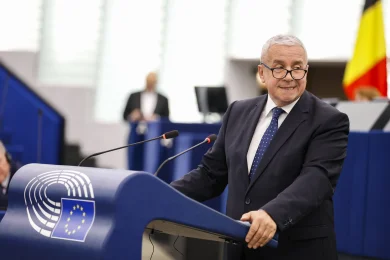
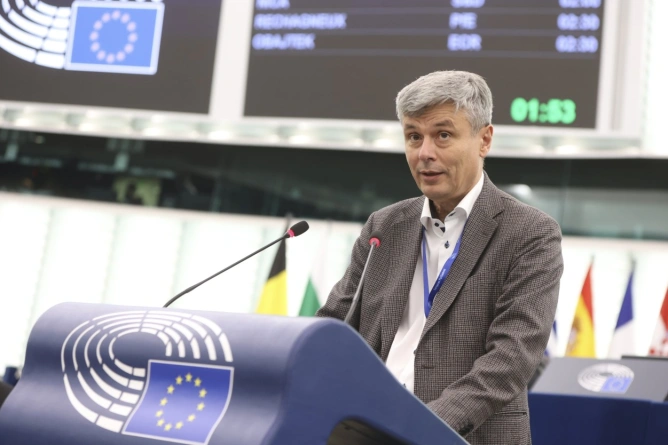
In the plenary session of the European Parliament, Virgil Popescu called for the Black Sea to be treated as part of the strategic energy architecture of the Union, presenting the Neptun Deep project as a European energy security project and arguing that the protection of offshore infrastructure must become an absolute European priority.
Virgil Popescu stated in the plenary session of the European Parliament that European energy security cannot be built solely around the North Sea and called for the Black Sea to be treated as a strategic component of the Energy Union, asserting that the Neptun Deep project "is not just a national project, it is a European energy security project" and requesting European support for increasing the protection of offshore infrastructure in the region.
In short
Virgil Popescu said that European energy security "is not built only in the North," but also in the South, East, and West.
He presented the Neptun Deep project as "a European energy security project."
The MEP stated that without the new volumes of natural gas from the Black Sea, the European energy transition risks being "more unstable, more expensive, and more vulnerable to external shocks."
According to Popescu, the Romanian continental shelf of the Black Sea has a potential of over 70 GW for offshore wind energy.
He called on the European Commissioner for Energy and Housing, Dan Jørgensen, to support the increase of protection for offshore infrastructure in the Black Sea.
Virgil Popescu's intervention started from the plenary debate about the energy potential of the North Sea but shifted the focus to the eastern dimension of European energy security. "Europe is talking today here about the energy potential of the North Sea. It is a legitimate and necessary discussion. But European energy security is not built only in the North. It is built in the South, in the East, and in the West," said the MEP.
He directly linked this argument to Romania's position in the region and the role of the Black Sea in the Union's energy strategy. "I come from an Eastern country, and that is why I am very interested in the Black Sea area. Romania plays a strategic role in this effort," Popescu stated, introducing the Neptun Deep project at the center of his intervention.
His main message was that the exploitation of natural gas from the Black Sea must be viewed in terms of European energy security, not just national interest. "The natural gas extraction project from the Black Sea, Neptun Deep, is not just a national project, it is a European energy security project," he said. In his formulation, the new volumes of gas from the Black Sea are presented as a stability element for the EU's energy transition. "Without the new volumes of natural gas from the Black Sea, the European energy transition risks being more unstable, more expensive, and more vulnerable to external shocks."
The speech was not limited to gas. Popescu also introduced the argument regarding Romania's offshore energy potential in terms of renewables, stating that "the Romanian continental shelf of the Black Sea has a huge potential for wind energy, over 70 GW." In this construction, the Black Sea appears as a dual source of energy security, both through gas and through the capacity to develop offshore wind energy.
Popescu argued that a European electrified, digitalized, and decarbonized economy cannot be built without stable sources and without resilient infrastructure. "The reality is simple: we cannot build an electrified, digitalized, and decarbonized economy without stable energy sources and without resilient infrastructure," he said, thus linking the theme of the green transition to that of energy security and the protection of critical infrastructure.
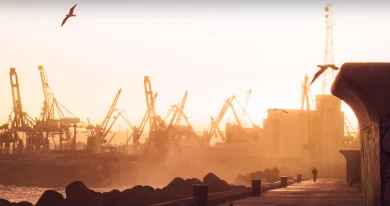
A central part of the intervention focused on the vulnerability of offshore energy infrastructure. Popescu invoked the attacks and sabotage in recent years, as well as the use of energy as a geopolitical tool. "In recent years, we have seen attacks on energy infrastructure, sabotage, and the use of energy as a geopolitical weapon. The protection of offshore infrastructure, whether from the North Sea or the Black Sea, must become an absolute European priority."
Virgil Popescu stated that he asked the European Commissioner for Energy and Housing, Dan Jørgensen, to support the increase of protection for offshore infrastructure in the Black Sea, arguing that Romania "will contribute to strengthening the energy security of the EU through the Neptun Deep project and offshore wind energy."
The intervention also introduces a clear positioning in favor of technological neutrality. Popescu said that "we must remain faithful to a fundamental principle: technological neutrality," adding that "renewable energies are essential and must be accelerated, but alongside them, we also need nuclear energy." The political message is that the energy transition should not be built exclusively around a single technology, but around a mix that ensures stability, competitiveness, and security.
In the same logic, he presented Romania as an energy stability provider for the Union. "Romania is already demonstrating that it can be an energy stability provider across the Union. We are investing in offshore in the Black Sea and regional interconnections," Popescu stated. This passage shifts the discourse from regional advocacy to a European strategic argument, in which Romania is presented as a state capable of contributing to the energy security of the entire Union.
The MEP also adds a dimension of political continuity between his national mandate and his current European role. "Even when I was Minister of Energy, I prepared the legislative project that now allows investments in offshore wind energy. That is why, now as an MEP, I support these investments, demanding protection and security."
The end of the intervention reiterates the idea of an Energy Union built on a balanced contribution from all regions and resources. "If we want a credible energy transition, we must build a real Energy Union in which all regions and all resources contribute to the common goal. Europe needs a green transition, but also a safe, competitive, and geopolitically consistent transition."
Virgil Popescu's intervention is part of a broader debate about the European Union's ability to build its energy security through geographical diversification, the development of offshore infrastructure, and the combination of climate objectives with those of strategic resilience. In this context, the speech seeks to reposition the Black Sea at the center of the European discussion, at a time when debates about offshore energy are predominantly dominated by the North Sea.
Politically, his message links three files that are often treated separately: the exploitation of offshore gas, the development of offshore wind, and the security of energy infrastructure. In the formulation proposed by Popescu, these themes are part of the same European strategic logic, that of a green transition that is at the same time safe, competitive, and resilient to geopolitical shocks.
Latest News
22:58
22:44
22:41
22:21
22:08
See more news
NEWS ON THE SAME TOPICS