EU and 12 CPTPP countries launch early warning network to prevent supply chain disruptions



Always see our news on Google
The European Union and the 12 countries participating in the Comprehensive and Progressive Agreement for Trans-Pacific Partnership (CPTPP) have launched a joint early warning network in Hanoi to identify risks affecting supply chains. The initiative, agreed within the framework of the second EU–CPTPP Dialogue on Trade and Investment, will enable participating authorities to share information on potential disruptions and analyze ways to limit their economic consequences.
Key points The EU–CPTPP network will facilitate the identification of risks, the rapid exchange of information and the assessment of disruptions’ effects on international production and distribution chains. Cooperation will be voluntary and legally non-binding. The network’s first meeting is scheduled for early 2027. The initiative is a concrete outcome of the dialogue launched in Melbourne in November 2025 between the EU and the 12 CPTPP countries, which together accounted, according to the Commission, for 32% of global GDP and 37% of global trade. Participants also agreed to develop cooperation on digital trade, customs procedures, logistics services and trade-related environmental measures, without the initiative representing EU accession to the CPTPP agreement.
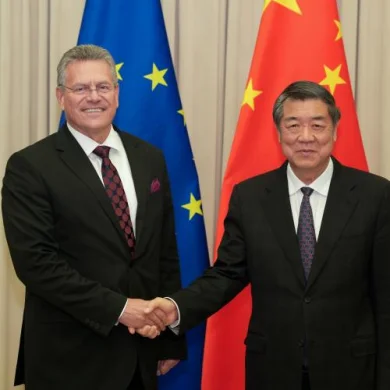
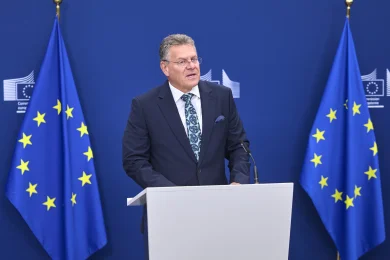
European Commissioner for Trade and Economic Security Maroš Šefčovič described the launch of the network as a concrete result of the cooperation that began a year earlier between the two groups of economies.
According to the European Commission, the mechanism will help improve authorities’ ability to anticipate supply difficulties and identify their effects on businesses and consumers.
The network will bring together representatives of the participating authorities. They will analyze both the risks of future disruptions and the consequences of incidents that have already occurred at different stages of value chains, from the supply of raw materials and components to the distribution of finished products.
The exchange of information will also help identify situations in which a difficulty arising in one economy may affect the production or availability of goods in other countries.
The ministerial statement adopted in Hanoi specifies that participation in the mechanism will comply with each participant’s legislation, domestic policies and international obligations.
The first meeting will take place in early 2027. Authorities will examine the experience gained in managing previous disruptions and seek to establish a common approach to the network’s operation.
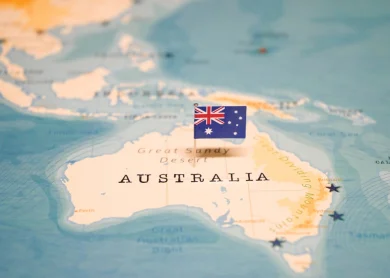
The EU–CPTPP Dialogue was launched on 20 November 2025 in Melbourne, Australia. At the time, the European Commission estimated that the participating economies together accounted for 32% of global gross domestic product and 37% of global trade.
The CPTPP brings together Australia, Brunei, Canada, Chile, Japan, Malaysia, Mexico, New Zealand, Peru, Singapore, the United Kingdom and Vietnam.
The European Union is not a party to the CPTPP. The dialogue on trade and investment represents a separate framework for cooperation between the EU and the agreement’s signatory countries.
The meeting in Vietnam was prepared through consultations between representatives of trade authorities and a technical workshop held in July 2026 in Tokyo, with the participation of the EU, CPTPP and the Association of Southeast Asian Nations (ASEAN).
In the area of critical raw materials, Regulation (EU) 2024/1252 already provides for monitoring supply risks, supplier concentration and developments in production and demand. The regulation also establishes mechanisms for warning member states and assessing vulnerabilities.
In the joint statement, ministers expressed concern about market-distorting practices, industrial overcapacity and the use of economic dependencies for coercive purposes.
Participants reaffirmed the importance of a rules-based international trading system and the need to reform the World Trade Organization (WTO), including the functioning of its dispute settlement mechanism.
In the area of digital trade, participating authorities are preparing a joint report on ways to deepen cooperation, which is expected to be presented to ministers in the first half of 2027.
In Hanoi, participants also reaffirmed their support for maintaining the practice of not imposing customs duties on electronic transmissions between their economies, after WTO members failed to agree on extending the multilateral moratorium at the ministerial conference held in March 2026 in Yaoundé.
Authorities were also tasked with examining ways to improve the application of rules of origin and customs procedures, including to combat illegal transshipment and practices used to evade customs duties.
Another area of work concerns logistics services. Participants will prepare a non-binding reference document aimed at promoting transparent regulatory frameworks, digitalization and more efficient transport and distribution of goods.
Cooperation on trade-related environmental measures will be developed separately through exchanges of information and experience between authorities.
For European businesses, including manufacturers and importers in Romania, the usefulness of the new mechanism will depend on its ability to identify at an early stage risks affecting the availability of components, raw materials and transport services.
The European Commission will present the results of the Hanoi meeting to civil society organizations at a meeting scheduled for 15 December 2026 in Brussels and online.
Following the first meeting of the early warning network, scheduled for early 2027, the results of the cooperation will be assessed at the next edition of the EU–CPTPP Dialogue on Trade and Investment, scheduled for next year.
น้ำ,
Latest News
09:40
09:25
09:11
08:54
08:45
See more news
NEWS ON THE SAME TOPICS