EU and Canada plan to launch alliance for trade, technology and defence in Montreal



Always see our news on Google
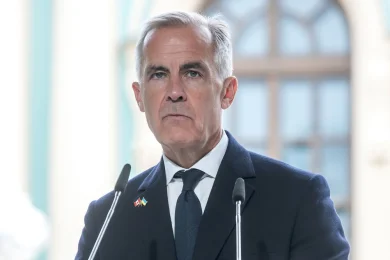
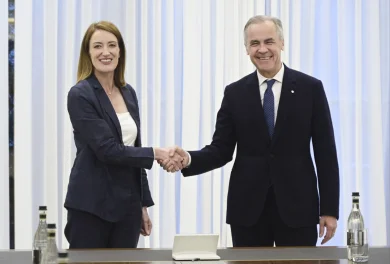
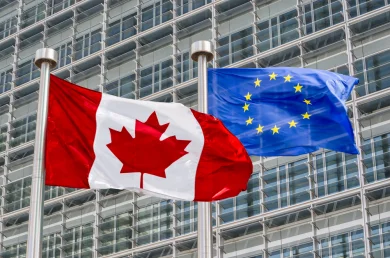
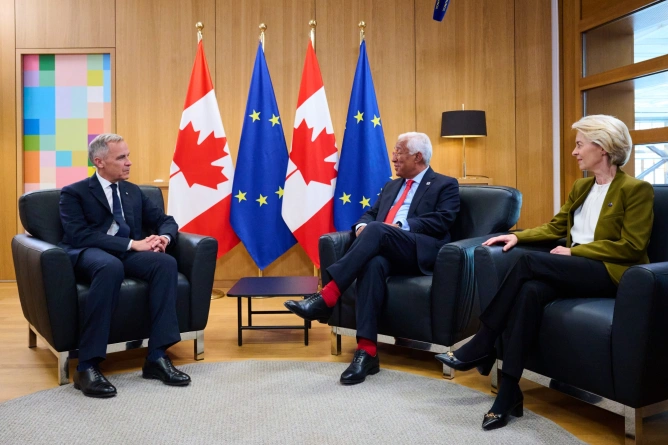
The European Union and Canada are preparing to launch a new alliance for trade, technology and defence at the summit on 29–30 October in Montréal. António Costa, President of the European Council, Ursula von der Leyen, President of the Commission, and Canadian Prime Minister Mark Carney will discuss how to bring the economies and defence industries of the two sides closer together, in a partnership that places security of supply alongside market access.
In brief
1. The EU and Canada intend to launch the “Alliance for the Future” at the summit in Montréal on 29–30 October. The agenda includes trade, technology, critical raw materials, defence, research and youth mobility.
2. Trade in goods and services reached approximately €130 billion in 2025, around 80% above the 2016 level. The CETA trade agreement has applied provisionally since September 2017, while its full ratification continues.
3. Negotiations for a digital trade agreement were launched in March 2026 and are ongoing. The new agreement is expected to complement CETA with rules for digital transactions and online consumer protection.
4. The EU–Canada agreement on SAFE has been in force since 1 August 2026 and sets the conditions for Canadian industry’s participation in defence procurement. The instrument provides loans to EU Member States, not a financial allocation for Canada.
5. The leaders will also discuss opportunities for young people and researchers. Canada is already associated with the collaborative research pillar of the Horizon Europe programme, while any possible new measures on mobility must be established separately.
The “Alliance for the Future”, the name announced in the European Council’s agenda, is expected to provide a broader framework for the cooperation that Brussels and Ottawa have expanded in recent years. Launching it is an objective of the meeting, and the leaders are expected to adopt a joint statement at the conclusion of the summit. The meeting follows the strategic partnership agreed in June 2025 and the policy proposals presented in September this year.
In her State of the Union address, von der Leyen opened the discussion on possible “associate member” status for Canada, while Carney presented his vision of a closer alliance in an address to the European Parliament. The Montréal summit is an opportunity to give this rapprochement concrete substance. The agenda published for the meeting provides for launching the alliance and deepening economic and institutional ties; a new legal status for Canada in relation to the EU remains a political proposal.
The economic stakes are already substantial. According to the European Commission, bilateral trade in goods and services reached approximately €130 billion in 2025, compared with €72.1 billion in 2016, the year before CETA began to apply provisionally. The increase is around 80%. Goods accounted for €81.5 billion, while services amounted to approximately €49 billion, rounded figures that explain the total presented by the Commission.
CETA has applied provisionally since 21 September 2017 and has gradually eliminated customs duties on almost all tariff lines, with the proportion reaching 99% by 2024. Its full entry into force still depends on the remaining national ratifications. In Montréal, the leaders will discuss making better use of the existing agreement and reciprocal investment in strategic industries, alongside expanding cooperation in areas that digital trade and technological transformation have brought to the forefront.
One of the files already on the negotiating table is the digital trade agreement. Talks were launched in March 2026, meaning that the summit is taking place during a negotiation process, following the preparatory stage announced in 2025. The Commission is seeking rules that would provide greater legal certainty for digital transactions, consumer protection and a safer online environment. The agreement would complement CETA; its final content depends on the negotiations.
The Canadian government presents the rapprochement as a meeting of complementary strengths. The European market, the EU’s research and industrial capacity could be linked with Canada’s energy and mineral resources, as well as its activities in artificial intelligence, quantum technologies and the space sector. Ottawa argues that closer cooperation can open markets for exporters and give consumers more choice at lower costs. These are the economic objectives of the initiative, whose results will depend on the measures agreed and on investment.
Critical raw materials directly connect the trade agenda with economic security. The EU and Canada have had a partnership in this field since 2021, and the meeting will address supply chains and investment in strategic sectors. Access to resources and the capacity to transform them into industrial products matter both for the energy transition and for the defence technologies and equipment that the two sides want to develop.
In defence, cooperation already has two distinct foundations. The security and defence partnership agreed in June 2025 provides the political framework for cooperation, including in the face of cyber and hybrid threats. The bilateral agreement on SAFE, signed on 14 February 2026, applied provisionally from 13 April and entering into force on 1 August, sets the conditions under which Canadian companies and products can participate in procurements supported by the European instrument.
SAFE makes loans of up to €150 billion available to EU Member States for joint defence procurement. For Canada, the agreement opens industrial opportunities, subject to rules on company eligibility, control, security and the origin of components. Contracts depend on procurement procedures. Ottawa announced an example of Canadian participation as early as June: a contract awarded to Montréal-based Marconi Technologies for radio equipment intended for Poland’s Cyber Command.
The envisaged cooperation does not stop at industry. The leaders will discuss education, research and opportunities for young people to study and work on the other side of the Atlantic. Canada has been associated since 2024 with Pillar II of the Horizon Europe programme, dedicated to collaborative research projects, allowing eligible organisations to participate in consortia and receive funding under the programme’s conditions. In the field of professional qualifications, the mutual recognition agreement for architects entered into force in December 2025. Expanding mobility remains an objective for discussion, with any rules and conditions to be agreed.
The political agenda includes support for Ukraine, the situation in the Middle East and security in the Arctic, alongside cooperation on climate and energy. The European Council links these discussions to a relationship in which trade and security are increasingly closely connected. Before the leaders’ meeting, Costa, von der Leyen and Carney will take part in the Canada–EU Business Forum on 29 October. A joint press conference is scheduled for 30 October, when the results of the summit are expected to be presented.

Latest News
19:13
19:13
18:55
18:43
18:20
See more news
NEWS ON THE SAME TOPICS