Canada and the EU discuss an association through permanent consultations while preserving decision-making autonomy



Always see our news on Google
Closer ties would enable policy coordination and broader participation in programs, without Canada joining the EU. Jonathan Wilkinson and Delphine Pronk explained to the European Parliament that the concrete form remains to be defined. The formula of “associate member” does not grant Canada voting rights in the Union’s institutions or automatic access to funding.
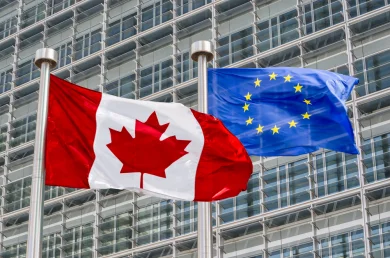
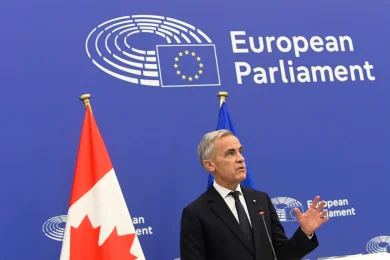
Canada and the European Union are discussing the establishment of permanent consultations to coordinate policies, while each retains the right to make its own decisions. Canadian Ambassador Jonathan Wilkinson presented this mechanism as the minimum objective of a closer association, without accession, at the hearing of the European Parliament’s Committee on Foreign Affairs (AFET) on 3 November. The additional rights, contributions, and access to programs still need to be defined.
In brief1. Jonathan Wilkinson explained that institutional rapprochement would enable regular consultations before decisions that could affect the partner, without transferring Canada’s or the EU’s decision-making power.
2. Delphine Pronk, the representative of the European External Action Service, specified that the first stage uses the existing agreements. The association model must be shaped together with Canada, the member states, and the European Parliament.
3. The Montréal summit declaration provides for defining the concept by the 2027 summit. Mark Carney is seeking to conclude the political discussions in June, following a meeting between the Canadian government and the College of Commissioners in March; these are not guaranteed deadlines for a treaty to enter into force.
4. The expression “associate member” does not create a category of EU membership provided for by the treaties and does not grant Canada voting rights in the European institutions. Any association agreement would have to be approved through the applicable legal procedures.
5. Existing participation in Pillar II of Horizon Europe and in procurement through SAFE has its own rules. Extending cooperation to other programs, including Erasmus+, depends on additional agreements and conditions.
At the AFET hearing, Wilkinson described the usefulness of continuous dialogue: the two sides could discuss in advance the measures they are preparing, in order to avoid unintentionally harming each other’s interests. Consultation would seek more effective cooperation, not the relinquishment of either side’s political autonomy. The ambassador left open the possibility that the future association could include other elements as well, which will be discussed in the coming months.
Delphine Pronk, Director-General for the Americas at the European External Action Service (EEAS), presented three directions for closer ties: policy coordination, cooperation between institutions, and broader participation in each other’s programs. She mentioned meetings between the Canadian government and the Commission, parliamentary exchanges, and closer contacts between other institutions, but stressed that the model is still being defined.
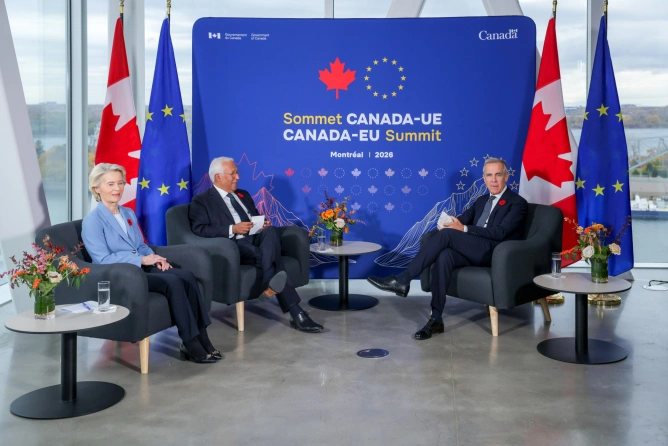
The clarifications follow the EU–Canada summit in Montréal, held on 29–30 October. In the joint declaration, the leaders committed to defining by the next summit the concept of an increasingly close association, without full membership. The political expression “associate member,” used by Prime Minister Mark Carney and Commission President Ursula von der Leyen, is not the name of an institutional status already granted.
The distinction matters for how Ottawa might participate in European discussions. Consultations with ministers or attendance at a meeting do not amount to a vote in the Council of the EU or the European Council. The proposal does not create Canadian seats in the European Parliament, nor does it give Canada the right to appoint a commissioner. Cooperation between institutions must be organized within the limits of their current powers.
The treaties distinguish between accession and association. Accession is the procedure through which a European state may become a member of the Union, under the conditions laid down in Article 49 of the Treaty on European Union. Separately, Article 217 of the Treaty on the Functioning of the European Union allows association agreements with third countries, based on reciprocal rights and obligations, joint action, and special procedures. Such an agreement does not turn the partner into a member state.
If a new association agreement were chosen on this basis, it would require, among other things, the approval of the European Parliament and unanimity in the Council, in accordance with the procedure under Article 218. The Council authorizes the opening of negotiations and the conclusion of the agreement, while Parliament must be informed throughout the process. This is the possible procedure for such an instrument, not a decision already announced for the entire Canadian project.
The first stage can advance without a completely new treaty. Pronk explained that the work starts from CETA, the trade agreement, and the Strategic Partnership Agreement (SPA), which organizes political dialogue. European and Canadian administrative groups will identify areas of cooperation, investment, and possible legislative projects. The alliance does not replace the two agreements, but seeks to make more intensive use of them.
CETA has been provisionally applied since September 2017, and the SPA since April 2017. Council registers show that the ratification processes have not been completed for all parties. Pronk called for their continuation. Provisional application already allows cooperation in the areas covered, but it should not be confused with the agreements’ full entry into force.
Participation in programs is negotiated on the basis of each instrument’s rules. Canada has been associated since July 2024 with Pillar II of Horizon Europe, intended for collaborative research, with the possibility of direct funding for eligible projects. This association does not automatically cover the other components. Wilkinson expressed interest in Pillar III and the future European Competitiveness Fund, proposing reciprocity for European businesses in Canada. Diplomatic interest does not constitute approval of access or of financial allocations.
Defence cooperation offers another sectoral example. The EU–Canada agreement on SAFE allows Canadian companies and products to participate in eligible procurement under the agreed conditions. SAFE, however, grants loans to EU member states; the participation of Canadian suppliers does not mean that Ottawa receives the same loans or decides how the European budget is used.
For Erasmus+, the leaders agreed to launch negotiations for deeper Canadian participation. The scope and financial conditions remain to be established. Additional study or training opportunities do not in themselves establish the free movement of Canadian citizens within the Union. For students, researchers, and firms, the benefits will depend on the eligibility provided for in the specific agreements.
Institutional discussions are taking place in parallel with the Alliance for the Future, launched at the summit for cooperation in trade, technology and research, resources and energy, financial services, security, and people-to-people ties. Wilkinson distinguished the specific EU–Canada relationship from this alliance, in which other trusted partners might also participate. Such openness would itself require the conditions for cooperation to be established.
The political timetable has two more precise milestones. In his closing speech at the summit, Carney announced a meeting in Canada between the federal government and the College of Commissioners in March 2027. He also accepted António Costa’s invitation to participate in European Council meetings in June, when he is seeking to conclude the negotiations. Wilkinson reiterated the June objective in AFET.
The joint declaration refers more broadly to defining the concept by the 2027 summit. Concluding political discussions does not guarantee that all necessary acts will be signed, approved, and applicable at the same time. The legal form chosen will determine the role of the institutions, any ratification procedures, and the moment when the new rights can be used.
For now, the concrete outcome is the commitment to build a closer relationship and a more regular consultation mechanism. Existing rights continue to derive from agreements in force or provisionally applied. Additional rights must be defined and approved: political rapprochement does not automatically grant Canada a vote in EU institutions or access to all European programs.
Latest News
19:27
19:25
19:21
19:16
19:05
See more news
NEWS ON THE SAME TOPICS






.webp)