The European Commission presents a plan to secure the supply of fertilizers and protect farmers



Always see our news on Google
The plan aims to provide financial support before summer, more flexible use of CAP instruments, strengthening European fertilizer production, and reducing dependence on imports.
The European Commission has adopted the Fertiliser Action Plan, a package of measures aimed at helping farmers affected by high fertilizer costs, strengthening European production, and reducing the European Union's dependence on imports.
In short
The European Commission has adopted the Fertiliser Action Plan to ensure farmers' access to fertilizers and to strengthen food security.
The Commission will present a financial package before summer for the farmers most affected by high fertilizer costs.
The plan includes a legislative package aimed at more flexible use of support from the CAP strategic plans, including a liquidity scheme and more flexible advance payments.
The EU wants to support domestic fertilizer production and accelerate the transition to bio-based fertilizers with reduced carbon emissions and circularity.
The Commission will launch a partnership for the fertilizer value chain and will analyze options such as seasonal stocks, joint purchases, and better market monitoring.
The European Commission has adopted an action plan for fertilizers, presented in response to the high costs borne by farmers, market volatility, and the European Union's vulnerability to external supply shocks.
The plan combines immediate measures for accessibility and supply security with medium- and long-term actions to strengthen domestic production, increase supply chain resilience, and accelerate the transition to bio-based fertilizers with reduced carbon emissions and circularity.
The Commission states that fertilizers are essential for agricultural productivity, farm viability, and food security. High energy costs, supply disruptions, and geopolitical tensions have led to a sharp increase in prices, putting pressure on farmers in Europe.
According to the Q&A document, the fertilizer needs for the current harvest year seem to be covered. However, many farmers have postponed purchasing fertilizers for the next planting season due to high prices, raising risks of logistical bottlenecks and changes in crop choices for 2027.
The Commission warns that high prices may lead to reduced fertilizer use or cultivated areas, posing risks to yields, food production, and the resilience of the EU agri-food sector.
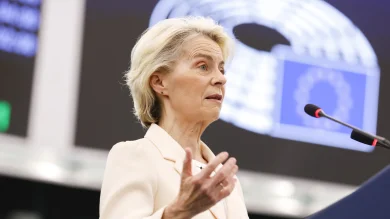
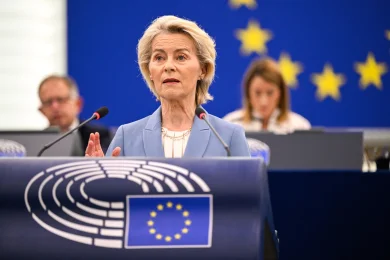
The President of the European Commission, Ursula von der Leyen, stated that the plan aims to strengthen the European fertilizer industry and support farmers.
"Through this action plan, we are investing in a stronger European fertilizer industry, supporting European farmers, and accelerating innovation in sustainable solutions produced in Europe. The ongoing fossil fuel crisis shows that climate leadership and economic resilience are interconnected. That is why Europe is building a future based on sustainability, financial accessibility, and industrial strength," said von der Leyen.
In the short term, the Commission announces exceptional support for farmers affected by high fertilizer costs, using existing EU agricultural policy tools. The European executive will propose mobilizing the EU budget to strengthen the agricultural reserve with a substantial amount.
The financial package will be presented before summer to provide liquidity to farmers ahead of the next production cycle and to support the continuity of agricultural production.
The Commission will also present a legislative package aimed at allowing member states to make more use of the support available in the current strategic plans of the common agricultural policy. This will include a new liquidity scheme for cash flow, more flexibility for advance payments, and stronger incentives for efficient agricultural practices.
The measures will target reducing and optimizing fertilizer use, transitioning to bio-based fertilizers, and investing in farm resilience where necessary.
The Commission also announces actions for better nutrient management, support for more efficient agricultural practices in nutrient use, and a stronger role for agricultural advisory services within the CAP.
The European executive will propose measures to facilitate the use of digestates, with adequate environmental guarantees. Following the upcoming evaluation of the Nitrates Directive, the Commission will clarify certain implementation rules to better align them with the realities of the agricultural calendar on the ground.
The Commissioner for Agriculture and Food, Christophe Hansen, stated that food security starts with fertilizer security.
"Food security starts with fertilizer security. Europe needs to produce more and depend less on others for the nutrients that sustain our agriculture. The action plan we are presenting today aims to secure food production, competitiveness, and strategic autonomy for Europe. In the short term, we will support European farmers so they can buy the fertilizers they need for the next harvest season. In the long term, we will strengthen our domestic production and unlock the potential for developing bio-based fertilizers. This action plan will provide a European partnership on fertilizers, with investments and actions at all levels: European, national, and private," said Hansen.
The plan includes measures to support the European fertilizer industry, prevent deindustrialization, ensure stable supplies, and reduce dependence on imports.
The Commission notes that approximately 30% of the EU's nitrogen fertilizer demand is covered by imports, and ammonia production, the first step for inorganic nitrogen fertilizers, is energy-intensive and largely depends on imported natural gas. The ammonia production capacity in the EU has decreased by nearly 10% in recent years.
In the case of phosphate fertilizers, 70% of the EU's needs are covered by imports of phosphate rock, with global reserves concentrated in a few countries outside the Union, especially in Morocco. For potassium, the dependence is lower, with about 40% of the need covered by imports, and Germany and Spain having domestic extraction activities.
The Commission emphasizes that availability is not currently the main issue, as the EU market remains supplied. The central issue is financial accessibility, especially for nitrogen fertilizers, whose prices are strongly influenced by international conditions and gas prices.
The plan aims to expand the use of European alternatives, including organic and bio-based fertilizers, alternatives to traditional mineral products, algal biomass, soil improvers, microbial solutions, biostimulants, and the recovery of nitrogen and phosphorus from sewage sludge.
In the context of the upcoming review of the EU emissions trading scheme, the Commission states that it will examine options for any additional flexibility granted to the fertilizer industry to be accompanied by the responsibility to decarbonize production, increase the production of bio-based and circular fertilizers, and secure the availability and accessibility of fertilizers produced in Europe.
The Commission will also analyze incentives for carbon farming and carbon removals, by combining private financing with public resources, including from member states, the CAP, the European Competitiveness Fund, and ETS revenues.
The European executive promises to reduce unnecessary bureaucracy and market barriers, as well as new measures to increase demand for sustainable fertilizers produced in Europe. The Commission will assess, in the context of the review of the Waste Directive, measures to simplify the management of animal by-products and other by-products.
Existing funds, including cohesion funds, will be mobilized to support the production of biogas and biomethane and investments in wastewater infrastructure, which can expand the valorization of sludge and nutrient recovery.
The Executive Vice President for Cohesion and Reforms, Raffaele Fitto, stated that the plan combines immediate support with medium- and long-term actions.
"The European Commission recognizes the difficulties faced by the agricultural sector due to rising costs and volatility in international markets. Through this action plan, we propose immediate measures to support farmers, including mobilizing available resources from cohesion policy, while at the same time establishing medium- and long-term actions to strengthen the resilience of the sector, reduce external dependencies, and increase the robustness and competitiveness of European agriculture," said Fitto.
For market functioning, the Commission will launch a EU Fertilizer Value Chain Partnership, which will bring together producers, farmers, and member states. The first policy dialogue in this format will be organized in the coming months and will analyze challenges regarding supply, production, marketing, and use of fertilizers.
The Commission will strengthen market monitoring, early warning capabilities, and a framework for regularly updated data on fertilizers in the EU. The Fertilizer Market Observatory will remain the central platform for market information and will be strengthened with better data on market functioning, prices, and stocks.
The Commission will also prepare a report on how costs related to CBAM and ETS are passed on to the fertilizer prices paid by farmers and, ultimately, to food prices.
To strengthen preparedness, the Commission will assess options regarding stocks and other instruments to secure fertilizers and key inputs. These may include seasonal or minimum stocks and, where appropriate, joint purchases or other instruments to increase resilience to external shocks and reduce price volatility.
The Commission also mentions the possibility of proposing the activation of the vigilance or emergency mode of the internal market, in accordance with the Internal Market Emergency and Resilience Act, if necessary.
The Commission presented a communication in 2022 regarding the availability and accessibility of fertilizers, at a time when gas and fertilizer prices had reached very high levels. The market stabilized in 2023 and 2024, but pressure on prices for farmers returned in 2025.
Fertilizers account for over 7% of input costs for the EU agricultural sector as a whole and reach 16% for farmers in arable crops. Rising costs can affect planting decisions, fertilization levels, yields, and, indirectly, food prices.
The Commission has already adopted several measures ahead of this plan. These include an exemption from standard calculation rules to reduce the impact of CBAM on fertilizers, the proposal from February 2026 regarding temporary tariff quotas without taxes for certain nitrogen fertilizers and inputs such as ammonia and urea, as well as the temporary state aid framework from April 2026 for sectors affected by the crisis in the Middle East, including agriculture.
The Fertiliser Action Plan aims to achieve three objectives: immediate support for farmers, resilience of the European fertilizer industry, and the transition to more sustainable products with lower emissions and more efficient nutrient use.
Latest News
23:03
22:44
22:40
22:37
22:34
See more news
NEWS ON THE SAME TOPICS