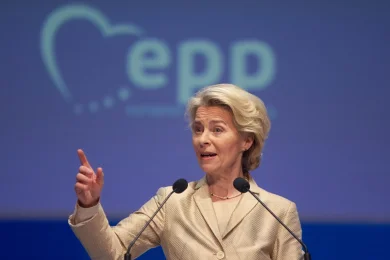
The European Commission proposes postponing by one year certain methane obligations for gas, oil, and coal imports



Always see our news on Google
The European Commission proposes giving importers of natural gas, oil and coal an additional year to apply certain obligations under the EU Methane Regulation, amid pressure on global supplies and high energy prices. The amendment adopted by the Commission on 14 October concerns requirements under which importers must demonstrate that producers outside the Union use methane emissions monitoring, reporting and verification systems equivalent to those in Europe, as well as certain related obligations concerning methane-intensity reporting. The Commission is not proposing to suspend the regulation in its entirety, and the change will not apply until it is adopted by the European Parliament and the Council.
In brief, the Commission proposes postponing by one year certain methane obligations for importers of natural gas, oil and coal. Under the current rules, from 1 January 2027 importers must be able to demonstrate the equivalence of the monitoring, reporting and verification systems applied to producers in third countries. The proposal shifts this stage by one year. Related obligations concerning the reporting of methane-emissions intensity for importers and EU producers are also affected. The rest of the Methane Regulation continues to apply. The Commission justifies the postponement by citing disruption in global energy markets, including the prolonged closure of the Strait of Hormuz, through which a significant share of global trade in liquefied natural gas and seaborne oil passes. The proposal must be negotiated and adopted by the European Parliament and the Council. Until then, the deadlines under the regulation currently in force have not changed.
The European regulation on reducing methane emissions, adopted in 2024, seeks to extend emissions controls beyond energy production within the EU. As the Union imports a large share of the fossil fuels it consumes, the legislation progressively introduces obligations for oil, gas and coal produced in third countries and sold on the European market.
One of the key stages was due to begin on 1 January 2027. For contracts concluded or renewed from 4 August 2024 onwards, importers must demonstrate to national authorities that the oil, natural gas or coal purchased comes from producers subject to methane-emissions monitoring, reporting and verification measures equivalent to those laid down in the European regulation.
For older contracts, the rule is different. Importers must make all reasonable efforts to ensure that suppliers apply equivalent systems and must inform the authorities of the results of those efforts. The regulation also allows equivalence to be recognised at the level of a third country when its regulatory framework provides guarantees comparable to those of the EU.
The Commission now wants to shift the application of these import-related obligations by one year. The stated reason is not abandonment of the objective of reducing methane emissions, but the risk that the immediate introduction of the new requirements could limit the number of suppliers able to demonstrate compliance at a time when Europe is seeking to maintain sufficient alternative energy sources.
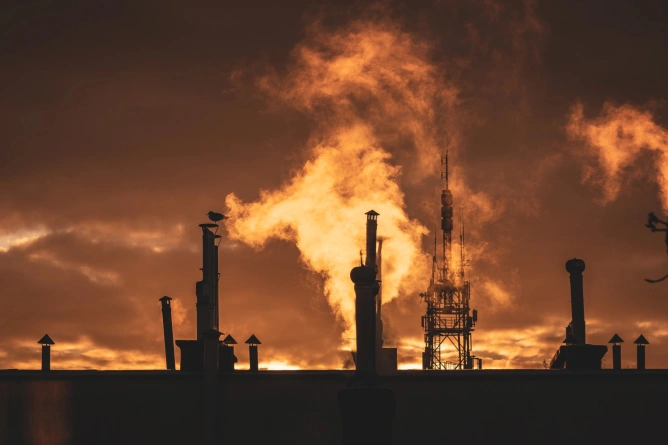
The energy context has changed significantly following the escalation of the conflict in the Middle East. The Commission says that the prolonged closure of the Strait of Hormuz has reduced the global availability of certain volumes of oil and gas. According to its assessment, approximately 20% of the liquefied natural gas traded worldwide and approximately 25% of seaborne oil normally pass through this route.
These percentages describe the route’s global importance, not the share of energy consumed directly in the EU that crosses the Strait of Hormuz. The consequence for Europe arises through the global market: lower available volumes and competition among importers can push prices higher and reduce options for rapidly replacing certain suppliers.
The Commission says that existing contracts and trade routes are already under pressure, while alternative supply for short-term deliveries is limited. In this situation, the European executive considers that importers and suppliers in third countries need additional time to build the systems and documentation required to demonstrate compliance.
Monitoring, reporting and verification, known together as MRV, are one of the regulation’s central components. Their purpose is to ensure that emissions declared by producers are not based solely on unverified estimates, and that European buyers and authorities can better compare suppliers’ performance.
For importers, the difficulty is that a significant share of the information must be produced outside the Union. The European company buying gas or oil does not directly control extraction facilities in a third country, but it must obtain enough information to demonstrate that its supply chain complies with European requirements.
The regulation seeks to address this problem through several mechanisms. Producers may use independent verification and recognised standards, while exporting countries may demonstrate that their own monitoring and verification framework is equivalent to the European one. The Commission has also published optional contractual clauses that importers may include when negotiating or renewing contracts with suppliers.
The proposal of 14 October also affects the timetable for methane-intensity obligations. The current regulation provides for the reporting of the emissions intensity associated with the production of oil, gas and coal placed on the European market, based on a common methodology to be established by the Commission. The proposed amendment shifts the targeted reporting obligations by one year, in order to maintain consistency between these requirements and the new import timetable.
Methane intensity measures the emissions associated with a quantity of fuel produced. It allows comparison of suppliers producing the same type of fuel with very different levels of methane leakage. At a later stage, the regulation also provides for the introduction of maximum methane-intensity values, after assessing the effects on emissions reductions, security of supply and competitiveness.
The Commission stresses that the proposal is targeted. Requirements applicable to production, transport and processing within the EU are not suspended by the amendment now presented. Nor do obligations concerning leak detection and repair, limits on venting and flaring, or European transparency tools disappear under this proposal.
This distinction matters because the Methane Regulation contains several timetables that enter into force gradually. Postponing certain obligations for importers cannot be interpreted as a general postponement of European methane policy, nor as the removal of controls on emissions from the energy sector.
In parallel, the Commission is continuing to prepare the acts required to implement the regulation. Standards, rules on thresholds for leak detection, the methodology for calculating methane intensity, and the criteria under which a third country can demonstrate the equivalence of its monitoring and reporting systems are being developed.
On 12 October, the Commission separately launched a consultation on standardised forms through which oil, gas and coal operators will report emissions information. That procedure is not the same as the legislative amendment of 14 October. The forms establish how reporting is carried out, while the new proposal changes the timetable for certain obligations laid down directly by the regulation.
In July, the Commission had already presented recommendations on compliance solutions and the sanctions regime, after companies and member states reported difficulties in applying the regulation. These recommendations may explain how authorities apply the rules, but they cannot on their own change the deadlines established by the regulation. A legislative change is required for that.
The dispute that follows in Parliament and the Council will concern precisely the balance between the two objectives. Importers and states concerned about security of supply may support allowing more time for compliance, while a postponement reduces immediate pressure on foreign producers to demonstrate their methane performance.
Methane has a shorter atmospheric lifetime than carbon dioxide, but a much stronger warming effect in the short term. Rapidly reducing leaks from the oil, gas and coal sector is considered one of the measures that can produce relatively quick effects on the pace of global warming.
For European companies, the immediate question is a legal one. The Commission has presented a proposal, not an exemption that is already applicable. The European Parliament and the Council must agree on the amendment and formally adopt it. Until the new act enters into force, the obligations and deadlines established by Regulation (EU) 2024/1787 remain applicable.

Latest News
15:47
15:30
15:09
14:54
14:46
See more news
NEWS ON THE SAME TOPICS
.webp)