The Development Commission calls for investments in partner countries to reduce irregular migration.



Always see our news on Google
The European Parliament's Development Committee adopted a report on Tuesday calling for EU development policy and migration management to be applied coherently to address the causes of irregular migration.
In short
The report was adopted in the Development Committee with 16 votes in favor, 6 against, and no abstentions.
MEPs call for an approach that combines development cooperation and migration management, with respect for human rights and the Sustainable Development Goals.
The text insists on long-term investments in partner countries, including in education, health, agriculture, economic development, and democratic strengthening.
The Development Committee supports cooperation with countries of origin and transit to combat human trafficking and networks of illegal migrant smuggling.
The report warns that strict border controls, without legal alternative migration pathways, can increase migrants' exposure to criminal networks, extortion, and violence.
The European Parliament's Development Committee adopted a report on Tuesday regarding strengthening development cooperation to address irregular population displacements and their causes in the EU's partner countries.
The report was adopted with 16 votes in favor, 6 against, and no abstentions.
MEPs in the Development Committee argue that an approach that combines development cooperation and migration management is essential to ensure security and solidarity both within the EU and in countries of origin and transit.
The text reaffirms the link between migration and development cooperation. MEPs call on the European Commission and member states to extend their commitment to policy coherence for development to migration policies, with full respect for human rights and the Sustainable Development Goals.
The report states that EU development policy should continue to prioritize the eradication of poverty, reduction of inequalities, and sustainable development, in line with the Sustainable Development Goals.
MEPs call for EU policy to also focus on long-term investments based on the needs of partner countries, including when addressing the root causes of irregular migration and forced displacement.
The EU approach should be prepared and applied coherently, according to the report. MEPs support a pragmatic, mutually beneficial, and results-oriented approach that brings stability and economic opportunities in partner countries, including in the countries of origin and transit of migration flows.
The report identifies several areas where the EU can provide tailored support to partner countries. These include fragile geopolitical contexts, the impact of climate change, the role of agriculture, support for youth, sustainable economic development, and strengthening capacity in education, health, and democratic institutions.
MEPs argue that the EU must promote cooperation with partner countries in the field of migration. This cooperation should be based on solidarity, shared responsibility, and respect for human rights.
The report states that this cooperation is also essential for combating human trafficking and networks of illegal migrant smuggling.
MEPs warn that strict border controls, when not accompanied by legal alternative migration pathways, can shift migration routes, introduce new stages in the journey, and new transit countries, and can increase the precariousness of travel.
According to the report, this can expose migrants to a greater extent to networks of illegal migrant smuggling, extortion, and violence.
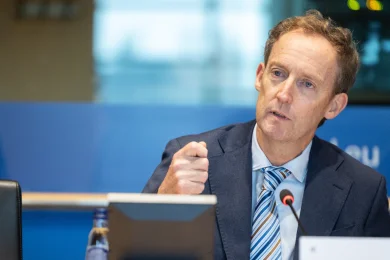
"The EU is the strongest soft power on the planet, considered the most reliable partner not only in business but also in development assistance and humanitarian aid. Economic cooperation represents the most effective form of support for development, fostering sustainable growth across generations. Irregular population displacements have long posed a challenge for the EU and the global community. It is in the common interest of developing countries and the EU to prevent situations where people are uprooted against their will," said rapporteur Lukas Mandl, an Austrian MEP from the EPP.
"When development assistance succeeds in strengthening infrastructure and standards in areas such as education and health, it can create real opportunities and enable people to stay in their countries of origin. At the same time, Europe's demographic changes mean that it will increasingly need to attract skilled workers from other regions of the world," said Lukas Mandl.
The report adopted by the Development Committee is part of the broader debate on how the European Union uses development policy in relation to partner countries and migration management.
The document does not establish new legislation and does not represent a final position of the European Parliament in plenary. It sets the position of the Development Committee on the link between development, migration, the causes of irregular displacements, and cooperation with countries of origin and transit.
Through the report, MEPs seek to maintain development policy within its core objectives: eradicating poverty, reducing inequalities, and sustainable development, while calling for a more coherent integration with the EU's migration policies.
The debate takes place in a context where the EU seeks to reduce irregular migration, combat human trafficking and networks of illegal migrant smuggling, and develop partnerships with countries of origin and transit, without abandoning conditions regarding human rights and sustainable development.
Latest News
12:02
11:59
11:56
11:51
11:49
See more news
NEWS ON THE SAME TOPICS
















.webp)