The anatomy of a blackmail that will change the European Union


.webp)

Always see our news on Google
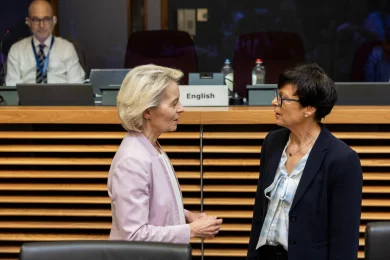
While the rest of Europe marked four years since the Russian invasion of Ukraine, Hungary's foreign minister, Péter Szijjártó, blocked in Brussels the new package of sanctions against Russia and the 90 billion euro loan for Kiev. It is no coincidence. It is the modus operandi of the Budapest regime that has transformed commemorations into personal opportunities. Every time Europe has tried to speak with one voice about the war in Ukraine, Budapest has used its veto as a negotiating tool. The goal has been as clear as possible for Hungarian diplomacy, which has always sought to obtain concessions on completely separate issues. Frozen European funds, infringement procedures, pressures in the rule of law dossier. Four years of war have painted a picture that is as enlightening as it is alarming. Hungary has blocked or threatened to block military transfers from the European Peace Fund, macro-financial assistance packages, the opening of accession negotiations, formal EU enlargement conclusions, sanctions against Russia, and, in recent weeks, a loan approved by heads of state and government in December 2025. Each time there has been a different justification. Either the rights of Hungarian minorities in Transcarpathia, or the Ukrainian blacklist on which a Hungarian bank was included, gas prices, or the Druzhba pipeline, and if there was nothing current, Hungary's neutrality was invoked. Each time the result was the same. Negotiations, concessions, partial unblocking, and the resumption of the cycle a few months later. What makes this remarkable strategy is not its cynicism (cynicism is not as rare as one might think in today's politics), but its effectiveness within a system that has been built on consensus. The European Union operates, in key areas, by unanimity. A single vote against paralyzes. Viktor Orbán has understood this better than any other European leader and has systematically exploited the structural vulnerability of the bloc, while the other leaders sought diplomatic formulas to describe him without naming him for what everyone knows he truly is. A security risk within the European Union. The first year of war, awakening to reality On February 24, 2022, Russian tanks entered Ukraine and the European Union froze. Awakened from the dream of eternal peace, the EU quickly adopted the first five packages of sanctions, almost without friction. Member states, shocked by the scale of the invasion, effectively spoke with one voice. Even Hungary signed. Unanimity created an illusion that Brussels interpreted as cohesion. In reality, it was the calculation of a man who understands that the value of a veto increases proportionally with the urgency of others. Orbán did not block anything in the first months. He spoke about peace, about the need for negotiations, about the costs of sanctions for the Hungarian economy, but he signed. In return, he obtained something more valuable than any veto. He set the limits of negotiation as he wished. Essentially, it was demonstrated that the unanimity that the EU needs more than it can publicly admit comes at a price. The turning point came in November 2022. Two days after the European Commission proposed freezing 7.5 billion euros from European funds destined for Hungary for non-compliance with the rule of law, Budapest became the only member state to refuse to approve an 18 billion euro financial assistance package for Ukraine. The Hungarian government justified its isolated position by concerns for Hungary's and the EU's vital interests within the framework of common foreign policy. It did not say a word about the frozen funds, inviting Brussels to negotiate. As a result of negotiations, the Commission reduced the frozen amount from 7.5 to 6.3 billion euros, and Orbán withdrew his veto. Within a month, in December 2022, Orbán returned to opposition against the common loan mechanism, stating that he would continue to block the EU's plan for common loans to finance the 18 billion euro package for Ukraine in 2023, invoking opposition to the financing formula, not to the aid itself. The second year of war, systematizing the method The ballet continued in May 2023 when Hungary blocked the eighth EU assistance package for Ukraine, worth 500 million euros through the EPF, the fund used to reimburse member states for military equipment sent to Kiev. At the same time, Budapest threatened to block the 11th package of sanctions against Russia on the grounds that OTP Bank was included on the Ukrainian list of "war sponsors." The OTP scandal was triggered by the Ukrainian anti-corruption agency, which included OTP Bank on the list of "international war sponsors," which infuriated Budapest and triggered a bilateral diplomatic conflict, with Brussels caught in the middle. It did not matter that OTP continued to operate in Russia and recognized the separatist regions. Hungary conditioned the unblocking of military assistance on the removal of the bank from this list and guarantees that it would not be relisted. OTP was removed from the list in October 2023, but Hungary maintained its veto, arguing that it needed unconditional guarantees that the situation would not repeat itself. Thus, in December 2023, Orbán voted against the financial package of 54.5 billion dollars (about 50 billion euros) at the European Council summit in December 2023. It did not matter that Putin publicly celebrated the Hungarian decision. Orbán requested the removal of Ukraine's accession from the summit agenda, blocked the financial package, and maintained the veto on the 500 million from the EPF. The third year of war, creative solutions, escalation of positions, and the new president of Europe As a result of the blocking positions, the leaders of Germany, France, and Italy directly pressured Orbán, and he yielded in the following. Additional budgetary revisions were agreed upon. Orbán lifted the blockade against the Ukraine Facility, approved by the Council on February 28, 2024. The institutional design included an annual report from the Commission and a review after two years, concessions aimed at partially satisfying Hungarian demands. The solution also included 10.2 billion unblocked for Budapest. Strategically, Viktor Orbán chose a "coffee break" during the vote on accession, an absence that allowed adoption with 26 votes instead of 27. The European Parliament sued the Commission for this concession. Summer was to bring new surprises for member states. In July 2024, Orbán transformed the rotating Presidency of the Council, held by Hungary in the second half of the year, into a platform for its own foreign policy. As a "true" president of the European Union, he visited Kiev, Moscow, Beijing, and Florida in ten days. "Peace missions" presented him as the new voice of Europe, without any mandate and without having an actual function. As such, the European Commission decided to boycott informal Council meetings held in Budapest, the first time in the institution's history that a rotating presidency was treated this way. Ministerial meetings were moved to Brussels. And also in 2024, after the European parliamentary elections, Viktor Orbán became one of the founders of Patriots for Europe, which became the third largest group in the European Parliament, with 84 MEPs from 12 member states. From a pariah in the European Parliament, he solved an overnight strategic problem. Since 2021, when Fidesz left the EPP, the party had to cope in isolation in the European Parliament without the necessary power of a political group. Now it leads the third legislative force of the Union. The fourth year leading up to the elections in Hungary Viktor Orbán has proven to be a lucky politician when it comes to crises that can give him a helping hand. After exasperating an entire continent, in December 2025, at the European Council meeting, a unanimous political agreement was reached for a 90 billion euro loan in favor of Ukraine for 2026–2027. Budapest accepted the political agreement but signaled that it would not participate in the financing scheme. A month later, in January 2026, the Druzhba crisis arose, in which, as a result of a Russian drone attack, the oil pipeline infrastructure in the Lviv area was severely damaged, causing the flow of Russian oil to Hungary and Slovakia to be halted. Both Hungary and Slovakia blamed Ukraine for the interruption of supplies. Hungary's foreign minister, Péter Szijjártó, described the transit halt as "a clear political blackmail" from Ukraine, aimed at raising fuel prices ahead of the Hungarian parliamentary elections in April 2026. Thus, Hungary decided to block the XX package of anti-Russian sanctions, to block the 90 billion euro loan for Ukraine, to stop diesel exports to Ukraine, and to threaten to stop electricity exports under the conditions in which it supplies nearly half of Ukraine's electricity imports.
The anatomy of obstruction, the pattern of blockages Four years of vetoes have not been chaotic. They have followed an internal logic, recognizable, reproducible. Before judging the mechanism, it is worth seeing the complete picture, what exactly has been blocked, delayed, or conditioned by Budapest between February 2022 and February 2026. The Hungarian obstruction has operated on five distinct levels. The first, the financial, was also the most visible. Hungary has blocked or conditioned three major support tranches for Ukraine, the 18 billion euro package from November 2022, the 50 billion Ukraine Facility, blocked between December 2023 and February 2024, and the 90 billion loan for 2026–2027, supported by frozen Russian assets, which was blocked on February 24, 2026. What matters here is not just the amount, but the recurrence. Every time the financial architecture needed to be stable and predictable, Budapest reintroduced uncertainty, exactly where the EU needed certainty. The second level, the anti-Russian sanctions, best shows how a veto can rewrite, in detail, policies designed to be firm. Of the 20 packages adopted, at least three required direct negotiations with Budapest, and the negotiations produced concrete consequences. The permanent derogation from the oil embargo since May 2022 has become a long-term lifeline, not a temporary exception, and the pressure to remove OTP Bank from the Ukrainian list of war sponsors has demonstrated that Budapest uses European instruments to settle bilateral disputes, with costs borne by the entire bloc. The third level, the military, struck at the most sensitive instrument of operational solidarity. Assistance through the European Peace Fund was repeatedly blocked, the 500 million euro tranche for five months in 2023 and, in 2024, the total reform of the 6.5 billion fund. The effect was not only the delay of some reimbursements but the introduction of a structural friction in the mechanism that allows member states to deliver equipment quickly and not be penalized budgetarily for it. The fourth level, with the most profound long-term impact, is Ukraine's accession process. Hungary has blocked the opening of Cluster 1, Fundamentals, throughout 2025 and has prevented the adoption of enlargement conclusions in December 2025. Here the veto is no longer about money or sanction packages, but about the political architecture of Europe post-2022. If Ukraine remains in the antechamber, the strategic signal of the EU degrades, and Russia gains time. The fifth level, seemingly technical, has been critical for the entire financial structure, the permanent immobilization of Russian assets. The threat of the semi-annual veto was only eliminated in December 2025, by changing the legal basis to Article 122 TFEU. When the EU begins to seek alternative legal solutions to avoid the veto, it is no longer a political incident but a system that begins to operate through exceptions. How the blockage works. Six repeatable stages. First, the Commission proposes freezing funds destined for Hungary. Second, a few days after the announcement, Budapest blocks a key decision regarding Ukraine. The connection is not explicitly stated, but the implicit message is clear. Third, the European Council, the Commission, and member states enter into direct negotiations with Budapest. Fourth, the EU makes a financial or political concession. Fifth, Hungary usually temporarily and partially lifts the veto on the Ukrainian dossier. Sixth, the cycle resumes in three to six months, with a new pretext dossier and a veto value calibrated to the urgency of the context. Budapest's official rhetoric relies on a single argument, the protection of Hungarian national interests. The analysis of concrete dossiers, however, shows a more complex stratification, with four overlapping and mutually amplifying types of motivations. Why block, four layers of motivations The first layer, dominant and most rigorously documented, is financial and transactional. The veto functions as a negotiation tool to maximize European financial transfers and minimize reform conditionalities. In this logic, money is not unlocked in exchange for reforms, but in exchange for cooperation on dossiers considered vital by others. The second layer is energy and strategic. Hungary's dependence on Russian energy is not an accident; it is a choice. While the EU has built diversification policies, Budapest has increased its import of Russian oil from 61% of the total in 2022 to 92% in 2025. This dependence structurally requires maintaining a functional relationship with Moscow and resistance to severe energy sanctions. At the moment when energy becomes an internal supply thread, it also becomes an external brake. The third layer, increasingly visible in 2025 and 2026, is electoral and internal. The Ukrainian dossier becomes political fuel. Messages like "we are not sending money to Kiev" and "we are not getting into war" are useful in a polarized electoral landscape, especially around the parliamentary elections of April 12, 2026. In this layer, the veto is no longer just a negotiation tool with Brussels but also an internal mobilization tool, transforming foreign policy into a permanent campaign. The fourth layer is geopolitical and ideological. Orbán has built a singular position in the EU, a leader who maintains functional relationships simultaneously with Moscow, Beijing, and a Trumpist Washington. In this logic, blocking support for Ukraine is not just a negotiation but also a demonstration. The demonstration that the West is strategically wrong, that Ukraine cannot win, that Europe must return to a cynical pragmatism, and that Budapest, through controlled ambiguity, can become an indispensable intermediary. Hungarian obstruction is not a declared pro-Russian position. Orbán has signed all 19 sanction packages adopted until 2025, including those he temporarily blocked. Hungary has not recognized Russian territorial annexations and has not blocked NATO's Article 5. Its position is one of controlled ambiguity, close enough to Moscow to be valuable as an intermediary, yet sufficiently within the EU to not be excluded. There is no systematic obstruction of all European policies. Hungary has actively cooperated on the enlargement towards Albania, Montenegro, and Serbia, in agricultural policies, and in other dossiers where national interests converge with the European agenda. The obstruction is selective and instrumental, focused precisely where the veto has maximum negotiation value.
Systemic costs, damages that will be seen over time Beyond the direct impact on Ukraine, the mechanism has produced structural damage. It has led to the erosion of conditionality because European funds have been unlocked for Hungary not as a result of reforms but as a result of lifting the veto. The message sent to other capitals is as dangerous as it is clear. Reform requirements are negotiable if the political price is high enough. Along with the package came diplomatic exhaustion. Each cycle consumes nerves and time in the Commission, in the Council, and in member states. While opposition is managed, reform is not built. The discourse about changing the rule of unanimity remains at a declarative level because reform itself requires unanimity. The system requires, to heal, exactly the tool that blocks it. Hungary has taken the Union hostage by unscrupulously using the rule of unanimity, which states that decisions in areas considered sensitive to the sovereignty of member states are made only when all 27 states agree. The justification related to national interest may be valid in some cases, but it must be understood that if negotiations and the ability to accept imperfect solutions were validated exclusively by national interest, the European Union would have long since disappeared. Regardless of the explanations given by the Budapest government, the truth is that Orbán has abused the privilege of blocking without regrets. Rarely is there public discussion about the culture of dialogue and the existing negotiation abilities in Brussels. Portrayed as a tower of summary and partisan decisions by voices that criticize without nuance and with a defaming agenda, Brussels itself cannot exist without the free will of those who make up the European Union. Hungary has demonstrated that it can block the EU's decision-making mechanism as if it were a Robin Hood fighting against globalism or uncontrolled progressivism. In reality, it is a simple abuse that any other state among the other 26 member states can exercise just as easily. The generous mechanism of unanimity, once abused, is hard to defend against the need for a Europe with two speeds. The result of the blackmail The result of Hungary's actions is the discussion about eliminating unanimity, which would accelerate European integration. But it would also create a Europe in which major decisions can be imposed on opposing states. For small or medium-sized states, unanimity is a guarantee of protection against great powers. For states like Germany and France, a qualified majority in foreign policy would be much more effective. The logic of the past was that, in the absence of consensus on foreign policy, no European action would be legitimate. In the strategic environment of the 1990s and 2000s, this logic worked; blockages were rare, stakes were lower, and the number of actors willing to use the veto as a systematic instrument was negligible. The fact that alternative legal solutions, such as resorting to Article 122 TFEU, have already been explored to circumvent unanimity shows that political patience has reached its limit. When partners begin to seek mechanisms to circumvent you, rather than to convince you, it means that trust has eroded deeply. The consequences can be significant. The pressure to limit the areas subject to unanimity will increase, even if a formal reform of the treaties is difficult. In parallel, arrangements of the "coalition of the willing" type may be strengthened, in which a group of states advances on key dossiers without waiting for the consensus of all. Such an evolution would gradually marginalize Hungary in strategic dossiers, reducing its long-term negotiating power. Additionally, financial conditionality mechanisms could be applied more firmly, and tolerance for transactional compromises will decrease as the perception strengthens that these encourage the repetition of the blackmail cycle. In the following, if the pattern of blockages continues, the Union risks entering a phase of functional fragmentation, and we will have a Europe that operates increasingly through exceptions, creative formulas, and ad-hoc majorities to avoid paralysis. Paradoxically, it is precisely the systematic use of the veto that could accelerate the transformation of the European decision-making architecture, reducing the maneuvering space of those who exploit it. The accumulated exasperation will not remain just a diplomatic state of mind. It can become the engine of a reform that will limit, over time, the ability of a single state to hold the entire Union hostage.

Latest News
12:25
12:16
12:13
12:11
12:05
See more news
NEWS ON THE SAME TOPICS

.webp)