The European Commission confirms that Romania declared an electricity crisis in August but avoided restricting consumption




Always see our news on Google
Romania sent an early warning to the European Commission on August 7 and officially declared an electricity crisis three days later, against the backdrop of severe drought, exceptionally low water levels on the Danube and reduced domestic production. Cross-border exchanges and available capacity made it possible to maintain supply without activating regional solidarity or last-resort non-market measures.
In August, Romania went through all the initial stages of the European mechanism for managing an electricity crisis, from an early warning to the formal declaration of a crisis, the European Commission confirms in a response to MEP Victor Negrescu. The system nevertheless remained supplied without forced consumption restrictions, while cross-border exchanges helped cover the production shortfall.
The early warning was sent on August 7, and Romania notified the Commission of the crisis situation on August 10. The Electricity Coordination Group held two extraordinary meetings, on August 11 and 19, to assess risks in Romania and other Central and South-Eastern European countries affected by high temperatures and exceptionally low water levels.
In brief
Romania issued the early warning required under European legislation on August 7 and declared an electricity crisis on August 10, following a deterioration in production conditions.
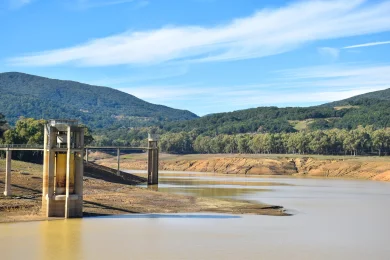
Severe hydrological drought and exceptionally low water levels on the Danube reduced hydropower generation and affected the operation of the Cernavodă nuclear power plant during a period of high evening demand.
During one of the consumption peaks before the crisis was declared, imports exceeded 2,300 MW and covered almost 31% of Romania’s instantaneous demand.
The Commission says that regional solidarity assistance was not activated and that resorting to last-resort non-market measures, such as forced consumption restrictions, was not necessary.
The European meetings on August 11 and 19 found that the regional system remained strained but faced no short-term adequacy risks, while the Commission insisted on maintaining electricity flows between countries.
The launch of the European mechanism followed a rapid deterioration in conditions in the National Power System. Severe hydrological drought reduced the Danube’s flow to levels that affected both hydropower generation and the availability of the Cernavodă nuclear power plant.
Unit 1 of the plant had been shut down in a controlled manner at the end of July, and the authorities also anticipated the unavailability of Unit 2. Its loss would have meant the withdrawal of an additional capacity of approximately 700 MW at a time when consumption was rising sharply during the evening hours.
In the meantime, the government had adopted a framework allowing Transelectrica to gradually introduce additional safety measures if the system’s balance deteriorated. The order provided for the use of available reserves, the start-up of units held in technical reserve and the management of cross-border exchanges before any potential phased restriction of consumption by large industrial consumers.
Consumption restrictions were therefore designed as a last-resort measure. Household consumers were not included in the forced-reduction mechanism, and the measures were to be activated only if available generation, reserves and imports could no longer keep the system balanced.
Pressure on imports was already visible before the official notification of the crisis. On the evening of August 5, Transelectrica’s operational data showed consumption of approximately 7,675 MW and domestic production of approximately 5,321 MW. The difference of more than 2,300 MW was covered by imports, equivalent to almost 31% of instantaneous consumption.
This level of reliance on cross-border exchanges explains why Romania’s situation also became a matter of European coordination. The regulation on risk preparedness in the electricity sector requires countries to inform the Commission and connected countries when serious information emerges about the possibility of a crisis, and to officially declare a crisis when the deterioration materializes.
The first extraordinary meeting of the Electricity Coordination Group, convened on August 11, examined the situation in the context of heatwaves and drought affecting several countries. The group found that there was no immediate European-wide adequacy risk, although the balance between production and consumption was expected to remain strained.
At this meeting, Romania presented the reduction in domestic production, the situation at the Cernavodă plant and the need to keep import options open. The Romanian authorities also requested an updated regional assessment of generation capacity, reserves, interconnections and neighboring countries’ ability to supply electricity if the situation deteriorated.
A second extraordinary meeting, on August 19, again found that security of supply remained stable in Central and South-Eastern Europe, although high temperatures and record-low water levels continued to put pressure on the systems. The Commission then stressed the importance of maintaining cross-border flows and coordination among transmission system operators.
In Romania, Transelectrica had announced the previous day that available production and import capacity were compensating for the unavailability of both Cernavodă units. The operator did not anticipate significant immediate supply problems but continued to monitor consumption, production, reserves and opportunities for exchanges with neighboring systems.
The Commission’s response now also clarifies the difference between using the European market and activating extraordinary solidarity mechanisms. Romania imported significant amounts of electricity through ordinary commercial exchanges, but no country had to activate the regional assistance measures provided for situations in which the market can no longer manage the crisis.
Nor were last-resort non-market measures necessary. EU legislation allows them to be used only after market-based options have been exhausted or when they are clearly insufficient, which did not occur in Romania’s case.
The episode does not mean, however, that structural vulnerability disappeared once outages were avoided. The government subsequently extended the safety framework until the end of September, citing the hydrological deficit, high demand during peak hours and the risk that import possibilities could be limited if a similar problem affected several countries in the region simultaneously.
The August crisis thus highlighted the role of interconnections in a system with temporarily reduced domestic production, but also the risk that arises when several countries simultaneously depend on the same available regional capacity. Without any further deterioration, Romania remained within market mechanisms, without forced outages and without the activation of emergency European assistance.
https://2eu.brussels/ro/news/comisia-confirma-ca-romania-a-declarat-criza-de-electricitate-in-august-dar-a-evitat-limitarea-consumului
Latest News
23:01
22:57
22:53
22:50
22:43
See more news
NEWS ON THE SAME TOPICS

.webp)