Regions call for high-speed trains to be linked to local networks so EU investment does not bypass peripheral areas



Always see our news on Google
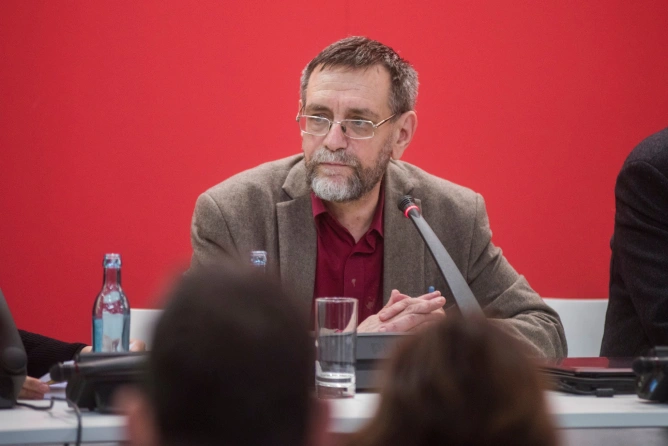
The expansion of the European high-speed rail network must be built together with the regional and local lines that bring passengers to the major corridors, according to the position presented by the European Committee of the Regions (CoR) at the plenary session on 14 October. The opinion prepared by Marco Marsilio, president of the Italian region of Abruzzo, calls for European transport investments to also be assessed through the access they provide to peripheral, rural and poorly connected territories, not exclusively through the speed between major metropolitan centres.
In brief
The CoR calls for high-speed trains to be connected with regional and local rail networks and with the transport needed for the first and last parts of the journey.
Regions want investments to include intermediate cities, rural and peripheral areas, not only capitals and the main European corridors.
Ports and airports, including regional infrastructure that plays an essential role for isolated territories, should be better integrated with the rail and road network.
The CoR links transport to the “right to stay”, meaning the possibility for people to live and work in their region without being forced to leave because of insufficient connectivity.
The regional position responds to the European Commission’s plans for high-speed trains and investment in sustainable transport, but does not itself establish routes or binding funding.
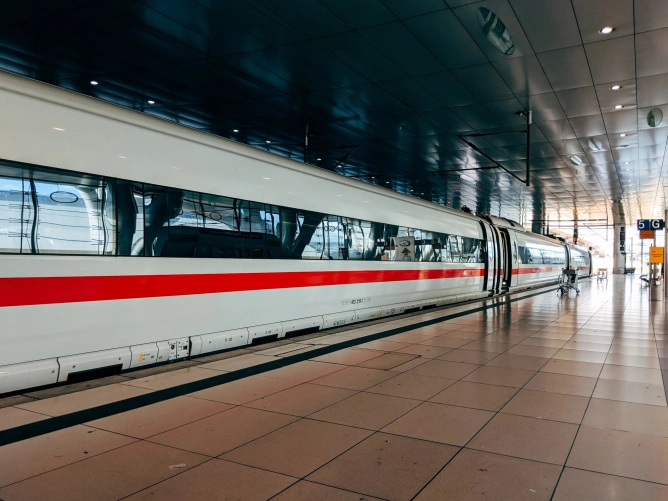
The difference between a high-speed line and actual access to it is central to the regions’ position. A train that cuts several hours from the journey between two capitals may have a much smaller effect for a passenger who has to spend another two hours reaching the main station. For this reason, the CoR calls for the planning of new corridors to include the conventional lines that feed the high-speed network, regional hubs, local public transport and the connections needed for the beginning and end of the journey.
For intermediate cities, the issue is not necessarily that every high-speed train should stop at every station, which would reduce the advantage of speed, but the existence of sufficiently frequent and well-coordinated connections with the main network. The timetable of a regional train, the capacity of a conventional line and the possibility of a rapid transfer at a railway hub can determine whether a community benefits from the European investment located a few dozen kilometres away.
The same logic applies to rural and mountainous areas, where low population density sometimes makes it difficult to justify frequent services commercially. The regions argue that transport policy cannot be built exclusively on existing demand, because insufficient infrastructure itself contributes to depopulation and reduced economic activity. The lack of a good connection to a university city, a hospital, an industrial centre or a high-speed railway station can turn distance into a disadvantage for residents and businesses.
This is where the link with the concept of the “right to stay” comes from. The European Committee of the Regions uses this idea for situations in which people should be able to choose to build their lives in their home region, without the lack of services, jobs or infrastructure effectively forcing them to move. Transport becomes a condition of this choice: a region may have economic opportunities and affordable housing, but it will continue to lose population if access to the rest of the country and Europe is too difficult.
Marco Marsilio also emphasised the links between railways and other modes of transport. For ports, rail access can enable the transfer of goods to the interior of the continent without such a large share of traffic continuing by road. For regional airports, connecting to efficient rail and road networks can be particularly important in territories where distances and geography limit the alternatives. The regions therefore call for a multimodal approach, in which infrastructure is viewed as a network rather than as a collection of independent projects.
This perspective does not exclude road transport. In territories where a railway line cannot realistically provide sufficient services to every community, buses, demand-responsive transport and road infrastructure can ensure the connection to railway hubs. The point is that investment in high speed should not end at the platform of a main station, but that a functioning transport chain should exist all the way to the passenger’s actual destination.
The regional opinion responds to the plan presented by the European Commission to accelerate high-speed trains in the EU. The Commission’s strategy aims to substantially reduce travel times on several European routes and expand cross-border connections, starting from the trans-European transport network. The Commission sees high-speed rail both as a lower-emission alternative for travel between cities and as an element of competitiveness and integration of the internal market.
For peripheral regions, however, a map with more high-speed lines does not automatically guarantee better accessibility. A new main line may even concentrate traffic and investment in the strongest hubs if secondary connections are not modernised at the same time. For this reason, the CoR calls for the territorial impact to be taken into account when investment priorities are established and for local and regional authorities to participate in project planning, since they manage an important part of the infrastructure connecting the European network with communities.
Another issue is the continuity of cross-border connections. The European railway network is fragmented by technical differences, insufficient capacity, construction works and projects progressing at different rates on either side of the borders. The CoR debate also referred to existing bottlenecks on the major Alpine connections, where a major project may be affected if the access infrastructure is not completed at the same time. For passengers, a very fast section does not eliminate delays created by the slower points on the same journey.
The regional position also refers to the European Commission’s Sustainable Transport Investment Plan, which seeks to mobilise the investment needed to decarbonise transport, including renewable and low-emission fuels used in aviation and maritime transport. The CoR calls for an approach adapted to territorial differences and supports technological neutrality where several solutions can contribute to reducing emissions. The common demand is that decarbonisation should not lead to a policy in which modern infrastructure is concentrated only where the market and traffic volumes are already the largest.
Transport planning thus also becomes a matter of cohesion. The regions want European funds, national investments and local projects to be coordinated so that a major line has the necessary connections before or at the same time as its opening. Otherwise, the EU may build highly efficient infrastructure along the main corridors while access to it continues to depend on slow lines, infrequent services or inadequate roads.
The CoR’s position does not modify the Commission’s plan and does not oblige states to build specific regional connections. The Committee’s opinions introduce the perspective of local and regional authorities into the European policy-making process. For high-speed trains, the message conveyed in October is that success should not be measured only by maximum speed or the travel time between two capitals, but also by the number of communities that can actually reach the network and by the investment’s ability to reduce, rather than deepen, differences between territories.

Latest News
23:01
22:57
22:53
22:50
22:43
See more news
NEWS ON THE SAME TOPICS






.webp)