Mobile payments almost double acceptance among merchants in the euro area in two years



Always see our news on Google
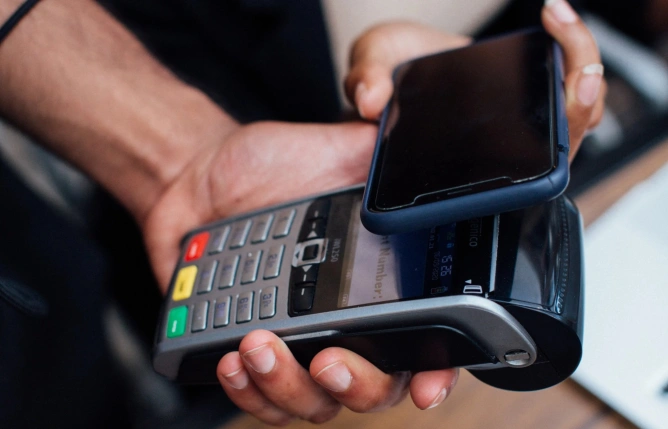
68% of companies that receive payments in physical locations now accept mobile methods, compared to 36% in 2024, according to a survey by the ECB conducted across all 21 eurozone countries. Cards remained almost unchanged at 88%, while cash continues to be accepted by 92% of companies.
The acceptance of mobile payments by merchants in the eurozone has increased from 36% in 2024 to 68% in 2026, the strongest change among the main payment methods analyzed by the European Central Bank. During the same period, card acceptance remained almost stable at 88%, while cash continues to be the method available at the highest proportion of companies, at 92%.
In short
1. 68% of companies that receive payments in physical locations accept mobile methods, compared to 36% in 2024.
2. Cards are accepted by 88% of companies, just one percentage point above the level in 2024.
3. Cash remains the most widely accepted method at physical points of sale, being available at 92% of the analyzed companies.
4. Instant payments and digital wallets are among the most frequently accepted forms of mobile payment.
5. Consumer preference is the main criterion indicated by companies when deciding which payment methods to accept, ahead of security and ease of use.
The expansion of mobile payments is the fastest change observed by the ECB between the two recent editions of the cash usage survey by companies. In 2024, just over a third of merchants receiving payments in physical locations reported accepting payment via phone or other mobile devices, and by 2026 the proportion reached over two-thirds.
The growth occurs in an environment where traditional methods have not disappeared. Cash is accepted by 92% of companies, compared to 90% in 2024, and physical cards are accepted by 88%, compared to 87% two years earlier. The result is a diversification of options available to consumers, not a rapid replacement of one form of payment with another.
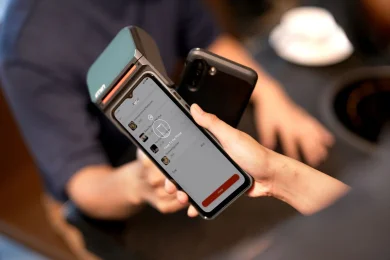
In the category of mobile payments, the ECB includes solutions such as digital wallets and instant payments, along with other mobile applications and methods based on scanning QR codes. The survey shows that instant payments and digital wallets are the most frequently accepted among these options.
The rapid expansion indicates that more and more companies have the necessary infrastructure to receive payments made via smartphone, smartwatch, or digital applications. The ECB links this development to the increasing familiarity with digital tools and the importance that merchants place on customer preferences.
When asked what the most important criterion is for choosing a payment method, 26% of respondents indicated consumer preference. Security was mentioned by 22%, and ease of use by 15%, which shows that merchants' investments in new payment methods are primarily related to how customers want to pay for goods and services.
Companies' own preferences are more fragmented. One third say they do not have a favorite method for payments made in physical locations, 24% prefer debit cards, 21% cash, and 14% credit cards. Large companies have a lower preference for cash than small and medium enterprises.
Digitalization is also visible in the investments made at points of sale. A quarter of companies in the eurozone report that they have introduced measures in the past year to encourage digital payments or reduce cash usage, from installing cashless payment terminals to directly promoting electronic options.
Among companies that have taken such measures, 37% say they have purchased terminals that accept cashless payments or have reduced the number of cash payment terminals. Another 30% have conducted promotional and advertising activities for cashless payment methods.
The increase in mobile acceptance does not mean that companies consider digital methods better in all respects. When companies that accept both cash and digital payments were asked to compare the two options, cash was rated more favorably, especially for privacy and reliability.
The ECB does not identify any of the six analyzed characteristics—costs, speed, ease of use, reliability, security, and privacy—for which companies consider, in clear terms, digital payments to be superior to cash.
This perception coexists with the accelerated adoption of technology. Merchants may continue to find cash useful or advantageous in certain respects and, at the same time, add mobile payments to meet consumer demand.
The ECB survey covers sectors where the relationship with consumers is direct: retail, restaurants and cafes, hotels, as well as activities in the arts, entertainment, and recreation. A total of 8,205 companies from all 21 eurozone countries were interviewed between February 23 and April 10, 2026.
The 2026 survey is the third edition conducted by the ECB on cash usage by companies, following those in 2021 and 2024. For the comparison between accepted methods at physical points of sale, the ECB uses data from 2024 and 2026, as the questionnaire was modified between editions.
The main result regarding mobile payments is a 32 percentage point increase over two years, from 36% to 68%. During the same period, cash and cards remained at high and relatively stable levels, indicating that the development of mobile payments primarily expands the number of options available to merchants.
Latest News
13:00
12:45
12:28
12:14
12:10
See more news
NEWS ON THE SAME TOPICS