Meta and TikTok activate crisis protocols after Ceuta, while the Commission is analyzing other DSA tools.




Always see our news on Google
Meta and TikTok have activated special mechanisms for crisis situations and are working with fact-checking organizations to quickly identify false information that could encourage new crossings to Ceuta. Cooperation is currently voluntary, but the Commission will discuss on Thursday whether additional tools provided by the Digital Services Act are necessary.
Meta and TikTok have activated their crisis situation protocols following the events in Ceuta and are participating in a special mechanism through which fact-checking organizations can quickly report false or misleading information related to possible new border crossings. The European Commission states that it is in daily contact with the platforms and Europol and will analyze whether the situation requires the use of additional tools provided by the Digital Services Act.
In short
Meta and TikTok have confirmed to the Commission that they have activated their internal crisis protocols following the events in Ceuta.
An ad-hoc mechanism brings together the platforms and fact-checking organizations, which can report false information related, for example, to the emergence of a new massive border crossing.
The mechanism currently operates through voluntary cooperation. The Commission coordinates the exchange of information but does not decide what content should be removed or restricted.
The Commission, Europol, and the platforms are in daily contact, and national law enforcement authorities can be involved when necessary.
On Thursday, the working group on information integrity of the Board of Digital Services Coordinators will analyze the monitoring of the situation and the possibility of using other DSA tools.
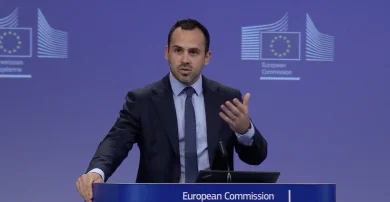
The Commission has intensified coordination with Meta and TikTok after false information distributed on social media was associated with massive movements towards Ceuta. Brussels is trying to limit the spread of messages that could create the impression that there are new opportunities for illegal crossing of the EU's external border.
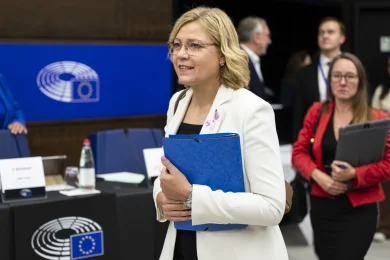
Executive Vice-President for technological sovereignty, security, and democracy, Henna Virkkunen, discussed the situation with the Spanish Minister for digital transformation and public administration, Óscar López. The Commission has stated that it is ready to provide Spain with additional support in the digital field, including through the tools of the Digital Services Act, if the Spanish authorities request it.
The cooperation currently used is based on the Code of Conduct on disinformation. The Commission convened a first meeting last week with Meta, TikTok, and fact-checking organizations participating in this framework.
The platforms confirmed during the discussions that they have activated their own crisis protocols. In parallel, participants decided to introduce an ad-hoc mechanism for escalation and cooperation that can be used in exceptional situations.
Fact-checkers can send information about problematic content they identify to the platforms. The Commission cited as an example false messages that could announce or encourage a new massive crossing towards Ceuta.
The advantage of local organizations is their knowledge of the context, language, and information circulating in the targeted communities. The platforms can use these signals to verify more quickly whether content violates their own rules.
The Commission specified that Meta and TikTok have committed through their own policies to prohibit certain forms of content associated with activities facilitating illegal migration and migrant smuggling networks.
A report made by a fact-checker does not automatically lead to the removal of a post. The platform must evaluate the content in relation to its own rules and decide on the applicable measure.
The Commission insisted that the current cooperation is voluntary. The institution does not order the platforms to remove content and does not make the final decision regarding the moderation of a post.
Its role is to bring together the involved actors and facilitate the exchange of information between platforms, fact-checkers, Europol, and, when necessary, national authorities.
The Digital Services Act contains more formal tools for managing systemic risks posed by very large online platforms. However, the Commission has not announced the activation of such measures in the case of Ceuta.
Spanish authorities should request additional support before Brussels analyzes what other DSA tools might be relevant. The Commission stated that it had not received such a request at the time of the briefing.
The institution refused to anticipate what measures might be used if the request comes. The choice would depend on the nature of the problem, the type of assistance needed, and the obligations applicable to the platforms.
A new discussion is scheduled for Thursday within the working group on information integrity of the Board of Digital Services Coordinators. The group brings together authorities that contribute to the oversight of DSA implementation in member states.
Participants will analyze the information resulting from the monitoring of the situation in Ceuta and will discuss whether other tools available under the DSA could be useful.
The Commission presents the current mechanism as a first line of response, based on rapid cooperation and information exchange, without excluding additional measures if the evolution of the situation justifies them.
The intervention is related to the role that information distributed online may have had in mobilizing individuals attempting to reach Ceuta from Morocco.
The Commission stated that disinformation messages circulated through social channels in Morocco and possibly elsewhere contributed to the situation at the border. Brussels is now trying to prevent the repetition of such episodes.
European authorities want to also convey clear information regarding the consequences of illegal crossings. The Commission states that individuals who do not have the right to remain must be returned and that it is working together with Spanish and Moroccan authorities to implement procedures.
Monitoring social networks is one of the components of the broader plan presented by the Commission President for managing the situation.
The other elements include cooperation with external partners to prevent illegal migration, strengthening external borders, early warning systems, combating migrant smuggling networks, and enhancing returns.
The Commission believes that monitoring information circulating online can help quickly identify new mobilizations and counter false messages before they lead individuals to embark on dangerous journeys.
The current mechanism does not guarantee that such situations can be completely prevented. The Commission stated that the tool can help platforms better enforce their own rules, but it did not claim that it can eliminate all false information or all attempts to cross.
The DSA applies to services offered in the European Union. In the case of content circulating outside the EU, such as messages posted in Morocco, the Commission specified that the current cooperation with the platforms is conducted on a voluntary basis.
This delineation is relevant to the crisis in Ceuta, as some of the messages that would have encouraged crossings were not initially posted by users located within the Union's territory.
Global platforms can still decide to apply their own rules regardless of where the content was published. The Commission can facilitate the exchange of information, but its legal authority under the DSA concerns the activities and services covered by European legislation.
The crisis in Ceuta has prompted the Commission to combine measures at the external border with interventions regarding the informational space. Brussels believes that false messages regarding the possibility of entering and remaining in the EU can quickly influence the movements of large groups of people.
The Digital Services Act imposes obligations on very large online platforms regarding the assessment and reduction of systemic risks associated with their services. The concrete application depends on the nature of the risk and the legal instrument used.
In the case of Ceuta, the Commission is currently using the voluntary cooperation framework of the Code of Conduct on disinformation and the internal mechanisms of Meta and TikTok.
The transition to additional DSA tools has not been decided. The Commission will continue to analyze the situation together with the Spanish authorities, digital services coordinators, Europol, the platforms, and fact-checking organizations.
Latest News
19:10
18:59
18:47
18:39
18:34
See more news
NEWS ON THE SAME TOPICS