The Commission says it can intervene if platforms fail to enforce their own rules on livestreaming an execution



Always see our news on Google
Online platforms operating in the European Union must diligently enforce their own terms of service, including rules concerning violent content, European Commission spokesperson Thomas Regnier said. The Commission has not announced an investigation, and the Digital Services Act does not automatically turn all violent content into illegal content.
The European Commission says it can use the enforcement mechanisms of the Digital Services Act if online platforms fail to enforce their own rules on violent content in the European Union, after being asked about the possibility of livestreaming a scheduled execution in the United States. Thomas Regnier, the Commission spokesperson for technological sovereignty, defence, space and disinformation, stated at the 12 October briefing that platforms must diligently enforce their terms of service and comply with European and national legislation.
In brief
1.The Commission says that platforms must enforce their own terms of service and that it can use DSA tools if these obligations are not respected in the EU.
2.The Digital Services Act does not establish a general ban on all violent images. Illegal content is defined by other European or national rules, while platforms may impose additional restrictions through their own policies.
3.Regnier cited Meta, TikTok and X as examples of services whose policies restrict broadcasts or images involving extreme violence. Meta explicitly prohibits livestreams of capital punishments, according to the explanation provided by the Commission.
4.For very large online platforms, the DSA additionally introduces obligations to assess and mitigate systemic risks, including those concerning the protection of minors and physical and mental well-being.
5.The Commission has not announced an investigation related to this situation and has not said that a potential broadcast would automatically be illegal in all EU member states.
The distinction between illegal content and content prohibited by a platform’s rules is essential. The Digital Services Act does not create a complete European list of all material that must be removed from the internet. When material is illegal under EU law or the law of a Member State, DSA mechanisms allow it to be reported and handled under the rules concerning illegal content. Separately, a platform may prohibit through its terms of service material that is not necessarily illegal. Article 14 of the DSA requires providers of intermediary services to explain these restrictions and apply them in a diligent, objective and proportionate manner, taking into account, among other things, freedom of expression and other fundamental rights.
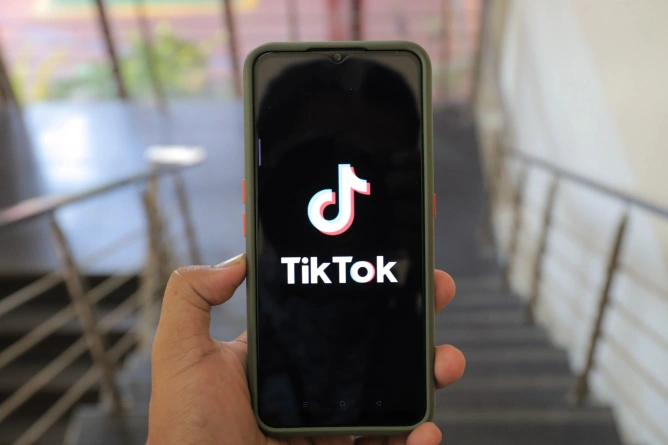
In his response, Regnier used the platforms’ rules to explain this difference. He said that Meta explicitly prohibits livestreams of capital punishments and pointed to existing restrictions on X and TikTok concerning violent or shocking content. TikTok’s current policy prohibits, among other things, graphically presented images of deaths and extremely violent or disturbing material. X allows certain graphic images if they are appropriately labelled, but prohibits violent content in highly visible areas, including livestreams, and prohibits the glorification of violence.
This means that the existence of a broadcast does not automatically trigger a single European rule requiring its removal. First, it must be established where the content is distributed, what rules the service has adopted, whether the material violates applicable legislation and which DSA obligations are relevant to that particular platform. A platform that prohibits a certain type of broadcast under its own rules cannot simply ignore that rule in the EU without the way it applies its terms and conditions potentially falling within the scope of DSA supervision.
For services designated as very large online platforms, the obligations are broader. Facebook, Instagram, TikTok, X and YouTube are among the services designated by the Commission. Their providers must identify and assess the systemic risks associated with the services, including effects on fundamental rights, the protection of minors and physical and mental well-being, and adopt proportionate measures to mitigate the risks identified.
This level of obligation does not mean that every violent item must be removed. The DSA also aims to protect freedom of expression, and the measures taken by platforms must be proportionate. Journalistic, documentary or public-interest content may raise different issues from material published to glorify violence or cause shock, and platforms’ own policies distinguish between these situations in some cases.
Enforcement powers are divided between the European Commission and national digital services coordinators. The Commission has a direct role in supervising the additional obligations applicable to very large online platforms, while national authorities participate in enforcing the other components of the regulation. The available tools include requests for information, investigations and, when an infringement is established, remedial measures and sanctions.
The question addressed to the Commission was prompted by plans concerning the execution of former US Army major Nidal Hasan. The US Army scheduled his execution by firing squad at Fort Hood for 3 December 2026, after the capital punishment was approved by the President of the United States. The army’s official announcement sets the date and method of execution; discussion of broadcasting it online subsequently generated questions about platform rules.
Regnier also delineated the scope of European intervention. The Commission did not comment on what may be broadcast in the United States, nor did it claim jurisdiction over a US administration website. His response referred to online services that fall under European rules when operating in the EU. If a platform were not to diligently enforce its own terms of service, the Commission says that the DSA enforcement framework provides tools to verify compliance with the obligations.
At present, there is no procedure announced by the Commission against any platform in connection with this situation. The intervention of 12 October establishes the framework in which a potential broadcast accessible to European users would be assessed: applicable legislation, the platform’s own rules, and the enforcement and risk-management obligations laid down by the DSA.
Latest News
17:31
17:23
17:16
17:08
17:04
See more news
NEWS ON THE SAME TOPICS














.webp)