


The European Commission postpones the adoption of Austria’s restrictions on children under 14 accessing certain video platforms



Always see our news on Google
The European Commission announced an extension of the waiting period for the Austrian draft, citing overlap with the EU Kids Act proposal. The 12 months are calculated from notification, not from the 29 October briefing. France and Greece have different procedural timelines, and the end of an examination period does not amount to approval of national legislation.
The European Commission announced on Thursday, 29 October 2026, that it was postponing the adoption of Austria’s draft legislation that would restrict children under 14 from accessing certain video platforms. The European executive cites overlap with the EU Kids Act proposal and the need for common rules to protect minors online. The waiting period extends to 12 months from notification of the draft, under the applicable legal mechanism; this does not mean another year calculated from the Commission’s announcement.
In brief
Austria must postpone adopting the draft concerning certain video platforms. The waiting period extends to 12 months from notification, not another year after the 29 October announcement.
The Austrian draft targets children under 14 and features considered harmful to their development; it does not prohibit all minors from accessing the entire internet.
The Commission cites negotiations on the EU Kids Act and the prevention of divergent national rules. The postponement is procedural and does not represent the definitive rejection of the draft.
France and Greece have distinct timelines. France also has a revised notification from September, with a separate deadline, so it cannot be presented as being exempted overall.
The EU Kids Act remains a proposal, with independent accounts from age 15. In the meantime, platforms’ existing obligations under the DSA continue to apply.
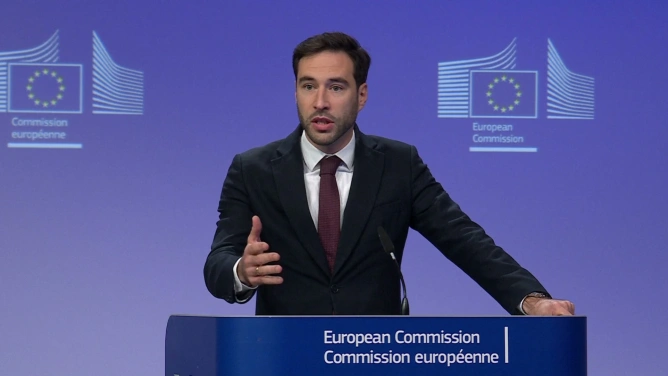
At the press briefing in Brussels, spokesperson Thomas Regnier confirmed that the formal assessment had been sent to the Austrian authorities. He said that Executive Vice-President Henna Virkkunen had discussed the matter with the Austrian government the previous day. The Commission aims to give the European Parliament and the Council time to negotiate the EU Kids Act and to avoid different age limits and obligations emerging for platforms operating in multiple Member States.
Austria notified its draft on 28 July 2026 through the European TRIS system, before the EU Kids Act was presented on 17 September. The Austrian text concerns certain video-sharing platforms with features considered harmful to minors’ development and provides for blocking access by children under 14, together with effective age verification. The draft also includes checks for services containing pornographic or violent material, which must remain inaccessible to all minors. Its scope is narrower than a general ban on internet access.
The European procedure requires Member States to communicate certain draft technical standards and rules for online services before adoption. Ordinarily, this is followed by a three-month waiting period during which the Commission and the other Member States can examine the text. Directive (EU) 2015/1535 allows the period to be extended to 12 months from receipt of the notification when the Commission determines, within the prescribed period, that the subject matter is covered by a European legislative proposal already submitted to the Parliament and the Council.
The mechanism concerns postponing adoption of the national draft, not its definitive cancellation or the suspension of all existing child-protection measures. Under its conditions, the Directive allows the period to be extended to 18 months if the Council adopts a position at first reading; the obligation may end earlier, including when the European act is adopted or the proposal is withdrawn. The 12 months therefore do not guarantee that the EU Kids Act will become applicable at the end of the period.
Asked about France and Greece, Regnier explained that some national procedures had reached the end of the waiting period before the European proposal was presented. He distinguished these situations from Austria’s case and from subsequent notifications, without providing a complete assessment of each national text. The Commission indicated that it is also examining initiatives from Slovenia, Italy and Belgium.
In France’s case, this explanation should not automatically be extended to all versions of the draft. The French notification of 14 September concerns a revised text that takes into account both the observations of the Constitutional Council and the detailed opinion previously issued by the Commission. The TRIS file indicates a waiting-period deadline of 15 December 2026 for this notification. The text proposes restrictions for children under 15 on certain networks with risky features, exceptions for services such as educational services, and the possibility for parents to authorise access for children aged 13 and 14.
Greece’s notification, received on 8 May, concerns access to social networks from age 15 and indicates an implementation timetable starting on 1 January 2027. In TRIS, the waiting period has ended, following a detailed opinion from the Commission and an extension until 11 September, before the EU Kids Act was presented. The file also records receipt of the adopted text. However, the end of the procedure does not constitute general approval of the compatibility of Greek legislation with EU law.
The EU Kids Act proposal seeks gradual access to social and video services with risky features: no personal accounts for children under 13, limited accounts managed by parents or guardians for those aged 13 and 14, and independent accounts from age 15. For video platforms designed for young children, it provides for a limited possibility of access through a parent’s account. The draft also includes requirements on safety by design and age verification with privacy protection.
These rules remain a legislative proposal, which the European Parliament and the Council may amend. Until any regulation is adopted and applied, existing protections remain mandatory. The Commission stressed that negotiations will proceed in parallel with enforcement of the Digital Services Act (DSA), including the obligations of very large platforms to assess and mitigate systemic risks to minors. The postponement of the Austrian draft does not remove these responsibilities.
https://2eu.brussels/ro/news/comisia-europeana-amana-proiectul-austriei-privind-accesul-minorilor-la-platforme-dar-franta-si-grecia-nu-sunt-supuse-aceleiasi-suspendari
Latest News
14:33
14:30
14:26
14:17
14:11
See more news
NEWS ON THE SAME TOPICS














.webp)


