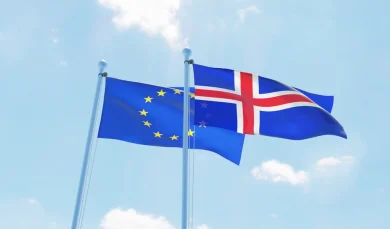
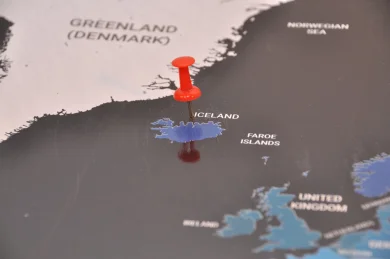
Iceland will vote if it resumes negotiations with the EU, although the majority remains against joining.



Always see our news on Google
The Icelanders are called to the polls on August 29 to decide whether the country should resume negotiations for EU membership, suspended in 2013. Polls cited by the European Policy Centre show a narrow majority in favor of reopening negotiations, but not for membership.
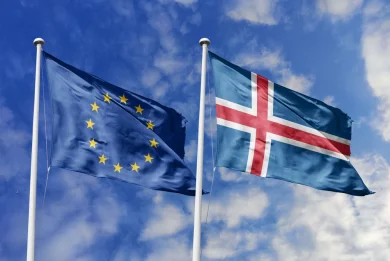
The Icelanders will decide on August 29 whether the country should resume negotiations for EU membership in a referendum that brings back to the forefront a candidacy suspended for over a decade. The vote does not concern actual membership: if the majority says "yes," the government will receive the mandate to reopen negotiations, and any final agreement would subsequently be subject to a new referendum.
In short The referendum on August 29 asks whether Iceland should resume negotiations for EU membership, not whether the country should become a member immediately. Iceland submitted its application for membership in 2009, began negotiations in 2010, and suspended them in 2013, before discussions reached some of the most sensitive areas, including fishing and agriculture. Polls cited by the European Policy Centre indicate 53% support for resuming negotiations and 47% against, but when asked about actual membership, the ratio reverses: 54% against and 46% in favor. Fishing, sovereignty, and monetary policy remain the main sources of reluctance, while European security, the volatility of the Icelandic crown, and the geopolitical environment have contributed to reopening the debate. Iceland is already a member of the European Economic Area and participates in the single market, so any potential resumption of negotiations would start from a much higher level of integration with the EU than in the case of most candidate countries.
Iceland returns to one of the most sensitive political questions in its recent history, after more than a decade in which the prospect of EU membership has largely remained off the agenda. The referendum on August 29 will ask voters to respond whether the country should start negotiations with Brussels again, without a favorable vote automatically meaning that Iceland will become a member state.
The Icelandic Parliament approved the organization of the referendum on May 28, 2026. The question posed to voters is whether Iceland should resume negotiations for EU membership, with the response options being "yes" and "no." The government has stated that, in the case of a positive result and subsequent conclusion of negotiations, the population will again have the final say on any potential membership agreement.
The distinction between the two stages is also visible in the polls presented in an analysis published by the European Policy Centre. 53% of Icelanders would support resuming negotiations, compared to 47% who would oppose, but support for actual membership is lower: 46% would vote for joining the EU, while 54% would vote against. The difference suggests that some voters want to know what conditions Iceland could obtain before making a definitive decision.
The country already has a very close relationship with the European Union. Through the European Economic Area, Iceland participates in the single market together with Norway and Liechtenstein and applies a significant part of the European legislation relevant to its functioning. Iceland is also a member of the Schengen area, so the difference between the current situation and full membership mainly concerns areas that remain outside existing agreements and direct participation in the EU decision-making process.
The first attempt at membership began in the context of the financial crisis. Iceland submitted its application in 2009, during the social-democratic and green government, after the collapse of the banking system and the severe recession that affected the economy. Negotiations began in 2010 and progressed rapidly in numerous chapters, Iceland's advantage being that a significant part of the European norms was already applied through the EEA agreement.
The process was suspended in 2013 after the return to power of conservative parties, before negotiations reached some of the most difficult areas, especially fishing and agriculture. The Icelandic government announced in 2015 that it no longer considers the country a candidate, while the European Commission maintained the interpretation that the membership application had not been legally withdrawn, and negotiations remained suspended.
Fishing continues to be probably the most sensitive issue. The sector has much greater economic and identity importance for Iceland than for most European states, and control over marine resources and fishing quotas is directly linked to the debate on sovereignty. Any resumption of negotiations would need to address the relationship between the Icelandic system and the EU's common policy in the fishing sector.
The EPC analysis shows that there are indications that Brussels would be willing to seek solutions tailored to Iceland's situation. The European Commissioner for Enlargement, Marta Kos, welcomed the organization of the referendum and emphasized that the accession negotiations reflect the specific situation of each candidate country. Regarding fishing and agriculture, there may be models of flexibility, including through special agreements similar to those applied to some northern regions of Finland and Sweden.
However, fishing is not the only reason for Icelandic reluctance. Maintaining its own currency and an independent monetary policy remains an important argument for opponents of membership, while supporters of closer ties with the EU point to the volatility of the Icelandic crown and the difficulties that a small currency can create for an open economy. The experience of the financial crisis of 2008-2009 continues to influence the debate, including discussions about economic stability and the cost of living.
The geopolitical context has also contributed to bringing the subject back onto the political agenda. Iceland has been a NATO member since 1949 but has no standing army and relies particularly on cooperation with allies for external security. The intensification of strategic competition in the North Atlantic, Russia's war against Ukraine, and debates about the United States' commitment in the region have provided additional arguments for those advocating deeper European integration.
However, these security themes have had less importance as the campaign for the referendum has progressed. The internal debate has again focused on the economy, fishing, and control of national decisions, which shows that traditional reasons for caution regarding membership continue to have a strong influence on the electorate.
The current government, formed by the Social Democratic Alliance, the Reform Party, and the People's Party, also does not have a common favorable position on membership. The social democrats and liberals support joining the EU, while the People's Party has accepted organizing the referendum based on the idea that the decision should be made directly by the electorate.
The Parliament approved the referendum with 34 votes in favor, eight against, and 14 abstentions, out of a total of 63 deputies. The date was advanced from the initial coalition agreement schedule, which provided for the consultation to be held no later than 2027, against the backdrop of the rapid return of the subject to political debate.
A positive result on August 29 would open a complicated stage. The negotiations conducted before 2013 could not simply be resumed from where they left off, as European legislation and the economic situation have changed in more than a decade. The areas already discussed would need to be reevaluated, and Iceland would need to establish new negotiating positions in sectors where it seeks exemptions or special solutions.
The existing relationship through the EEA could facilitate part of the process, as Iceland already applies numerous internal market norms. In return, the issues that previously politically blocked the process, especially fishing and agriculture, would return to the center of negotiations, and the compromise obtained would need to be convincing enough to pass through a second referendum.
A negative vote would keep Iceland in its current form of integration, primarily based on the EEA, Schengen, NATO, and bilateral cooperation in the field of security. The government could continue to deepen its relationship with the EU through these instruments without pursuing full membership status.
Therefore, the referendum on August 29 will not answer the question of whether Iceland will enter the European Union. It will decide whether the country is willing to reopen negotiations to find out under what conditions it could become a member, at a time when a narrow majority favoring discussions coexists with a majority that, according to polls cited by the EPC, continues to oppose membership.
https://2eu.brussels/ro/news/islanda-voteaza-daca-reia-negocierile-cu-ue-desi-majoritatea-ramane-impotriva-aderarii
Latest News
14:30
14:15
13:59
13:43
13:23
See more news
NEWS ON THE SAME TOPICS