Hoekstra Calls for Reform of UN Climate Negotiations After Failure to Adopt COP31 Pact



Always see our news on Google
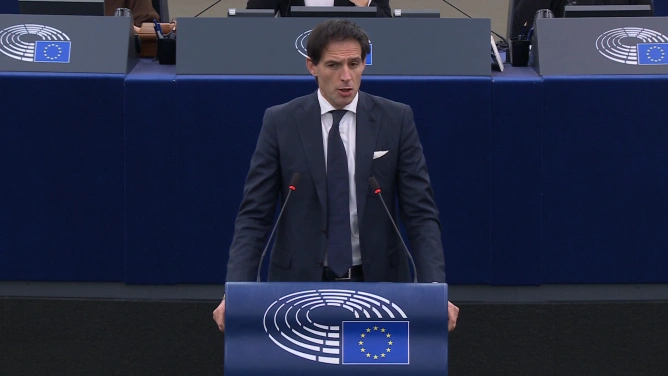
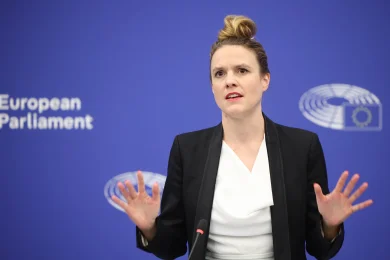
European Commissioner for Climate, Climate Neutrality and Clean Growth Wopke Hoekstra called for reform of UN climate negotiations during a plenary session of the European Parliament in Strasbourg after COP31 ended without the adoption of the general political pact proposed in Antalya. He advocates three courses of action: improving the multilateral process, initiatives among groups of states, and bilateral partnerships, including in the area of carbon markets. Hoekstra stressed that the rejection of the pact does not mean abandoning international cooperation.
Key point: Wopke Hoekstra considers reform of the UN climate negotiation process necessary, but acknowledges the difficulty of securing an international agreement on changing it. The commissioner proposes developing plurilateral initiatives through which groups of states willing to advance in certain areas can cooperate without waiting for global consensus on every measure. The European Union is seeking to intensify bilateral cooperation on carbon markets, including with China, Brazil, Chile and Mexico. The unadopted Antalya Pact provided for dialogues in 2027 and 2028 to improve the negotiation process, followed by the presentation of a report at COP34 in 2029. Hoekstra rejects the idea of abandoning multilateralism and supports continuing preparations for COP32, which will take place in 2027 in Addis Ababa, Ethiopia.
During the debate on the results of the COP31 climate conference, Wopke Hoekstra defended the European Union’s decision to reject the final draft presented by the conference presidencies in Antalya. The commissioner considers that the document failed to address the urgency of the climate situation and that adopting it would, in certain respects, have represented a step backward from existing international commitments. Hoekstra criticised the absence of an explicit reference to the link between fossil fuel use and climate change, as well as the approach to carbon capture and storage technologies, which the draft, in his view, assigned a disproportionate role.
According to the commissioner, a group of approximately 130 countries, including the European Union, submitted an alternative proposal on the evening of 21 November aimed at facilitating a compromise. Hoekstra nevertheless said that the version presented the following morning did not address the requests made and that the European Union and the other states supporting a more ambitious approach could not accept the text. The commissioner insisted that rejecting the draft must not be interpreted as the European Union withdrawing from the multilateral climate process.
In his reply to representatives of the political groups in Parliament, Hoekstra identified three directions in which the European Union should continue international climate cooperation. The first concerns reforming the negotiation process conducted under the United Nations Framework Convention on Climate Change, known by the acronym UNFCCC. The commissioner acknowledged that changing this process would be particularly difficult, given differences among states and the current geopolitical context. Hoekstra did not, however, present a specific proposal to change the voting rules, nor did he explicitly propose replacing consensus with majority voting.
The issue of reforming the climate negotiation system had also been discussed at the conference in Antalya. According to UNFCCC documents, consultations on strengthening the negotiation process took place on 12, 13, 14 and 19 November 2026, continuing earlier discussions within the Convention’s subsidiary bodies. The draft Antalya Pact, presented on 22 November under reference FCCC/CP/2026/L.14, recognised the growing complexity of negotiations and the need to improve their functioning. Paragraphs 13 and 14 of the document provided for continued efforts to strengthen the consensus-based process, the organisation of dialogues in November 2027 and November 2028, and the preparation of a report for consideration at COP34 in November 2029. Since the Antalya Pact was not adopted, that timetable did not acquire the status of a mandate approved by the document.
Decision-making at UN climate conferences operates primarily on the basis of consensus. According to the procedural guidelines published by the UNFCCC Secretariat, states have failed to agree on the general voting rule contained in the draft rules of procedure. Consequently, decisions are normally adopted by consensus, except in situations where the applicable conventions and rules explicitly provide for a vote. This system allows a small number of states to prevent the adoption of a document when they raise objections that cannot be overcome through negotiations.
During the European Parliament debate, a representative of the Greens/European Free Alliance group called for majority voting to be introduced at climate conferences, arguing that the current mechanism allows measures supported by a large number of countries to be blocked. This proposal was part of the parliamentary intervention and does not represent a formal position presented by the European Commission on Thursday.
The second course of action identified by Hoekstra concerns expanding plurilateral initiatives. These allow a group of states to develop commitments and cooperation mechanisms in specific areas without each initiative requiring the participation of all parties to the climate convention. One example is the Open Coalition for Regulated Carbon Markets, launched at COP30 in the Brazilian city of Belém. On 16 November 2026, during COP31, coalition representatives adopted a joint declaration, launched its working groups and established strategic priorities for 2027. The initiative is coordinated by Brazil, with China and the European Union serving as co-chairs. According to the European Commission, the coalition comprised 13 members and 34 observers at the time of the meeting.
Participation in this initiative is voluntary and does not amount to establishing a single global carbon market or adopting binding international legislation. The third direction presented by the commissioner concerns developing bilateral cooperation and continuing the European Union’s own measures. Hoekstra explicitly mentioned cooperation on carbon markets with China, Brazil, Chile and Mexico, considering that such partnerships could help expand the use of economic instruments to reduce emissions. Cooperation on carbon markets may include policy dialogues, exchanges of expertise and support for developing national emissions-pricing mechanisms.
This does not automatically mean linking national emissions-trading systems with the European ETS system, nor does it mean mutual recognition of all carbon certificates or credits. Hoekstra also stressed that the European Union must continue its own investments in clean energy production, electrification, storage capacity and energy infrastructure.
In his view, reducing energy dependence on external suppliers and accelerating the transition contributes both to climate objectives and to Europe’s competitiveness and security. The parliamentary debate highlighted differences over the assessment of COP31’s results and the future direction of European climate policy. Representatives of the EPP, S&D, Renew Europe, the Greens and the Left supported, from different perspectives, continuing international climate cooperation, although some also criticised the coherence of certain EU legislative decisions. Other MEPs challenged the level of European climate ambition, citing economic costs and continued dependence on fossil fuels.
Hoekstra insisted that climate policies must remain grounded in scientific research findings and that the difficulty of achieving international consensus does not diminish the need to reduce emissions. The COP31 conference ended on 22 November without the adoption of the general political decisions proposed by the Turkish and Australian presidencies. The UNFCCC Secretariat nevertheless confirmed that sectoral negotiations produced separate outcomes, including in the areas of just transition, climate finance and adaptation. Initiatives carried out under the Global Climate Action Agenda also made progress.
Failure to reach consensus on the general pact does not invalidate the Paris Agreement or the decisions adopted separately in Antalya. In a joint statement on the conference outcome, Wopke Hoekstra and Irish Minister Darragh O’Brien, representing the presidency of the EU Council, reaffirmed the Union’s support for multilateral cooperation and announced the immediate start of preparations for COP32. Hoekstra’s intervention in the European Parliament thus outlines an approach through which the Union would seek both to improve global negotiations and to achieve results through cooperation with states willing to move faster. At the time of the debate, the European Commission had not presented a detailed legislative or diplomatic proposal to change the rules for adopting decisions under the UNFCCC.
あるassistant to=event_translation code 制ана {Sources

Latest News
14:21
14:12
14:09
13:57
13:49
See more news
NEWS ON THE SAME TOPICS



.webp)