Security College establishes priorities for evacuations, energy, and transport following developments in Iran and the Middle East



Always see our news on Google
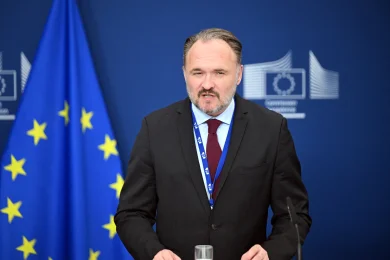
Security College has analyzed the evolving situation in Iran and the Middle East and its effects on the European Union, and the Commission has stated that its activities will be guided by two priorities, supporting member states and protecting EU citizens from the negative consequences of events.
In short
Security College has analyzed the developments in Iran and the Middle East and their effects on the European Union.
The Commission has established two priorities, supporting member states and protecting EU citizens.
Support for evacuations and repatriations is being intensified through the EU Civil Protection Mechanism and the Emergency Response Coordination Centre.
Monitoring of transportation disruption risks around the Strait of Hormuz and in the Red Sea is being strengthened.
An Energy Task Force will be convened with member states, in connection with the International Energy Agency.
In the official information published after the meeting, the Commission specifies that it is also intensifying support for member states' evacuation and repatriation efforts, including through the EU Civil Protection Mechanism and the Emergency Response Coordination Centre, in close cooperation with EU delegations.
On the transportation dimension, the Commission states that it is also strengthening the monitoring of disruption risks, especially around the Strait of Hormuz and in the Red Sea, and that it is intensifying coordination with airlines, shipping companies, and national authorities.
On energy, the Commission specifies that it is closely monitoring developments regarding prices and supply and that it will convene an Energy Task Force with member states, in connection with the International Energy Agency, with a first meeting this week.
In the field of internal security, the Commission maintains a high level of vigilance and close cooperation with Europol and member states regarding potential risks.
On migration, the Commission states that it is also strengthening preparedness by closely monitoring trends and through enhanced cooperation with relevant UN agencies and partner countries.
Security College is the internal coordination format of the College of Commissioners used by the European Commission in crisis situations or when external developments may have direct implications for the security, economy, or citizens of the Union. The meeting is convened by the President of the Commission and brings together relevant commissioners depending on the nature of the file, to assess risks, establish operational priorities, and coordinate measures at the level of the European executive.
The official information indicates an operational response from the Commission to developments in Iran and the Middle East, focusing on the protection of EU citizens, support for evacuations, monitoring logistical risks on maritime and air routes, tracking the impact on energy markets through an Energy Task Force, and strengthening cooperation on internal security and migration.
Latest News
15:35
15:28
15:24
15:21
15:19
See more news
NEWS ON THE SAME TOPICS