European Commission and EESC sign agreement to involve civil society in combating poverty



Always see our news on Google
On Thursday, 22 October 2026, the European Commission and the European Economic and Social Committee (EESC) signed a memorandum of understanding on cooperation in implementing the EU strategy against poverty and strengthening the European Child Guarantee. The agreement provides for the involvement of employers, trade unions, civil society organisations and people living in poverty in the development, implementation and monitoring of European policies.
In brief, the Commission and the EESC signed the memorandum on 22 October 2026 in Brussels. The cooperation concerns implementation of the EU strategy against poverty and strengthening the European Child Guarantee, with the involvement of civil society, employers, trade unions and affected people. In 2025, 92.7 million people in the EU were at risk of poverty or social exclusion: 20.9% of the population. The total included 19.3 million children. The rounded figure of 93 million is not a new estimate for October 2026. The EESC will contribute through opinions, analyses, consultations and monitoring. Annual plenary debates and regular exchanges between the responsible commissioner and the Committee president are planned. The EU’s 2030 target is to reduce by at least 15 million the number of people at risk of poverty or social exclusion compared with 2019, including at least five million children. Eradicating poverty by 2050 is a long-term ambition. The strategy schedules the Anti-Poverty Coalition for 2026, and for 2027 a structured dialogue with affected people, a Commission recommendation on in-work poverty and a proposal on integrated access to services. The signing of the memorandum does not amount to the launch of these initiatives. Boland called for measurable objectives and annual assessments through the European Semester. EAPN called for the future 2028–2034 budget to be aligned with social objectives; negotiations are continuing. The study presented at the debate identifies ten factors behind intergenerational poverty and analyses 32 European policy instruments. The memorandum establishes institutional cooperation, not a mechanism through which families can directly apply for new grants or benefits.
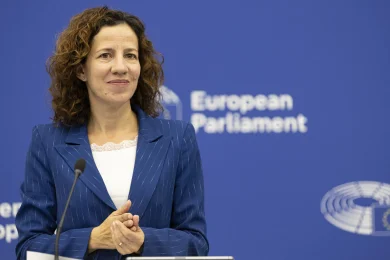
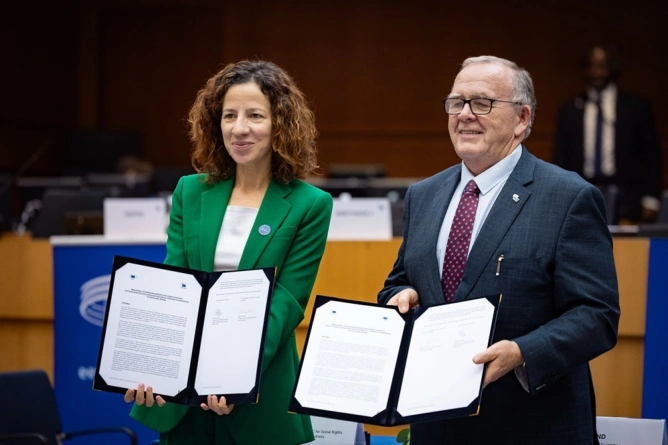
The memorandum was signed in Brussels by Roxana Mînzatu, Executive Vice-President of the European Commission responsible for social rights and skills, quality jobs and preparedness, and by Séamus Boland, President of the EESC. The signing took place during the debate on eradicating poverty by 2050, organised during the Committee’s 21–22 October plenary session in the Paul-Henri Spaak building of the European Parliament.
In 2025, 92.7 million people in the EU, representing 20.9% of the population, were at risk of poverty or social exclusion, according to Eurostat data presented by the Commission. This total includes 19.3 million children under 18, approximately one in four children. The indicator covers people in at least one of three situations: risk of monetary poverty, severe material and social deprivation, or living in a household with very low work intensity. The figure of approximately 93 million used in the strategy’s presentation is a rounding and does not represent a new estimate for October 2026.
The Union aims to reduce by at least 15 million the number of people at risk of poverty or social exclusion by 2030, compared with the 2019 level, including at least five million children. Eradicating poverty by 2050 is the strategy’s long-term ambition.
The memorandum supports implementation of the strategy adopted by the Commission on 6 May 2026. The Commission and the EESC will jointly identify areas in which the Committee’s contribution could be particularly useful, with priority given to initiatives relevant to employers, workers and civil society organisations. The EESC will contribute through opinions, analyses, consultations and activities supporting the implementation and monitoring of measures.
The cooperation includes annual debates in the EESC plenary and regular exchanges between the responsible European commissioner and the Committee president. The official statement also emphasises the involvement of people with direct experience of poverty. Separately, the strategy’s timetable schedules the launch in 2027 of a structured dialogue with affected people, to consult them on the development, implementation and monitoring of policies.
Combating child poverty is an explicit component of the agreement. Strengthening the European Child Guarantee aims to improve vulnerable children’s access to education, care services, healthcare, healthy food and adequate housing. The memorandum is a mechanism for institutional cooperation, not an application through which families can directly request new funding or social benefits.
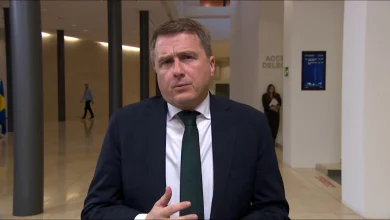
During the debate, Séamus Boland called for action on the interconnected causes of poverty: income, employment, education, housing, health, care and access to essential services. The EESC president advocated measurable objectives, the effective use of European funds, sustained national investment and annual assessments of the poverty situation in each Member State through the European Semester.
Roxana Mînzatu linked the signing of the agreement to turning European social objectives into joint action and practical results. The Executive Vice-President presented closer cooperation and dialogue with the EESC as tools for advancing the 2030 targets and the 2050 ambition.
The strategy brings together measures concerning income, employment, social protection, housing, access to services and combating discrimination. For 2027, the timetable provides for a Commission recommendation on combating in-work poverty and a proposal for a Council recommendation on simpler and integrated access to services.
Cooperation with the EESC includes supporting contacts with the future Anti-Poverty Coalition, intended for the private sector and philanthropic organisations. The strategy schedules its launch for 2026. The 22 October statement presents it as a future initiative; the signing of the Commission–EESC memorandum is a separate step from the coalition’s launch.
Carlos Susías, President of the European Anti-Poverty Network (EAPN), called for the Union’s future multiannual budget for 2028–2034 to be compatible with the strategy against poverty and the European Pillar of Social Rights. The EESC statement specifies that negotiations on this financial framework are ongoing.
Participants were also presented with the results of an EESC-commissioned study on the transmission of disadvantage between generations. The research identifies ten factors behind intergenerational poverty and analyses 32 European public policy instruments. The aspects highlighted include parents’ education and family stability.

Latest News
16:50
16:38
16:25
16:15
16:03
See more news
NEWS ON THE SAME TOPICS