The EU–Moldova Committee calls for the formal opening of accession negotiations on all clusters by the end of 2026.



Always see our news on Google
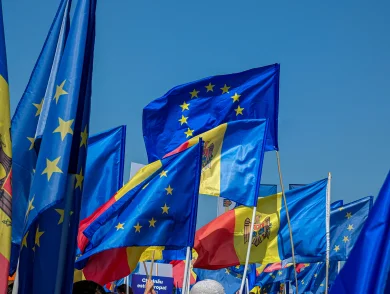
The EU-Moldova Parliamentary Association Committee has requested the Council of the European Union to formally open accession negotiations with the Republic of Moldova on all six clusters, without further delays, starting with the "Fundamentals" cluster during the Cypriot Presidency of the Council and with the other five clusters before the end of 2026. The final declaration adopted in Brussels puts political pressure on member states, after the European Commission communicated that the technical work is completed and that all clusters are ready for opening.
In short The EU-Moldova Committee calls for the formal opening of negotiations on all six clusters by the end of 2026.
The first targeted cluster is "Fundamentals," which is expected to be opened during the Cypriot Presidency of the Council.
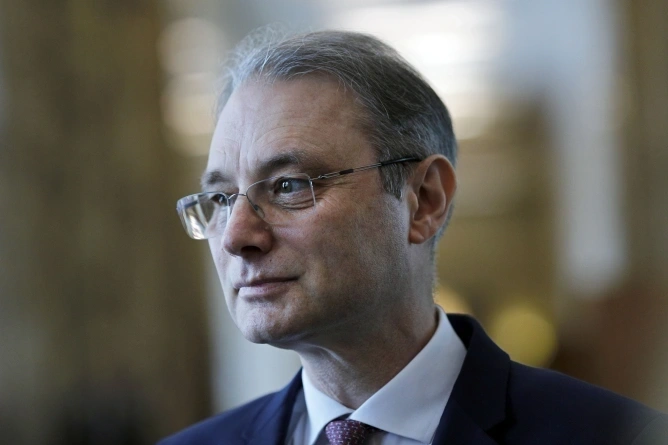
Gert Jan Koopman stated that the technical work on all clusters is completed and that all are ready for opening.
The Republic of Moldova asserts that it wants to be ready for EU accession by 2030.
The final declaration links the accession process to reforms, the Growth Plan, justice, security, energy, and Moldova's resilience to external pressures.
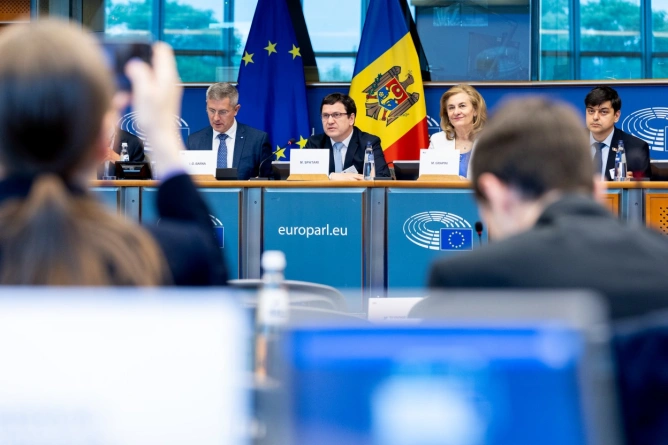
The EU-Moldova Parliamentary Association Committee has requested the Council of the European Union to formally open accession negotiations with the Republic of Moldova on all six clusters, without further delays, starting with the "Fundamentals" cluster during the Cypriot Presidency of the Council and with the other five clusters before the end of 2026. The request appears in the final declaration and recommendations adopted at the 17th meeting of the EU-Moldova Parliamentary Association Committee, held in Brussels on May 5, 2026. The document welcomes the launch of technical negotiations on clusters 1, 2, and 6, "Fundamentals," "Internal Market," and "External Relations," in December 2025, as well as the launch of technical negotiations on the other three clusters in March 2026.
The declaration, however, calls for the transition from the technical stage to the formal opening of negotiations. The Committee states that this step would show that the EU recognizes and rewards Moldova's progress and would strengthen the credibility of the enlargement process.
Gert Jan Koopman, Director-General for Neighbourhood and Enlargement Negotiations at the European Commission, stated that the technical work on all clusters has been completed and that all are ready for opening. "All clusters are ready for opening and should be opened without further delays," said the European Commission official. Koopman explained that the 27 member states have completed the benchmarks for all clusters in informal documents very close to the formal documents that will need to be adopted. He said that Moldova's work "has not been in vain" and that it has laid the groundwork for a rapid process in the next stage.
The Commission's message shifts the focus from Moldova's technical preparation to the political decision of the member states. According to Koopman, the reforms carried out by Moldova in record time remain compatible with the goal of closing negotiations by 2028, provided that the pace of reforms and their implementation on the ground are maintained.
Marcel Spatari, co-chair of the meeting on behalf of the Parliament of the Republic of Moldova, stated that Moldova needs clear political signals from the EU for the institutions in Chișinău to keep up the pace of reforms.
Cristina Gherasimov, Deputy Prime Minister for European Integration, stated that EU accession remains a national priority and that the goal of the Republic of Moldova is to prepare the country for accession to the Union by 2030. She said that Moldova has moved from the preparation stage to one of delivery and measurable results, after completing the bilateral screening on all six clusters and launching technical negotiations on all chapters of the acquis.
Judicial reform was one of the main themes of the meeting, being directly linked to the "Fundamentals" cluster. Koopman welcomed the progress in vetting judges and combating corruption but emphasized that the efficiency of the judicial system must be maintained. Stela Braniște, Deputy Secretary General of the Ministry of Justice, presented the status of the evaluation of judges and prosecutors and measures to strengthen anti-corruption mechanisms.
On the economic dimension, the meeting focused on the implementation of the Growth Plan, the European package of 1.9 billion euros for the Republic of Moldova. The European Commission welcomed the 93% implementation rate of the steps in the Growth Plan. Alexei Buzu, Secretary General of the Government and National Coordinator for the Growth Plan, presented the plan as a tool for economic convergence, reforms, and investments.
Cristian Pîrvulescu, co-chair of the EU-Moldova Civil Society Platform, emphasized that civil society and social partners must be involved in the development, monitoring, and implementation of the reforms in the Growth Plan. He stated that the sustainability of the reforms should not be measured only by technical indicators but also by the trust of citizens and the support of civil society.
On the security dimension, the final declaration condemns the repeated incursions of Russian drones and missiles into the airspace of the Republic of Moldova and calls for stronger cooperation between the EU and Moldova in the field of airspace security, surveillance, defense capabilities, and resilience to hybrid threats.
On the energy dimension, the document welcomes the strengthening of interconnections, surpassing the threshold of 1 GW of installed renewable capacity, and Moldova's efforts to integrate into the European energy market. Deren Derya, head of the EEAS division for the region, stated that Moldova has eliminated its dependence on Russian gas and electricity, while Dorin Junghietu, the Minister of Energy, presented Chișinău's priorities regarding interconnections, emergency stocks, and market liberalization.
The final declaration also includes themes with a direct impact on citizens and companies, such as Moldova's integration into the "Roam Like at Home" zone, operational participation in SEPA, participation in Creative Europe and EaSI, and alignment of national legislation with the Digital Services Act, with the goal of transposition by October 2026.
The Committee also addressed the situation in Transnistria and Gagauzia. Regarding Transnistria, the declaration recalls the EU's offer of 60 million euros in conditional assistance and regrets the refusal of the unrecognized authorities in Tiraspol to utilize the support. Regarding Gagauzia, the document expresses concern over the difficulties in organizing elections for the People's Assembly and over the risks of external interference.
The final declaration was adopted unanimously. The text also includes a call for the reform of local public administration to be carried out in an inclusive manner, with real, transparent, and substantial consultations with local administrations and civil society, respecting the principle of voluntary amalgamation of administrative units.
The EU-Moldova Parliamentary Association Committee is the interparliamentary structure created based on the Association Agreement for political dialogue between the European Parliament and the Parliament of the Republic of Moldova. The 17th meeting took place in Brussels on May 5, 2026, and adopted a final declaration and recommendations regarding Moldova's accession to the EU, European support, reforms, security, and energy.
The Republic of Moldova has candidate country status for the EU, and technical negotiations are launched on all six clusters. The next political step is the formal opening of negotiations on clusters by the Council.
For Chișinău, the stake is to transform technical progress and internal reforms into formal steps in the accession process. For the EU, Moldova's file is linked to the credibility of enlargement, regional security, and the stability of the eastern neighborhood.
Latest News
11:07
10:57
10:52
10:48
10:44
See more news
NEWS ON THE SAME TOPICS
.webp)