The EU General Court rejects, for lack of jurisdiction, Hungary’s action against the financing of the Ukrainian army from the proceeds of frozen Russian assets



Always see our news on Google
Hungary challenges its exclusion from the vote on the allocation of the first tranche through the European Peace Facility, after having constructively abstained from an earlier decision. The Court considered that choosing the military destination of the funds falls within the common foreign and security policy and did not examine the legality of the procedure on the merits.
The General Court of the European Union dismissed, for lack of jurisdiction, the action by which Hungary challenged the allocation of the first tranche of revenues from frozen Russian assets to the Ukrainian armed forces. The judges considered that the decision concerned political or strategic choices in the common foreign and security policy, and therefore did not examine on the merits Hungary’s complaint regarding its exclusion from the vote.
In briefThe Court did not decide whether Hungary’s exclusion from the vote was lawful. It dismissed the action because the contested act concerns political or strategic choices that the Union courts cannot review in this case.
The dispute concerns the first tranche allocated through the European Peace Facility in June 2024, intended for ammunition, artillery, air defence and equipment for Ukraine’s defence industry. The profits resulting from windfall revenues are at issue, without any decision on the confiscation of the Russian assets themselves.
Hungary had constructively abstained from an earlier decision on allocating the funds for military support, thereby allowing its adoption. The European Peace Facility Committee considered that this abstention excluded it from the subsequent vote on the allocation of the tranche, an interpretation challenged by Hungary.
Invoking the voting rules, the equality of the Member States and the right to an effective remedy did not remove the jurisdictional limitation laid down by the Treaties. The judgment may be appealed only on points of law.
The dispute stems from the decision taken on 21 June 2024 by the European Peace Facility Committee, which allocated the first tranche of net profits derived from windfall revenues generated by frozen Russian assets. The funds were to finance ammunition and artillery systems, missiles and air-defence systems, as well as military equipment for Ukraine’s defence industry. The decision also set out the indicative allocation among these categories, the places of procurement, those responsible and the delivery timetable.
The conflict concerning the vote arose after two separate Council decisions adopted in May 2024. Hungary supported the rules on directing the profits towards support for Ukraine, but resorted to constructive abstention in the case of the decision on allocating the amounts to military support through the European Peace Facility. This form of abstention allowed the decision to be adopted without Hungary’s favourable vote.
When the Committee proceeded to allocate the first tranche, it considered that the states that had constructively abstained from the earlier decision could not participate in the new vote. Hungary challenged this interpretation and sought annulment of the decision, as well as partial annulment of the minutes recording its adoption. It argued that its exclusion violated the voting rules, the equality of the Member States, the rule of law and the democratic functioning of the Union.
Hungary’s central argument was that the judges could review the procedure without ruling on the appropriateness of military support. The State accepted that the courts should not replace the political and strategic choices of the competent authorities with their own assessment, but argued that its voting right constituted a different issue. The European Peace Facility and the Council, by contrast, sought dismissal of the action for lack of jurisdiction, relying on the nature of the contested act.
The Court began with the limits laid down by the Treaties for the common foreign and security policy, CFSP. In this area, the jurisdiction of the Union courts is, in principle, excluded, with exceptions for reviewing the demarcation between the other EU policies and for reviewing certain restrictive measures against natural or legal persons. Hungary’s action fell within neither of these two exceptions.
The judges then examined whether the act had a direct connection with political or strategic choices. They found that allocating funds for certain types of weaponry and choosing the assistance measure through which support was to be financed represented such choices. The decision responded to Ukraine’s urgent request for military equipment, including equipment with lethal capability, and implemented the strategic orientation established to support its armed forces.
The fact that Hungary challenged the procedure did not alter this conclusion. According to the Court, the lack of jurisdiction to review such acts also concerns their external legality, namely matters relating to their adoption. In this case, the voting rules invoked by Hungary belonged precisely to the CFSP framework; this was not a matter of applying a provision outside that area.
The Court also rejected the argument that the right to an effective remedy would allow it to examine the case. In its reasoning, the judges stated that “the absence of other judicial remedies cannot, as such, give rise to jurisdiction of the Union court”. They considered that such an extension would exceed the powers conferred by the Treaties, even though Hungary invoked the violation of fundamental values and principles.
The judgment thus leaves the contested decision untouched, without an examination on the merits of the legality of Hungary’s exclusion from the vote. It also does not constitute a general authorisation for the confiscation of Russian assets: the subject matter of the case was the allocation of a tranche of profits derived from windfall revenues generated by the frozen assets.
The framework adopted by the Council in May 2024 provided that 90% of the respective contributions would go to the European Peace Facility and 10% to programmes financed from the EU budget. The contributions came from the net profits of central securities depositories resulting from the immobilisation of Russian assets. This was the allocation scheme established at the time of the facts in dispute.
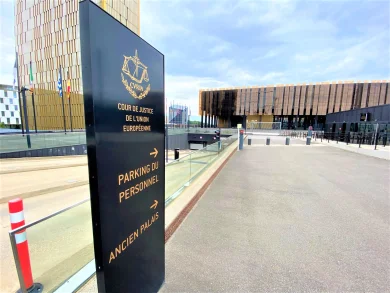
The judgment was delivered in Luxembourg in Case T-457/24. Hungary must bear its own costs and those of the European Peace Facility and the Council. An appeal may be brought before the Court of Justice, limited to points of law, within two months and ten days of notification of the judgment.
Latest News
15:50
15:39
15:25
See more news
NEWS ON THE SAME TOPICS